Key Takeaways:
- Bitcoin halvings occur roughly every 210,000 blocks, which works out to approximately every four years.
- The April 2024 halving cut the block reward from 6.25 BTC to 3.125 BTC, marking the fourth halving in Bitcoin’s history.
- Each of the first three halvings preceded significant price increases within 12 to 18 months of the event.
Bitcoin’s supply schedule is built directly into its code, and the halving is its most defining feature. Every 210,000 blocks, the reward miners receive for processing transactions drops by 50%. This happens automatically, with no human intervention, and it continues until all 21 million Bitcoin have been mined. The halving is why Bitcoin’s inflation rate drops over time and why supply scarcity becomes more pronounced with each cycle.
Here’s the full halving schedule, what each one did to Bitcoin’s price, and what the data suggests about future halvings.
What Are All the Bitcoin Halving Dates So Far?
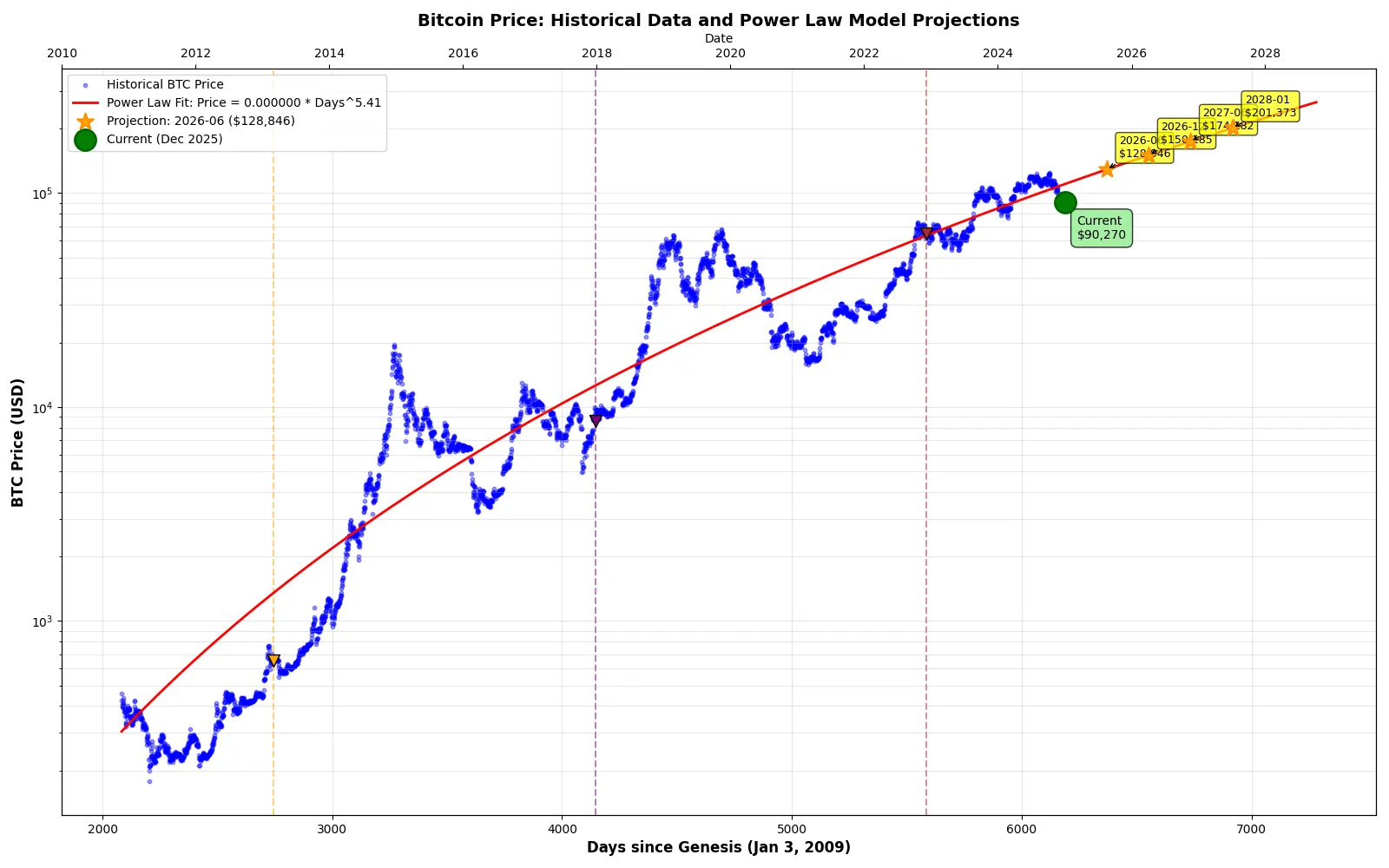
Bitcoin has completed four halvings since its launch in 2009. Each one cut the block reward in half and reduced the daily rate of new Bitcoin entering circulation. Here’s the complete historical record:
- First halving, November 28, 2012: Block reward dropped from 50 BTC to 25 BTC. Bitcoin’s price sat around $12 at the time. Within 12 months, it climbed past $1,000.
- Second halving, July 9, 2016: Block reward dropped from 25 BTC to 12.5 BTC. Bitcoin traded near $650 at the halving. By December 2017, it reached nearly $20,000.
- Third halving, May 11, 2020: Block reward dropped from 12.5 BTC to 6.25 BTC. Price sat around $8,700 at the event. By November 2021, Bitcoin hit a then-all-time high of $69,000.
- Fourth halving, April 19, 2024: Block reward dropped from 6.25 BTC to 3.125 BTC. Bitcoin traded around $63,000 at the halving and went on to set new all-time highs above $73,000 within weeks.
The pattern across all four halvings shows a consistent lag between the supply reduction and the price response. Prices didn’t peak immediately after each halving. The bigger moves came 6 to 18 months later.
When Is the Next Bitcoin Halving Date?
The fifth Bitcoin halving is expected around April 2028, assuming average block times stay near 10 minutes. At that point, the block reward will drop from 3.125 BTC to 1.5625 BTC.
Bitcoin’s code adjusts mining difficulty every 2,016 blocks to keep average block times close to 10 minutes. If miners process blocks faster than that, difficulty increases. If they slow down, it decreases. This self-correcting mechanism keeps the halving schedule roughly on a four-year cycle, though the exact date shifts based on actual network activity.
How Does Difficulty Adjustment Affect the Halving Date?
Difficulty adjustments happen every two weeks and directly affect how close the halving stays to its expected date. During periods of rapid hashrate growth, blocks arrive faster than 10 minutes on average, which pushes the halving forward slightly. During hashrate drops, the opposite happens.
The 2024 halving arrived a few days earlier than some initial estimates predicted because the network’s hashrate grew faster than expected through late 2023. Analysts tracking the 2028 halving use real-time block production data to refine the date estimate as it approaches.
What Does the Halving Mean for Bitcoin’s Price?
The halving reduces the rate of new Bitcoin entering the market. If demand stays constant or grows, lower supply growth puts upward pressure on price. This is the basic economic argument for why halvings matter.
The data from the first three halvings supports this logic, but the relationship isn’t perfectly predictable. Broader market conditions, institutional adoption, and regulatory developments all influence price alongside the halving. A few patterns stand out from the historical halving data:
- Pre-halving accumulation: Prices often rise in the 6 to 12 months before the halving as anticipation builds.
- Post-halving lag: The largest price gains typically arrive 6 to 18 months after the halving, not immediately after.
- Diminishing returns: Each halving produces a smaller percentage gain than the previous one, likely because the market prices in the supply change more efficiently over time.
You can track Bitcoin’s on-chain supply metrics through crypto analytics and on-chain data platforms to monitor how each cycle develops in real time.
To buy Bitcoin ahead of or after the next halving, platforms like Coinbase, Kraken, and Binance all offer straightforward BTC purchases. For long-term storage through multiple halving cycles, Ledger and Trezor remain the most widely trusted hardware wallets. This guide on how to choose the best Bitcoin wallet walks through your storage options in detail.
Frequently Asked Questions
When Was the Last Bitcoin Halving?
The most recent Bitcoin halving occurred on April 19, 2024. The block reward dropped from 6.25 BTC to 3.125 BTC at block height 840,000.
When Is the Next Bitcoin Halving Expected?
The fifth Bitcoin halving is projected around April 2028, when the block reward will drop from 3.125 BTC to 1.5625 BTC. The exact date shifts based on actual block production rates between now and then.
Does Bitcoin’s Price Always Go Up After a Halving?
Historical data shows price increases after each of the first four halvings, but the gains came with significant delays, typically 6 to 18 months after the event. Past performance doesn’t guarantee future results, and each cycle has unique conditions.
How Many Bitcoin Halvings Are Left?
Bitcoin’s supply is capped at 21 million coins. Halvings will continue until the block reward drops below one satoshi, which is expected around the year 2140. Approximately 29 halvings remain before that point.