Key Takeaways:
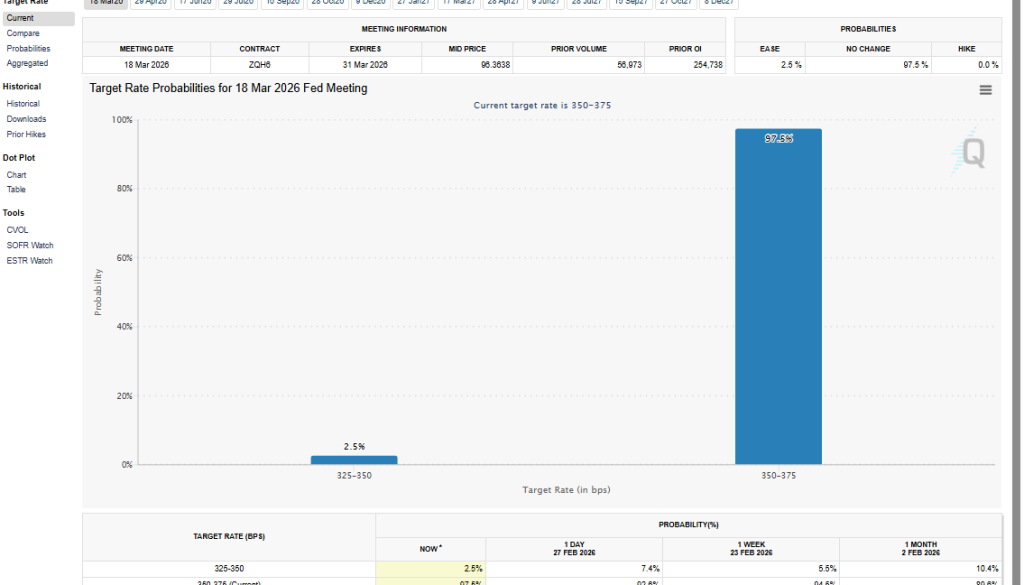
- The CME FedWatch Tool shows a 95.7% chance the Federal Reserve holds interest rates steady in March 2026.
- Higher inflation and rising oil prices from the Ras Tanura strike keep the Fed in a cautious stance.
- Bitcoin and traditional markets are seeing a pullback as the dream of an early spring rally fades.
Investors hoping for a spring rally just got a cold dose of reality. The latest data shows a 95.7% chance of no rate cut in March and the bull run is now on a clear hold. Most traders expected the Federal Reserve to lower borrowing costs soon. Instead, the Fed will likely keep the benchmark rate at the current 3.5% to 3.75% range. This shift happened after inflation numbers stayed higher than the official 2% target.
The market reaction was fast and painful for many. Bitcoin dropped below the $66,000 mark as traders moved toward safer assets. S&P 500 futures also fell by 1.4% following reports of a drone strike on a major Saudi oil refinery. These events combined to cool off the excitement that built up late last year. Everyone is now waiting for the official March 18 meeting to see the next move.
Why Did the March Rate Cut Odds Drop So Fast?
The Federal Reserve looks at many data points before changing the interest rate. Inflation is still sitting at 2.9% which is too high for the central bank to ignore. Energy prices are also a big concern right now. A recent attack on the Ras Tanura refinery in Saudi Arabia caused oil prices to jump. Higher energy costs usually lead to higher prices for everything else later.
Central bank officials remain divided on when to start easing their policy. Some want to wait for more proof that prices are staying down for good. Others worry that high rates might hurt the job market if they stay too long. For now, the “hold” sentiment is winning the debate. The goal is to avoid a new wave of inflation that could ruin the economy.
Why Is the 2% Inflation Target Still the Goal?
Energy costs play a major part in the inflation data the Fed tracks. When oil prices rise, the cost of shipping goods across the country also goes up. This makes it harder for the central bank to lower rates without risking a price spike.
Why Is the 2% Inflation Target Still the Goal?
The Fed uses 2% as a benchmark for a stable and healthy economy. Keeping prices near this level helps people plan their spending with more certainty. Since current numbers are still at 2.9%, the Fed feels they must keep rates high for a longer time.
How Are Crypto Markets Handling This Policy Shift?
Digital assets usually thrive when interest rates are low and cash is cheap. With no rate cut in March and the bull run on pause, many altcoins are losing ground. Bitcoin sellers are stepping in to take profits or move into less risky positions. This creates a lot of short-term volatility that can be hard to time correctly.
Traders are now looking at key support levels to see where the bottom might be. Some analysts point to the $107,000 zone as a place where buyers might show up again. If that level fails, the price could slip further toward $103,000 to find more demand. The current trend shows a lot of lower highs which signals that sellers have the upper hand right now.
Keeping your coins safe during these messy market swings is vital:
- Use a Ledger to store your assets away from exchange risks.
- Monitor live charts on Binance to watch for sudden liquidity sweeps.
- Set up a Trezor to secure long-term holdings for the next cycle.
- Review the 6 essential crypto rules to help stay calm during a crash.
Can Investors Still Find Good Deals During a Market Pause?
A market pause does not mean you should stop paying attention to your portfolio. It actually gives you time to research projects without the pressure of a fast rally. Many investors use this time to build their positions at lower prices. This is often called dollar-cost averaging. It helps you get a better average price over several months.
Some traders are shifting their focus to different types of tools to stay ahead:
- They look at KuCoin for new coins that might lead the next run.
- Many use Coinigy to track multiple charts and price alerts in one place.
- Others research the best crypto tax software to prepare for the end of the year.
What Should You Expect for the Rest of 2026?
While a March cut is off the table, the year is still far from over. Some analysts still predict one or two small cuts later this year. This could bring the benchmark rate closer to 3.25% by the end of December. That would be a positive signal for both stocks and cryptocurrencies in the long run.
The market needs to see inflation stay low before the Fed will act. Watching the jobs report and energy prices will be the main task for everyone. If the economy stays strong despite the high rates, a bull run could still return later. For now, the best move is to stay patient and keep a close eye on the data.
The path to the next high will likely be full of sudden moves:
- Expect more volatility as the Fed talks about future rate paths.
- Watch for a potential move toward $119,500 for Bitcoin to signal a new breakout.
- Check our crypto tools and platforms guide to find better ways to trade.
- Stay updated on new Nigeria crypto laws if you operate in that region.
The dream of an easy rally in March is gone. But this pause lets the market reset and find its true support levels. Smart investors are using this time to get organized. They are moving assets to cold storage and setting their plans for the next official shift. The bull run might be on hold, but it is not dead yet.
Frequently Asked Questions
Why did the odds for a March rate cut drop so significantly?
The probability fell to 4.3% or lower because inflation is still at 2.9%, which is higher than the Fed wants. Rising oil prices from geopolitical strikes also made the central bank more worried about price stability.
How is the current interest rate impact on Bitcoin?
High interest rates usually make investors more conservative and less likely to buy risky assets like Bitcoin. The news of no rate cut caused Bitcoin to slip below $66,000 as traders looked for safer places to park their cash.
When is the next Federal Reserve meeting scheduled?
The Federal Open Market Committee will meet on March 18, 2026, to discuss the next interest rate move. Most investors now expect the Fed to keep the current rates steady during this specific meeting.
Are there any predicted rate cuts later in 2026?
Some banks and analysts still believe the Fed might cut rates once or twice before the end of the year. These cuts could potentially bring the federal funds rate down to about 3.25% if inflation cools off.
What tools can help manage crypto during high volatility?
Investors can use hardware wallets like Ledger or Trezor to keep their private keys safe from online threats. Trading platforms like Binance and KuCoin provide the liquidity needed for quick moves, while Coinigy helps track complex market charts.