
Key Takeaways:
- The $1,300 mining cost turned Iran into a Bitcoin superpower through heavily subsidized electricity at $0.004 per kilowatt-hour
- Iranian miners achieve profit margins up to 8,000% while U.S. miners spend $75,000 to $102,000 per Bitcoin
- Iran accounts for 2% to 5% of global Bitcoin hash power with the government using crypto to evade sanctions
- The Islamic Revolutionary Guard Corps drove over $3 billion in crypto inflows during 2025 alone
The $1,300 mining cost turned Iran into a Bitcoin superpower that operated largely under the radar until 2025. While U.S. and European miners struggle with electricity costs exceeding $75,000 per Bitcoin, Iranian operations produce the same coin for approximately $1,320. This 50-fold to 80-fold profit margin stems from government-subsidized industrial electricity rates as low as $0.004 per kilowatt-hour. Iran legalized Bitcoin mining in 2019 as part of a “digital alchemy” strategy to convert domestic energy into digital assets that bypass international sanctions. The country now controls an estimated $7.78 billion crypto ecosystem with the Islamic Revolutionary Guard Corps deeply involved in operations.
Why Does Mining Cost So Little in Iran?
The $1,300 mining cost turned Iran into a Bitcoin superpower through extreme electricity subsidization that creates profitability impossible elsewhere. The Iranian government maintains industrial electricity rates around $0.004 per kilowatt-hour compared to $0.17 in the United States. This 44-fold difference in energy costs translates directly to mining profitability since electricity represents the largest operational expense.
State subsidies keep energy artificially cheap as part of Iran’s broader economic strategy. The government views cheap electricity as essential for industrial development and economic activity. Bitcoin mining emerged as an unexpected beneficiary of these long-standing energy policies designed for traditional manufacturing sectors.
Iran’s abundant natural gas reserves provide the raw fuel for electricity generation at minimal cost. The country ranks among the world’s top natural gas producers, giving it access to cheap energy inputs. Combined with government subsidies, this creates mining economics that no market-rate electricity region can match.
The cost breakdown reveals the full advantage Iranian miners enjoy. While a U.S. miner pays $75,000 to $102,000 in electricity and equipment costs per Bitcoin, Iranian operations spend roughly $1,320. At Bitcoin prices between $65,000 and $110,000, Iranian miners realize profits exceeding 5,000% to 8,000%.
The Underground Mining Economy
Government estimates suggest that up to 90% of Iranian Bitcoin mining occurs through unlicensed operations. Home miners and hidden facilities exploit even cheaper residential electricity rates that aren’t intended for industrial use. These underground operations avoid the requirement that licensed miners sell Bitcoin directly to the Central Bank of Iran.
Residential electricity rates in Iran cost even less than industrial rates, sometimes dropping below $0.003 per kilowatt-hour. Households running mining equipment in basements or converted spaces achieve profitability that surpasses even legal operations. The government struggles to detect and shut down these installations despite their strain on the power grid.
The scale of underground mining became apparent through electricity consumption patterns. Residential areas showed usage spikes consistent with industrial equipment rather than household appliances. Authorities conduct raids targeting suspected mining operations, but the profitability incentivizes continued underground activity.
How Does Iran Use Bitcoin to Bypass Sanctions?
The $1,300 mining cost turned Iran into a Bitcoin superpower specifically to circumvent U.S.-led international sanctions. The Central Bank of Iran requires licensed miners to sell their Bitcoin directly to the government rather than on open markets. This arrangement provides the regime with cryptocurrency it uses to pay for imports and settle international trade outside dollar-dominated banking systems.
Iran faces severe restrictions from the SWIFT international payment network that banks worldwide use for cross-border transactions. These sanctions effectively cut Iran from mainstream global finance. Bitcoin provides an alternative payment rail that no single government can shut down or control.
The government treats Bitcoin mining as strategic infrastructure comparable to oil exports. Licensed operations must register with authorities and follow strict rules about selling production to the state. In return, miners receive guaranteed access to subsidized electricity and legal protection for their operations.
Foreign trading partners willing to accept Bitcoin in exchange for goods can conduct business with Iran despite sanctions. Chinese and Russian companies particularly use cryptocurrency to settle trades involving Iranian oil, natural gas, and other exports. This sanctions evasion mechanism generates billions in value for the Iranian economy annually.
Military Control Through the IRGC
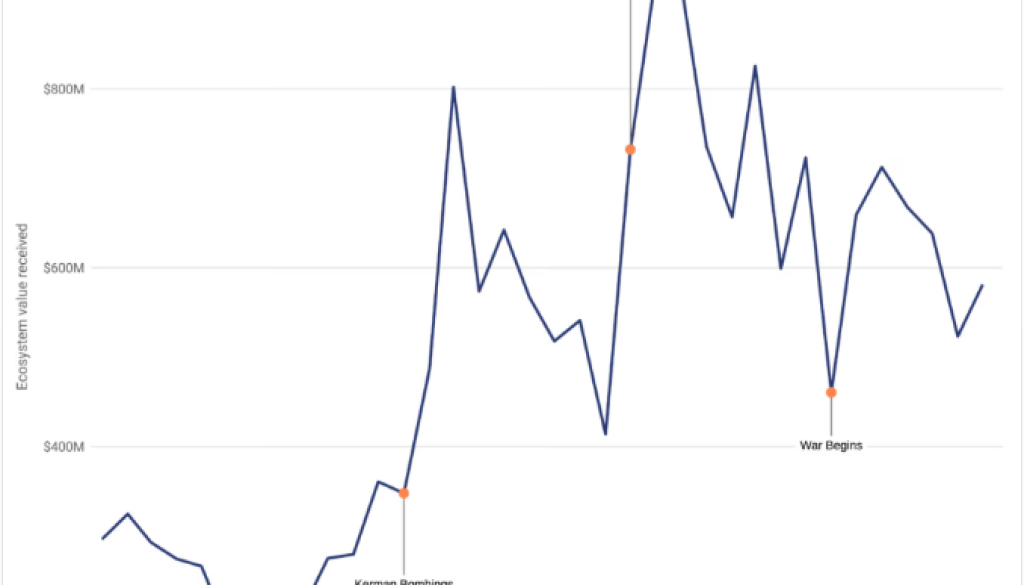
The Islamic Revolutionary Guard Corps controls significant portions of Iran’s Bitcoin mining infrastructure and cryptocurrency holdings. Wallets linked to the IRGC processed over $3 billion in crypto inflows during 2025 alone. This military involvement ensures the regime maintains tight control over the strategic resource.
IRGC-affiliated companies operate large-scale mining facilities using the latest ASIC hardware. These operations benefit from first access to subsidized electricity and prime locations near power plants. The military’s deep involvement signals how seriously the regime views Bitcoin’s role in economic survival.
The IRGC’s crypto activities extend beyond mining to include money laundering and sanctions evasion schemes. U.S. Treasury Department sanctions target specific Iranian crypto addresses and exchanges linked to Revolutionary Guard operations. However, Bitcoin’s pseudonymous nature makes enforcement extremely difficult compared to traditional banking sanctions.
What Challenges Does Iranian Mining Face?
Despite the $1,300 mining cost that turned Iran into a Bitcoin superpower, the industry faces severe infrastructure limitations. Iran’s aging power grid cannot reliably handle the massive electricity demand from mining operations. Frequent blackouts disrupt both mining and civilian power access, forcing periodic government crackdowns on the sector.
Summer 2025 saw particularly severe electricity shortages as air conditioning demand combined with mining load to overwhelm generation capacity. The government imposed temporary mining bans to stabilize the grid and prevent cascading failures. These periodic shutdowns reduce the effective profitability of Iranian operations despite low per-kilowatt costs.
Recent military strikes in early 2026 further damaged energy infrastructure. Power plants and transmission lines suffered damage that reduced overall electricity generation capacity. Mining operations dependent on stable power supplies face new uncertainty about long-term viability even with continued subsidies.
The government faces a difficult tradeoff between mining revenue and civilian electricity needs. During peak demand periods, mining operations consume power that residential areas desperately need. Public frustration with blackouts creates political pressure to permanently restrict or ban Bitcoin mining despite its foreign exchange value.
Competition and Profitability Pressures
As global Bitcoin hash rate increases, Iranian miners must continually upgrade equipment to remain competitive. The latest ASIC miners cost tens of thousands of dollars and face international sanctions that complicate imports. Older equipment becomes unprofitable even with cheap electricity as mining difficulty rises.
Bitcoin’s price volatility affects Iranian operations despite their cost advantages. When BTC dropped from $110,000 to $65,000 in early 2026, profit margins compressed even for low-cost miners. While still highly profitable, the reduced returns create uncertainty about long-term business viability.
International pressure specifically targeting Iranian mining operations continues mounting. The U.S. Treasury Department sanctions companies providing mining equipment to Iran. Financial institutions face penalties for processing payments related to Iranian cryptocurrency operations. These restrictions increase operational costs and complexity for Iranian miners.
How Does This Compare to Mining in Other Countries?
The stark contrast between the $1,300 mining cost turned Iran into a Bitcoin superpower and costs elsewhere reveals mining’s geographic dependencies. Italy represents the most expensive location at $306,550 per Bitcoin, making mining completely uneconomical. Austria, the Bahamas, and Switzerland also face costs exceeding $200,000 per coin.
United States mining operations spend approximately $75,000 to $102,000 per Bitcoin depending on location and electricity rates. Texas and other states with cheap energy offer some competitive advantages, but nothing approaching Iranian economics. European miners face even worse profitability due to high renewable energy costs and carbon regulations.
Other developing nations with subsidized electricity compete more directly with Iran. Ethiopia mines Bitcoin for approximately $1,990 per coin, while Sudan and Cuba achieve costs around $3,970. Libya produces Bitcoin for roughly $5,290 each. These countries use cryptocurrency mining to monetize excess or wasted energy capacity.
Russia represents Iran’s closest competitor among major mining nations with costs around $39,000 per Bitcoin. Russian operations benefit from cheap natural gas and cold climate that reduces cooling expenses. However, Russian miners still cannot match Iranian profitability due to higher industrial electricity rates and less government subsidization.
The Geographic Mining Divide
The global mining map divides sharply between profitable and unprofitable regions based purely on electricity costs. First-world nations with market-rate energy pricing cannot compete economically with subsidized developing nation operations. This geographic reality concentrates mining power in specific countries regardless of technical expertise.
The concentration of mining in countries like Iran, Russia, and China creates centralization concerns for Bitcoin’s decentralized ethos. These governments can potentially influence or control significant portions of the network’s hash power. The tradeoff between mining economics and decentralization remains unresolved.
Climate and renewable energy availability also factor into geographic mining patterns. Cold regions reduce cooling costs for mining equipment that generates tremendous heat. Countries with excess hydroelectric or geothermal power can offer cheap, clean electricity that improves mining economics while addressing environmental concerns.

What Does This Mean for Bitcoin’s Future?
The reality that the $1,300 mining cost turned Iran into a Bitcoin superpower raises questions about cryptocurrency’s role in geopolitics. Bitcoin’s design as censorship-resistant money means it inevitably serves sanctioned regimes and criminal enterprises alongside legitimate users. The network cannot discriminate between Iranian government miners and individual hobbyists.
U.S. policymakers face a dilemma where Bitcoin simultaneously represents financial innovation and a sanctions evasion tool. Attempts to restrict Iranian mining threaten Bitcoin’s core value proposition as permissionless money. Yet allowing hostile regimes to profit from mining undermines American foreign policy objectives.
The concentration of mining in countries with subsidized electricity also affects Bitcoin’s environmental footprint. Iranian mining relies heavily on natural gas power plants that emit greenhouse gases. The low electricity costs that enable profitability come partly from ignoring environmental externalities that other countries price into their energy markets.
Future regulatory frameworks may attempt to distinguish between different mining operations based on their funding sources or ultimate beneficiaries. However, Bitcoin’s pseudonymous nature makes such distinctions technically difficult to enforce. The fungibility of Bitcoin means coins mined by the IRGC become indistinguishable from those mined by Texas operations once they enter circulation.
Frequently Asked Questions
How much Bitcoin does Iran mine annually?
Iran accounts for approximately 2% to 5% of global Bitcoin hash power, translating to roughly 15,000 to 30,000 Bitcoin mined annually depending on network difficulty. The exact figures remain uncertain due to widespread unlicensed mining that government statistics don’t capture.
Can other countries replicate Iran’s mining advantage?
The $1,300 mining cost turned Iran into a Bitcoin superpower through specific conditions difficult to replicate. Heavy government electricity subsidies, abundant natural gas, and sanctions creating desperate need for foreign exchange combined uniquely. Other nations attempting similar strategies would need all three elements.
Is Iranian Bitcoin mining legal?
Bitcoin mining is legal in Iran with proper licensing from the government. However, up to 90% of mining occurs through unlicensed operations that violate regulations. Bitcoin itself is banned as currency for domestic transactions, but mining for export remains permitted.
How do sanctions affect Iranian mining operations?
International sanctions complicate equipment imports and financial transactions for Iranian miners. However, the domestic profitability from cheap electricity provides sufficient incentive to overcome these obstacles. Some miners smuggle equipment or use intermediaries to bypass restrictions.
What happens if Iran’s power grid collapses?
Prolonged power grid failures would devastate Iranian mining operations despite low electricity costs. The $1,300 mining cost advantage disappears if miners cannot reliably access power. Recent infrastructure damage from military strikes raises genuine concerns about long-term operational viability regardless of subsidies.