Key Takeaways:
- Bitcoin and Ethereum lead the pack in 2026 due to institutional demand and proven network utility
- Solana, XRP, and Chainlink show strong real-world adoption across payments, DeFi, and smart contract infrastructure
- The right crypto for you depends on your risk level, timeline, and how well you know the project
The best crypto to buy now is not determined by trending Twitter posts or weekend price spikes. In 2026, the assets worth buying share one thing: real usage. Strong networks, active developers, and growing institutional interest separate them from the noise.
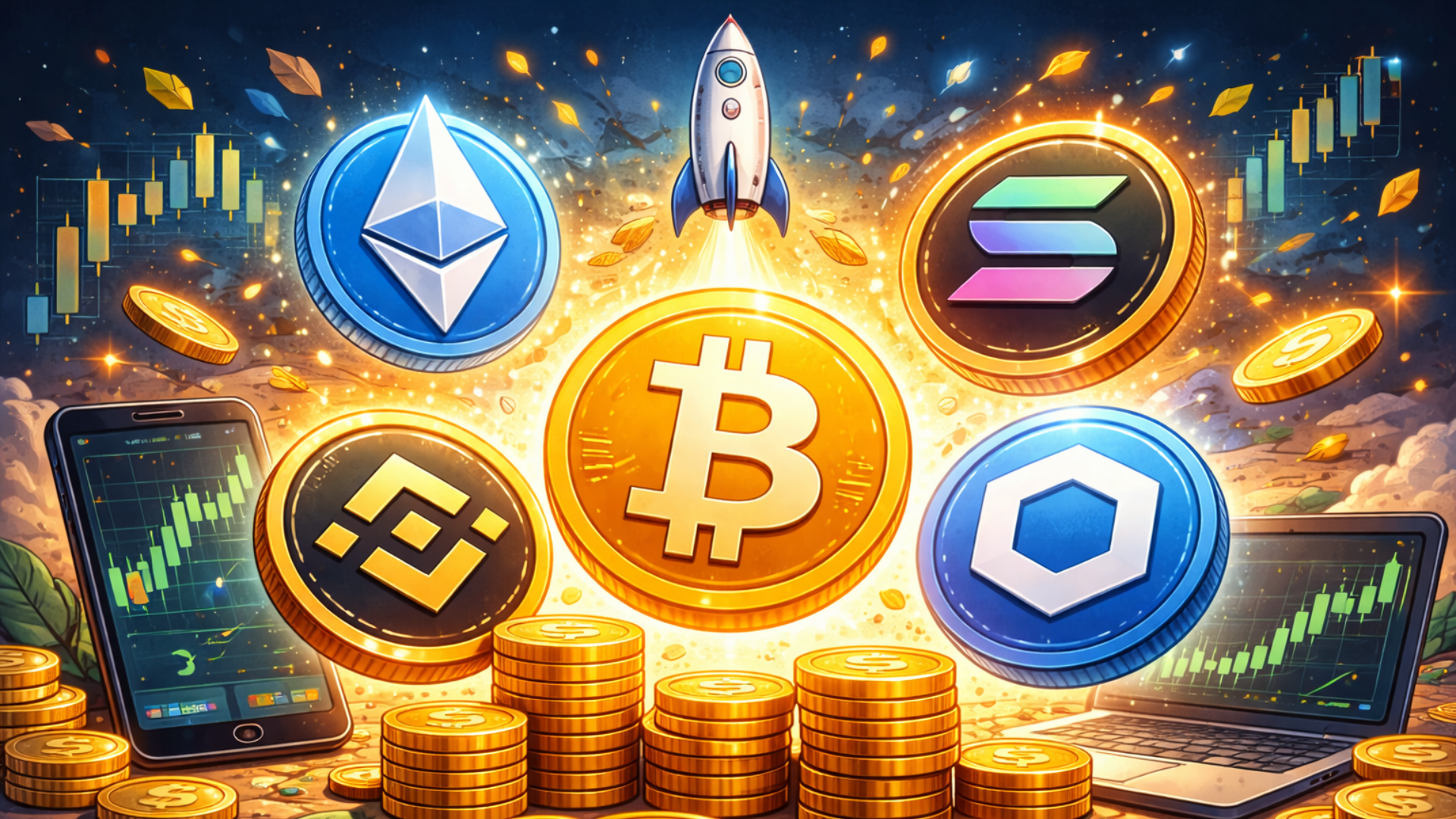
This guide focuses on five assets with solid fundamentals and clear reasons to hold them beyond speculation.
What Makes a Crypto Worth Buying Right Now
Before picking a coin, you need a filter. Price action alone will mislead you. The strongest assets show value through how they are actually being used.
Here are the five factors that separate quality crypto from hype:
- Network activity: Real users transacting daily on the blockchain
- Developer engagement: Active code commits and protocol updates
- Institutional adoption: Banks, funds, or governments integrating the asset
- Token utility: The token serves a function within its own ecosystem
- Liquidity: You can buy and sell it easily on major exchanges
These five filters cut through most of the noise. Every asset listed below scores well across all of them.
The Best Crypto to Buy Now in 2026
The picks below cover a range of use cases. Each one earns its spot based on fundamentals, not hype.
Bitcoin (BTC)
Bitcoin remains the most widely held crypto asset in the world. Spot Bitcoin ETFs now trade on US markets. Major banks offer Bitcoin custody to private clients. Institutional buying has accelerated since the 2024 halving, and the fixed supply cap of 21 million coins has not changed.
Tighter supply and growing demand create a straightforward equation. For any new investor or anyone building a conservative position, Bitcoin is the most logical starting point.
You can buy it on Coinbase, Binance, or Kraken. As your holdings grow, storing Bitcoin in a hardware wallet like Ledger or Trezor keeps your keys offline. Our guide on choosing the best Bitcoin wallet walks you through the options.
Ethereum (ETH)
Ethereum powers more decentralized applications than any other blockchain. DeFi protocols, tokenized real-world assets, and stablecoin infrastructure all run on it. Layer 2 networks like Arbitrum and Base have solved the high gas fee problem by processing transactions faster and cheaper.
ETH demand comes from actual usage. Every app built on Ethereum needs ETH to function. That built-in demand keeps the asset relevant regardless of market cycles.
If DeFi interests you, check out the top crypto wallets for decentralized finance before you start.
Solana (SOL)
Solana processes thousands of transactions per second at low cost. That speed has made it the preferred chain for consumer apps, fintech integrations, and high-frequency on-chain activity in 2026.
Major payment processors have integrated Solana-based stablecoin transfers into live products. Developer activity remains consistently high. SOL is available on Binance, Kraken, and Coinbase. Our top Solana-based wallets guide covers storage options.
XRP (XRP)
XRP focuses on institutional cross-border payments. Ripple has active partnerships with banks across Asia, the Middle East, and Latin America. The regulatory picture in the US cleared significantly in 2025, which reopened institutional buying that had stalled during years of legal uncertainty.
XRP trades with strong liquidity on Kraken and Coinbase. Few other assets sit as close to live banking infrastructure.
Chainlink (LINK)
Chainlink is an oracle network. It feeds real-world data into smart contracts, which means it serves a permanent technical role across nearly every blockchain application. Price feeds, weather data, and sports results all flow through oracle networks.
Banks tokenizing real-world assets need this infrastructure. LINK fills that gap with no comparable competitor at scale. It is available on all major exchanges including Binance and Coinbase.
How to Store and Track What You Buy
Buying crypto is only half the work. Keeping it secure and organized is equally important. Hardware wallets like Ledger and Trezor protect your assets from exchange-side risk. Our wallet security guide covers the basics clearly.
For tracking multiple assets, a good portfolio tracker saves time and prevents missed signals. See the top crypto portfolio trackers for 2026 for tested options.
Frequently Asked Questions
Is Bitcoin still worth buying in 2026?
Yes. Bitcoin has a fixed supply, growing institutional demand, and the deepest liquidity of any crypto asset. The 2024 halving reduced new supply while ETF inflows increased buying pressure from large funds.
Which crypto has the most real-world use in 2026?
Ethereum and XRP both see heavy real-world usage. Ethereum powers DeFi and tokenized asset infrastructure. XRP moves money between financial institutions across multiple continents daily.
Where should a first-time buyer start?
Coinbase is the most straightforward option for new buyers in the US. It has strong regulatory standing, clear fees, and a simple interface that does not overwhelm beginners.
How much should someone invest in crypto for the first time?
Start with an amount you can afford to lose entirely. Most advisors suggest keeping crypto to a small percentage of your total portfolio until you understand how each asset behaves.
Do you need a hardware wallet right away?
Not immediately, but once your holdings grow, moving assets off exchanges becomes important. A Ledger or Trezor device keeps your private keys offline and away from exchange risk.