Disclaimer: Crypto airdrops are promotional events where tokens are distributed to existing holders of a cryptocurrency or to individuals who meet certain criteria. While airdrops can be a way to acquire tokens at no cost, they also involve risks. There’s no guarantee that the airdropped tokens will increase in value, and there may be associated fees or requirements. Additionally, airdrops can be susceptible to scams and phishing attempts. Always exercise caution and verify the legitimacy of any airdrop opportunity before participating.
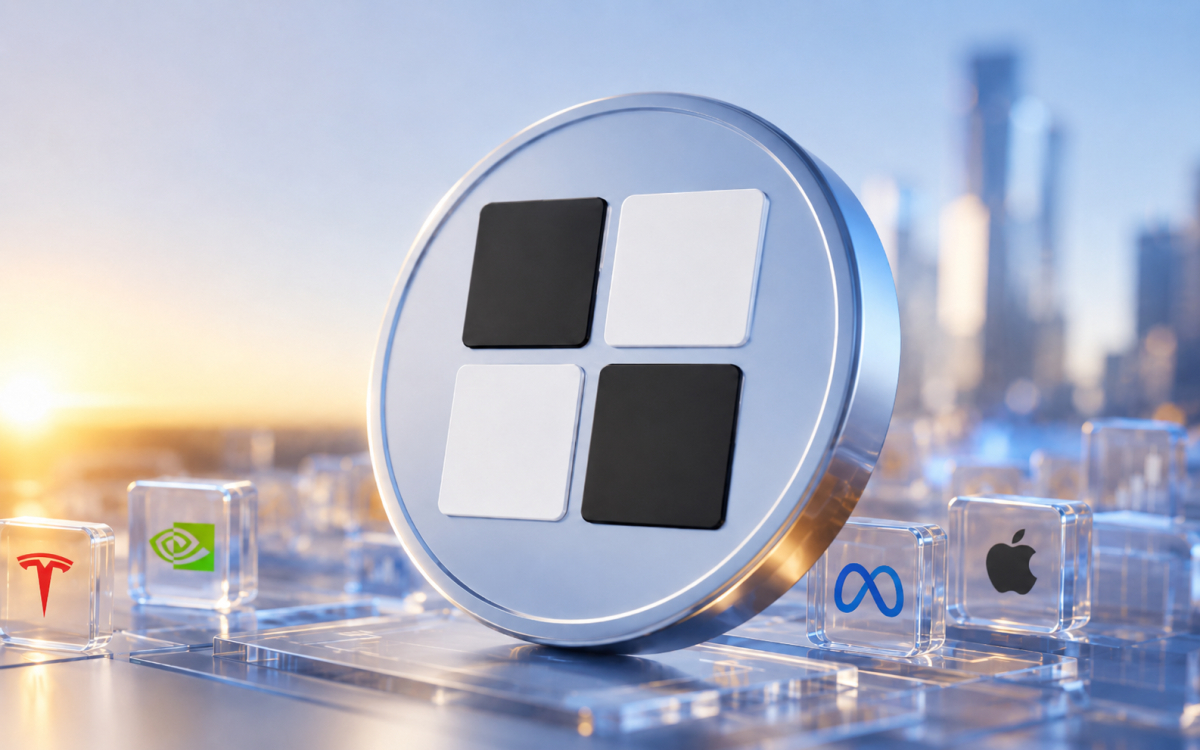
Index or Index Finance is a protocol on Robinhood Chain that converts trading activity into tokenized US stocks, distributed automatically to holders of its native $INDEX token every 15 minutes.
Status (October 2026): $INDEX has been live on Robinhood Chain since July 2026, and there is no airdrop or task campaign. Its stock payouts were still running in early September 2026: a 3% fee on $INDEX trades funds a basket of 18 tokenized stocks, sent to eligible wallets about every 15 minutes with no claim step. The project’s dashboard then showed about $1.6 million in stocks distributed. Sources: OurCryptoTalk, Cryptoast.
Token confirmed: Yes, $INDEX is already live and tradeable; this is not a pre-launch airdrop campaign
Reward mechanism: A 3% tax on trades funds automatic, proportional tokenized US stock distributions to $INDEX holders every 15 minutes, with no claims required
Chain: Robinhood Chain
What The Index Has Built
Index describes its core mechanism as a flywheel. Fees from its connected trading venue, rwa.wtf, split 75% toward treasury purchases of tokenized stocks for distribution to holders and 25% toward deepening liquidity on the venue that generates those fees. A newer feature called Zap lets holders automatically compound distributed stocks back into $INDEX rather than managing that decision manually.
According to the project’s own account, nearly $1,000,000 in tokenized stocks has been distributed to holders since launch, including a single 15-minute distribution of more than $155,000.
The project says it has become one of the top three stock purchasers on Robinhood Chain by volume, in a market where the chain’s entire tokenized stock base measures in the low eight figures. The project reports that figure grew from roughly $12 million to $13 million in Robinhood Chain’s first week to just under $15 million by July 17.
Recent technical updates named by the project include an integration with Rialto to optimize swap fees, use of Alchemy’s API for data streaming, a v4 hook contract listed on GMGN, Axiom, TradingTerminal, Fomo, and Dexscreener, a whitelisted Uniswap hook for trade routing, integration with Robinhood’s Lighter instance, and RWA wallet infrastructure powered by Turnkey. The project also says its stock tokens are structured as standard ERC-20 tokens using Chainlink price feeds, following a corporate-action standard intended to handle dividends and stock splits.
The project has been candid that its share of Robinhood Chain’s activity remains small relative to memecoin trading on the same chain, and has framed itself as one attempt at converting speculative trading activity into durable, productive on-chain activity rather than a finished solution.
Am I Eligible for The Index Rewards?
You are eligible for Index rewards if your wallet holds $INDEX: as of July 2026, stock reward distributions are automatic and proportional to how much $INDEX a wallet holds at each 15-minute distribution interval. There is no waitlist, task list, staking or manual claiming, and selling part of a balance can reduce future distributions.
If you are tracking other campaigns other than Index, our airdrops page covers the active campaigns worth watching right now.
How to Participate in the Index Airdrop
Index has no airdrop tasks: taking part means holding $INDEX, a token live on Robinhood Chain since July 2026. To get it, users set up an EVM wallet such as Rabby with Robinhood Mainnet added, bridge ETH through official routes and swap it on Index’s swap page, where trades carry a 3% fee that funds the stock rewards.
- Set up a wallet compatible with Robinhood Chain, such as an EVM wallet like Rabby, and add Robinhood Mainnet as a network.
- Bridge ETH to Robinhood Chain through official bridge routes only, verifying the bridge address directly through official channels before sending funds.
- Go to Index’s official swap page, connect your wallet, and check the live quote, slippage, and price impact before swapping ETH for $INDEX. Trades carry a 3% fee that funds the reward mechanism.
- Hold $INDEX in your wallet to become eligible for the automatic, proportional stock reward distributions issued every 15 minutes.
- Consider whether to use the Zap feature to automatically compound distributed stocks back into $INDEX, rather than managing that decision manually each cycle.
Potential Risks in Participating in Index
The project has published detailed technical and metric information about itself, but real risks remain worth understanding before committing funds.
The Project Is Undoxxed and Unaudited
The team behind Index remains undoxxed, meaning no individual members or legal entity have been publicly identified, and no independent smart contract audit has surfaced. The project does maintain an active, detailed public account describing specific integrations and metrics, which is a meaningfully different situation from a project with no public presence at all. Still, being active and communicative on X is not the same as being doxxed or audited, and readers should weigh that distinction directly rather than assume one implies the other.
The Reward Mechanism Depends on Ongoing Trading Volume
Stock reward distributions are funded by trading fees, not by any fixed or guaranteed source of income. If trading volume in $INDEX or its connected venue slows down, distributions can shrink accordingly. Treat any current or past distribution figures as a snapshot of recent activity, not a promised or sustainable yield going forward.
Treasury-Controlled Funds Carry Concentration Risk
The protocol’s treasury collects fees and uses them to purchase tokenized stocks that are then distributed to holders. This means a single treasury holds and directs pooled, fee-derived funds on behalf of all holders. Any failure or issue at the treasury level could affect the entire reward system simultaneously, regardless of how detailed the project’s public communications are.
Leveraged RWA Trading Adds Real Capital Risk
Rwa.wtf, the project’s connected trading venue, offers leveraged RWA trading up to 50x. Leveraged positions can produce losses beyond an initial deposit, and this risk exists independently of $INDEX’s own reward mechanism.
Readers new to leveraged trading specifically should review our guide on leverage trading in crypto before using any platform offering leveraged RWA exposure.
Newer Chain and Bridge Infrastructure Carry Their Own Risks
Robinhood Chain launched only weeks ago, and bridging funds onto any new chain carries smart contract and bridge-specific risk separate from any individual token or protocol built on it. Only use official bridge routes, and verify addresses directly through official channels.
Frequently Asked Questions
Need a refresher? Here are the questions most readers ask about The Index before getting started.
Has Index’s team or smart contracts been verified?
No individual team members, legal entity, or independent smart contract audit have been identified in the sources reviewed for this guide. However, the project maintains an active public account on X, though it still isn’t the same as verified identity or a completed audit.
How does Index distribute stock rewards?
Holding $INDEX in a wallet makes that wallet eligible for automatic, proportional distributions of tokenized US stocks, issued every 15 minutes with no claim required. Distributions are funded by a 3% fee on trades, split between treasury stock purchases and liquidity for the project’s connected trading venue.
How much has Index distributed so far?
According to the project’s article post on X, nearly $1,000,000 in tokenized stocks has been distributed to holders since launch, including a single 15-minute distribution of more than $155,000.
What is Zap and how does it relate to $INDEX?
Zap is a feature that lets holders automatically compound stock rewards they have received back into $INDEX, rather than managing that decision manually after each distribution cycle.
Is $INDEX the same as an airdrop?
Not in the traditional sense. $INDEX is already a live, tradeable token rather than a future reward tied to a waitlist or task-based campaign. The ongoing reward is the proportional stock distribution to holders, not a one-time token airdrop.