Key Takeaways:
- Binance charges just 0.1% trading fees plus $1 for TRC-20 USDT withdrawals, making it the cheapest option for transfers above $500
- Strike uses the Lightning Network with zero fees for Bitcoin payments, delivering instant transfers to bank accounts in 10+ countries
- Wise integrated USDC settlements that cut international transfer costs to under 0.5% while completing transactions in minutes instead of days
Sending money across borders shouldn’t cost you an arm and a leg. Traditional banks and money transfer services charge anywhere from $30 to $50 per transaction. They pile on hidden exchange rate markups that eat another 3-5% of your transfer. Your family ends up receiving significantly less than what you sent.
Companies offer crypto remittance have completely changed this game. They use blockchain networks to move money in minutes instead of days. Fees drop to under 1% in most cases. The best platforms charge even less when you pick the right cryptocurrency and network combination.
Global remittances hit $630 billion annually according to World Bank data. Families depend on this money for rent, food, medical bills, and school fees. Every dollar saved on fees puts more money where it belongs, in their hands.
What Makes Crypto Remittance Companies Cheaper Than Banks?
Crypto companies bypass the entire traditional banking infrastructure that creates high costs. Banks move money through correspondent banking networks like SWIFT. Each intermediary bank takes a cut of your transfer. Currency conversion happens multiple times with markups at each step.
Blockchain technology eliminates these middlemen completely from the equation. You convert your dollars to cryptocurrency at one end. The recipient converts cryptocurrency to their local currency at the other end. Only two conversions happen instead of four or five through traditional channels.
Network fees replace service charges in the crypto model entirely. You pay to process the blockchain transaction instead of bank service fees. TRON charges under $1 per transfer regardless of amount. Polygon costs just pennies per transaction for stablecoin transfers.
Competition between platforms keeps prices down across the industry. Traditional remittance services operate in consolidated markets with limited options. Crypto platforms compete globally with transparent pricing displayed upfront. This transparency prevents the hidden fee games banks play regularly.
Which Platform Offers the Absolute Lowest Fees?
Binance leads the pack for overall cost efficiency on most transfer sizes. The platform charges 0.1% for trading cryptocurrencies against major currencies. Withdrawing USDT on the TRON network costs just $1 flat fee.
Calculate the total cost for sending $1,000 through Binance. You pay $1 to buy USDT, $1 to withdraw, and maybe $2.50 for your recipient to convert locally. Total fees hit around $4.50 or 0.45% of the transfer amount.
Strike takes a different approach by focusing exclusively on Bitcoin Lightning Network. The platform charges 0.99% when you buy Bitcoin initially. Lightning Network payments themselves cost absolutely nothing in fees. Money arrives in recipient bank accounts within minutes across supported countries.
Strike works brilliantly for frequent smaller transfers under $500 each time. The 0.99% fee beats banks by miles while delivering instant settlement. Supported countries include Mexico, Philippines, Kenya, and several others with strong remittance demand.
Wise recently added USDC support for international transfers through partnerships. The fintech company now settles certain currency routes using stablecoin rails. Fees dropped to 0.43% on these routes from previous rates above 1%. Transfer speeds improved from hours to minutes in most cases.
Kraken charges 0.16% for stablecoin trades with no deposit fees. Withdrawal fees vary by network but TRON USDT costs under $1. The platform serves users in fewer countries than Binance but offers solid rates where available.
How Do P2P Platforms Compare on Pricing?
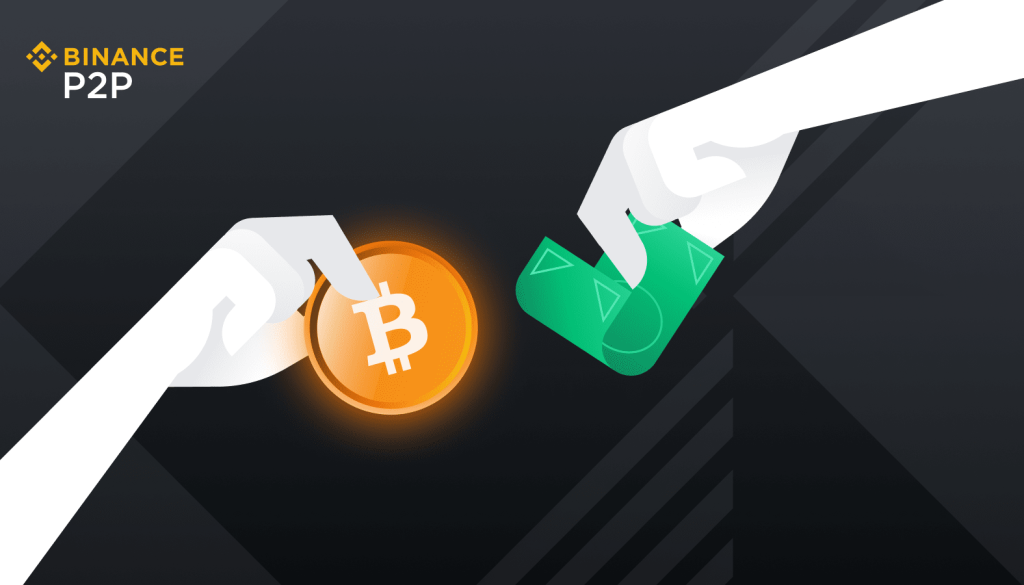
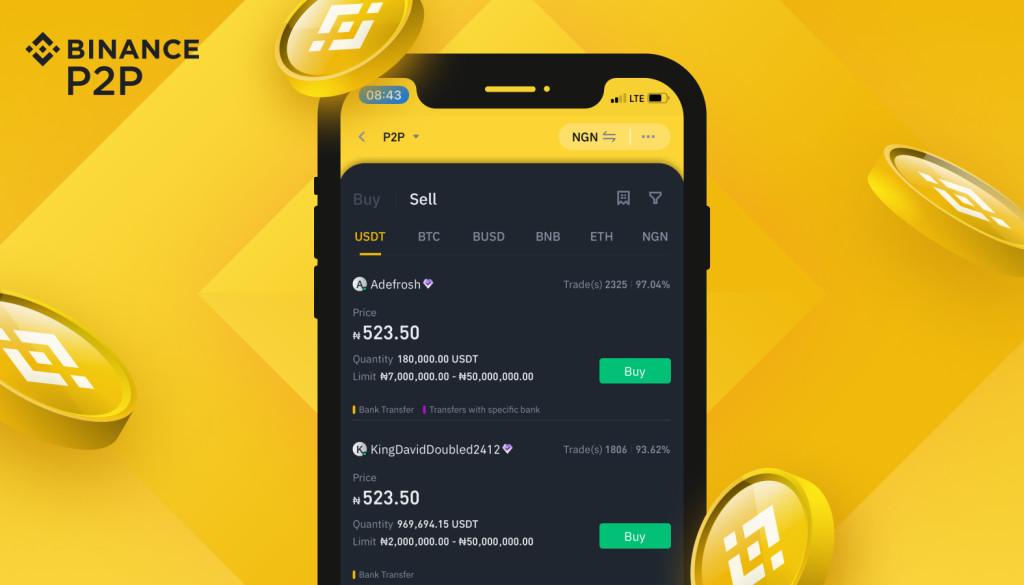
Peer-to-peer platforms connect buyers and sellers directly without intermediaries. Binance P2P dominates this space globally with active markets in 100+ countries. The platform charges zero fees for P2P trades conducted on their system.
Sellers build their profit margins into the quoted prices they offer. Competition keeps these spreads reasonable at 0.5-1.5% above market rates typically. You get better prices during high activity periods with more sellers competing.
P2P works especially well in regions with limited banking infrastructure. Nigeria, Kenya, and Pakistan all have thriving P2P markets for crypto remittances. Users trade directly in local currency using whatever payment method works.
NoOnes (formerly Paxful) operates P2P markets with similar fee structures to Binance. The platform charges 1% to sellers only, keeping it free for buyers. Liquidity runs lower than Binance in most markets though. This sometimes means worse exchange rates that offset the fee savings.
Which Cryptocurrencies Keep Transaction Costs Lowest?
Stablecoins like USDT and USDC eliminate price volatility that plagues Bitcoin transfers. They maintain a 1:1 peg with the US dollar constantly. Your $500 transfer always delivers $500 in value to recipients.
Network choice matters enormously for final transaction costs on stablecoins. Ethereum charges $5-20 per transfer depending on network congestion levels. TRON runs the same transfer for under $1 every single time. Polygon costs just $0.01-0.10 for USDC transfers with lightning-fast settlement.
Bitcoin works well through the Lightning Network for instant settlement. Regular Bitcoin transfers cost $2-10 based on network traffic currently. Lightning payments complete in seconds with zero network fees attached. Strike and other Lightning-focused services excel at Bitcoin remittances specifically.
XRP and Stellar were built specifically for cross-border payments originally. Both charge fractions of a penny per transaction regardless of amount. Adoption remains lower than USDT though, making local conversion harder in many countries.
What Hidden Costs Should You Watch For?
Exchange rate markups hide in plain sight on many platforms. Companies display one rate while executing at another slightly worse one. This spread can cost 1-3% without appearing as a direct fee.
Always check the actual exchange rate against mid-market rates on Google. Calculate the percentage difference to understand true markup costs. Platforms like Binance show real-time market rates with minimal spreads under 0.5%.
Withdrawal fees to bank accounts vary wildly between platforms and countries. Some charge nothing while others take 1-2% of your withdrawal amount. Factor these costs into total calculations when comparing remittance options.
Recipient conversion fees matter just as much as sending costs do. Your family pays to convert cryptocurrency to local currency on their end. P2P platforms typically offer better rates than local exchanges in developing markets. Compare both options before choosing the conversion method.
Payment method fees hit during the initial purchase of cryptocurrency. Credit cards add 3-4% to transactions across most platforms universally. Bank transfers cost nothing but take longer to process completely. Understanding wallet security helps protect funds during the entire transfer process.
How Do Costs Compare Across Different Transfer Amounts?
Small transfers under $100 face proportionally higher costs from fixed fees. A $1 network fee represents 1% of a $100 transfer. That same dollar only costs 0.1% on a $1,000 transfer instead.
Binance works best for transfers above $200 where the 0.1% trading fee matters more than fixed costs. Strike excels for smaller frequent payments under $500 each time sent. The 0.99% fee structure scales linearly regardless of transfer size.
Large transfers above $5,000 benefit from platforms with deep liquidity like Binance and Kraken. Better liquidity means tighter spreads on large trades. You save hundreds on big transfers through reduced slippage.
Crypto remittance companies deliver massive savings over traditional banking channels. Fees drop from 3-8% to under 1% in most cases. Speed improves from days to minutes for urgent transfers. More money reaches your family when you pick the right platform for your situation.