Key Takeaways:
- DePIN ecosystem map in 2026 shows $8.2 billion market cap supporting 41.8 million devices across compute, storage, and wireless networks globally
- Digital Resource Networks like Render and Akash offer 65-80% cost savings versus AWS for GPU compute at $0.40-0.60 hourly rates
- Physical Resource Networks including Helium operate 987,000 active hotspots with hardware costs from $175-418 for entry-level participation
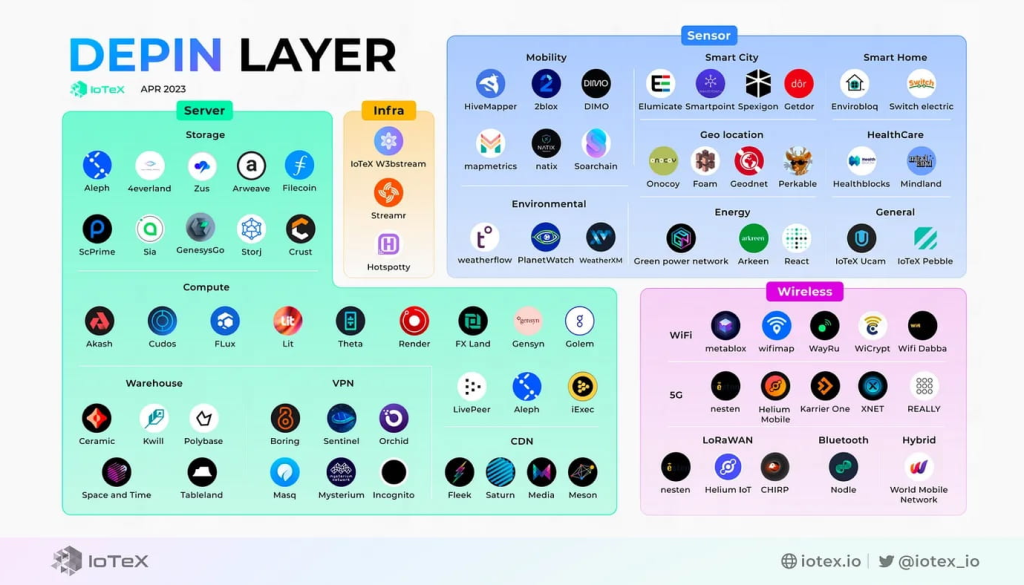
The DePIN ecosystem map in 2026 reveals a mature infrastructure bridging blockchain incentives with real-world hardware. Decentralized Physical Infrastructure Networks now support 41.8 million devices globally. Total market capitalization sits at $8.2 billion across compute, storage, wireless, and energy sectors. Two main categories define the space: Physical Resource Networks requiring location-specific hardware and Digital Resource Networks using fungible compute resources anywhere.
What Are Digital Resource Networks in the DePIN Ecosystem Map?
Digital Resource Networks focus on decentralized cloud services where hardware location matters less than performance. These networks compete directly with centralized providers like AWS and Google Cloud. Cost advantages range from 65-80% for equivalent services.
Which Compute Networks Lead the DePIN Ecosystem Map?
GPU and CPU marketplaces dominate compute infrastructure currently. Render Network leads decentralized GPU rendering for CGI, AI, and immersive media applications. The network trades at $1.39 with $722.16 million market cap. Professional rendering costs 70-80% less than AWS equivalent services.
Akash Network operates an open-source decentralized cloud compute marketplace. Current price sits at $0.31 with $88.69 million market cap. Enterprise setups use Intel Xeon Gold clusters with 512GB+ RAM. Consumer-grade operators earn $0.40-0.60 hourly using NVIDIA RTX 4090 GPUs.
io.net provides massive decentralized GPU clusters specifically for AI and ML training. The platform aggregates distributed computing power for model training. This competes against centralized options at fraction of costs.
Bittensor dominates AI/ML networking with $1.66 billion market cap. TAO token trades at $173.08 currently. The network incentivizes machine learning model development. Understanding how DeFi platforms work helps grasp DePIN tokenomics.
How Do Storage Networks Fit the DePIN Ecosystem Map?
Decentralized data hosting solves centralized cloud storage problems. Filecoin leads storage networks incentivizing global data provider pools. Market cap reaches $669.36 million with $0.89 token price. Total supply exceeds 1.9 billion FIL tokens.
Professional Filecoin mining rigs cost upwards of $30,000 currently. Specialized ASIC miners like Bitmain Antminer X9 generate roughly $17.55 daily profit. These hardware requirements create entry barriers for casual participants.
Arweave focuses on “permaweb” solutions ensuring permanent data storage. The network charges one-time fees for perpetual storage. This contrasts with subscription models from competitors. Archive use cases particularly benefit from this approach.
What Physical Resource Networks Appear on the DePIN Ecosystem Map?
Physical Resource Networks require hardware deployed at specific geographic locations. Services depend on physical presence rather than pure computing power. Wireless connectivity and mapping dominate this category.
How Does Helium Wireless Infrastructure Work?
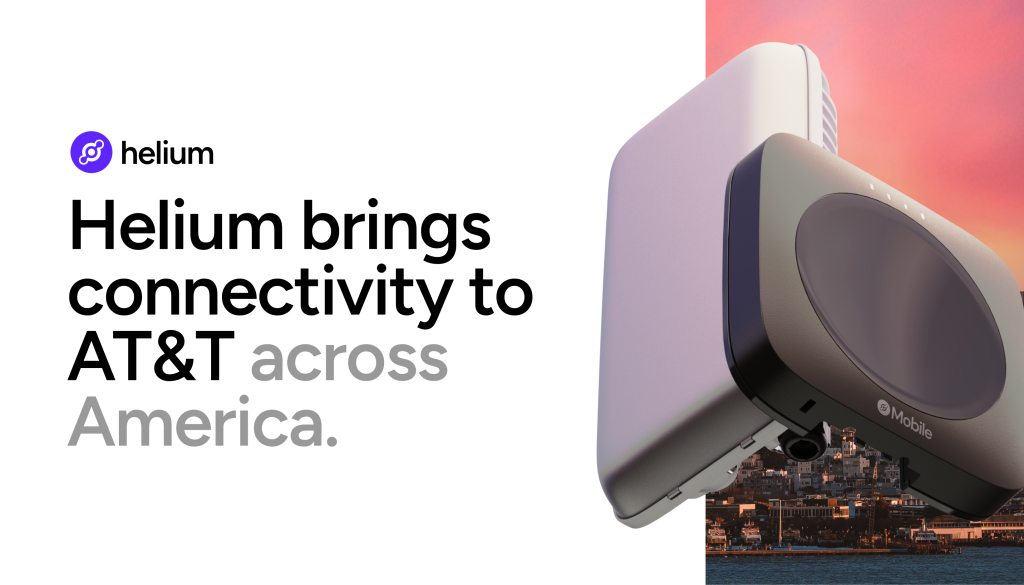
Helium operates global IoT and 5G mobile networks through community hotspots. The network supports 987,000 active hotspots worldwide currently. HNT token trades at $1.52 with $284.06 million market cap.
Hardware costs vary significantly by network type and condition. New 5G hotspots range from $349 to $418 for latest models. Pre-owned “Grade A” units cost as low as $175. IoT/LoRaWAN hotspots run $179 to $398 depending on specifications.
Operators earn rewards for providing network coverage in their areas. Urban locations with high data usage generate better returns. Rural coverage fills critical gaps but earns less. The network creates genuine utility beyond speculation.
What Role Does Hivemapper Play in Mapping?
Hivemapper builds decentralized mapping using 4K dashcams globally. The network provides fresher alternatives to legacy map services. Volkswagen’s ADMT division plans scaling to thousands of robotaxis by late 2026.
The Hivemapper Bee dashcam costs $500-600 upfront currently. A new $19 monthly subscription launched late 2025 subsidizes hardware. This subscription model lowers entry barriers significantly for new mappers.
Drivers earn tokens for collecting street-level imagery. Fresh map data updates faster than traditional services. Commercial clients pay for accessing current information. This creates real revenue beyond token speculation.
Which Energy Networks Contribute to the DePIN Ecosystem Map?
Daylight incentivizes individuals contributing to decentralized energy grids. The network coordinates distributed solar and battery systems. Participants earn rewards for grid stabilization services.
WeatherXM operates community-powered weather station networks. Hyper-local environmental data surpasses centralized weather services. Station operators earn tokens for providing accurate measurements. Agriculture and logistics sectors purchase granular weather data.
What Infrastructure Supports the DePIN Ecosystem Map?
Several blockchain platforms provide technical backbone for DePIN projects. These modular infrastructures enable faster deployment of new networks. Specialized features address real-world data integration challenges.
IoTeX operates as modular L1 blockchain designed specifically for DePIN. W3bstream middleware connects real-world data to blockchain. This solves major technical hurdles for hardware-based networks. Many newer projects build on IoTeX foundation.
peaq provides Layer-1 blockchain optimized for “Machine Economy” applications. The platform handles machine-to-machine transactions efficiently. IoT devices can transact without human intervention. This enables autonomous infrastructure operation.
Solana serves as settlement layer for major projects including Helium, Render, and Hivemapper. High throughput and low fees suit DePIN transaction patterns. The network processes millions of micro-transactions daily. Understanding Solana wallets helps participants interact with these networks.
How Have DePIN Ecosystem Map Finances Evolved?
The sector shifted toward “fundamentals-first” era in 2026. Speculation peaked in 2024-2025 before market corrections. Current valuations reflect actual network usage and revenue.
What Do Current Market Caps Tell Us?
Total DePIN sector market cap sits at approximately $8.2 billion. This represents decrease from speculative peaks previously. But device count reached record 41.8 million globally. Network scale continues growing despite lower valuations.
Leading projects show concentrated market dominance currently:
- Bittensor (TAO): $1.66B market cap at $173.08 price
- Render (RENDER): $722.16M at $1.39 per token
- Filecoin (FIL): $669.36M at $0.89 per token
- Helium (HNT): $284.06M at $1.52 per token
- Aethir (ATH): $92.68M with 30,000+ distributed GPUs
- Akash (AKT): $88.69M at $0.31 per token
These valuations reflect genuine utility and adoption metrics. Pure speculation tokens largely washed out during corrections. Projects with real users and revenue maintained valuations.
How Much Institutional Investment Flows In?
Between 2024 and mid-2025, over $744 million funded 165+ DePIN startups. Venture capital shows strong long-term conviction. This funding supports infrastructure buildout and hardware subsidies.
Enterprise adoption drives serious investment interest. Volkswagen integration with Hivemapper signals corporate acceptance. Major companies explore DePIN data sources and services. This enterprise revenue stream matters more than retail speculation.
What Hardware Costs Face New DePIN Participants?
Entry costs vary dramatically across different network types. Some networks remain expensive while others lowered barriers. Subscription models increasingly subsidize upfront hardware investments.
How Much Do Wireless Network Operators Spend?
Helium 5G hotspots cost $349-418 for new units. Pre-owned “Grade A” units available for $175 significantly reduce entry. IoT/LoRaWAN hotspots range $179-398 depending on features. Indoor units cost less than weatherproof outdoor models.
Return on investment depends heavily on location factors. High-traffic urban areas generate better earnings consistently. Rural coverage areas earn less but face minimal competition. Network saturation in popular cities reduces individual earnings.
What Do Compute and Storage Operators Need?
Consumer-grade GPU operators use high-end cards like NVIDIA RTX 4090. These GPUs earn $0.40-0.60 hourly on networks like Render. Professional setups require significant upfront investment however.
Enterprise-grade operations need Intel Xeon Gold clusters with 512GB+ RAM. These professional rigs cost tens of thousands. But enterprise clients pay premium rates for guaranteed performance.
Filecoin storage mining requires specialized rigs upwards of $30,000. ASIC miners like Bitmain Antminer X9 generate $17.55 daily profit. Hardware costs create natural barrier to casual participation.
How Do Mapping Networks Reduce Entry Costs?
Hivemapper Bee dashcams cost $500-600 upfront traditionally. The new $19 monthly subscription launched 2025 changes economics. Hardware costs spread over time instead of large upfront payment.
This subscription model accelerates network growth significantly. More participants join without capital requirements. Hivemapper subsidizes hardware to expand coverage faster. The strategy prioritizes network effects over short-term profits.
Where Is the DePIN Ecosystem Map Heading?
Several clear trends shape DePIN evolution going forward. Cost efficiency advantages drive enterprise adoption. Institutional funding supports infrastructure expansion. Real utility replaces pure speculation gradually.
DePIN compute resources now cost 65-80% less than AWS equivalents. NVIDIA H100 and A100 chips rent much cheaper through networks. This price advantage attracts AI companies and researchers. Enterprise clients prioritize cost savings over centralized convenience.
Network device counts keep growing despite market cap declines. The 41.8 million devices globally represent real infrastructure. This contrasts with pure software protocols lacking physical presence. Hardware deployment indicates genuine ecosystem development.
Subscription models lower participation barriers across categories. Hivemapper’s $19 monthly plan exemplifies this trend. Other networks will likely adopt similar approaches. Lower barriers accelerate network effects and coverage.
Learning about blockchain consulting services helps businesses integrate DePIN infrastructure. Enterprise adoption requires guidance navigating decentralized networks.
Frequently Asked Questions
What is a DePIN ecosystem map in 2026?
A DePIN ecosystem map in 2026 shows decentralized physical infrastructure networks supporting 41.8 million devices globally. The map categorizes networks into Digital Resource Networks (compute and storage) and Physical Resource Networks (wireless, mapping, energy) with $8.2 billion total market capitalization.
Which DePIN projects lead the ecosystem map?
Bittensor leads with $1.66B market cap, followed by Render at $722M for GPU rendering and Filecoin at $669M for storage. Helium operates 987,000 wireless hotspots with $284M market cap, while Akash provides decentralized cloud compute at $88.69M valuation.
How much does DePIN hardware cost to start?
DePIN hardware costs range from $175 for pre-owned Helium IoT hotspots to $30,000+ for professional Filecoin storage rigs. Consumer GPU operators using NVIDIA RTX 4090 earn $0.40-0.60 hourly, while Hivemapper offers $19 monthly subscription for mapping hardware.
Do DePIN networks actually save money versus AWS?
Yes, DePIN compute networks like Render and Akash offer 65-80% cost savings compared to AWS for equivalent GPU resources. High-end AI chips like NVIDIA H100 and A100 rent much cheaper through decentralized networks, attracting enterprise clients seeking cost efficiency.
How many devices support the DePIN ecosystem?
The DePIN ecosystem supports 41.8 million devices globally as of February 2026. This includes 987,000 Helium wireless hotspots, 30,000+ Aethir distributed GPUs, thousands of Hivemapper dashcams, and numerous storage nodes across Filecoin and Arweave networks.