Key Takeaways
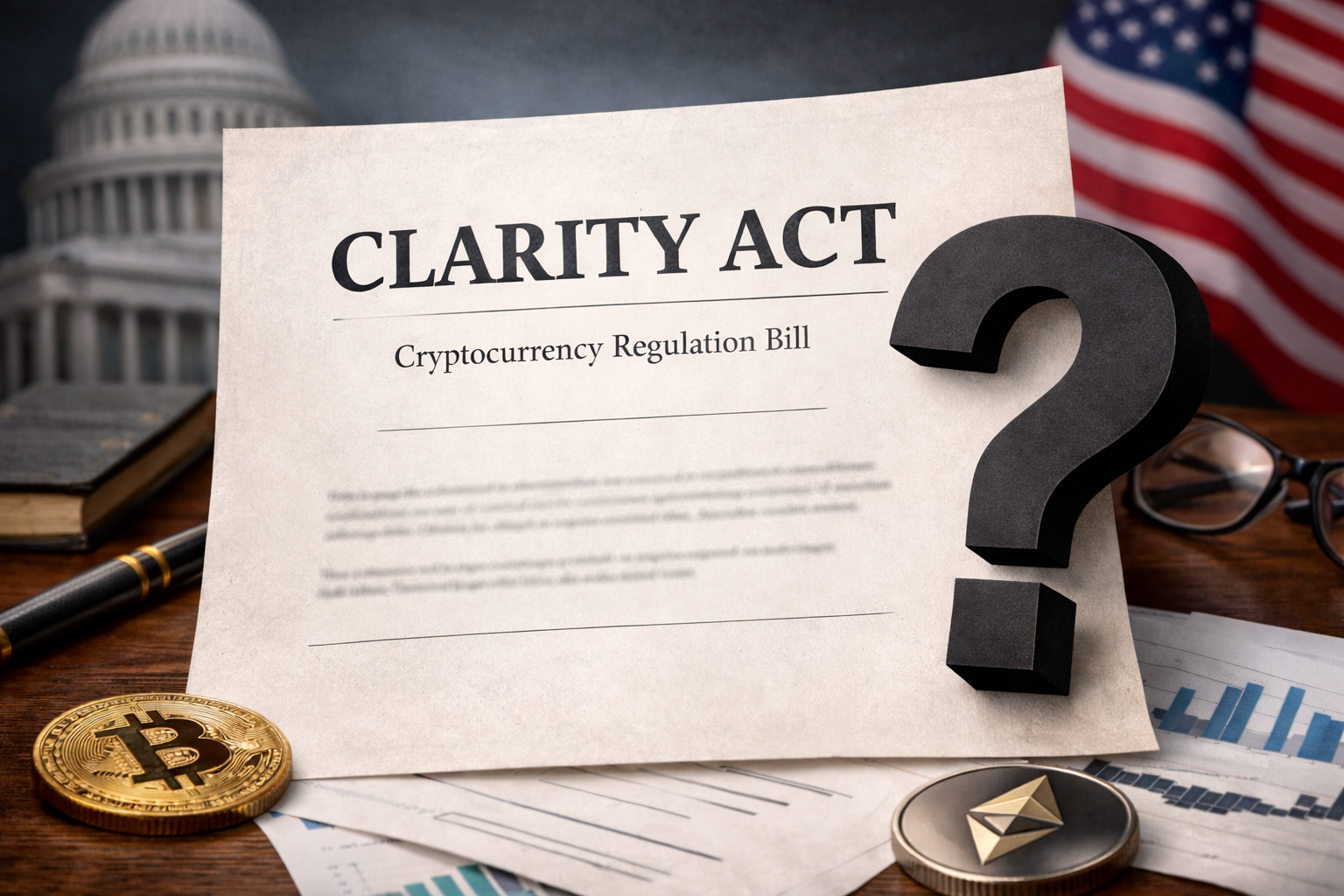
- The CLARITY Act is a U.S. bill aiming to define clear rules for cryptocurrencies, protect consumers, and provide legal guidance for exchanges and DeFi.
- The Senate Agriculture Committee advanced the bill 12–11, but it still faces debate and amendments before a full vote.
- Coinbase’s withdrawal of support highlights ongoing disagreements between exchanges and lawmakers over provisions in the bill.
The long-awaited CLARITY Act, a bill designed to define the rules for cryptocurrencies in the United States, is still in limbo, leaving investors and businesses uncertain about the future of digital assets. Although it passed the House of Representatives last year, the legislation has yet to clear the Senate, with political negotiations and industry pushback slowing its progress.
The White House has voiced support for clearer crypto regulations, emphasizing the need to protect investors while fostering innovation, and a key meeting between lawmakers and regulators is scheduled for February 2 to discuss the bill’s next steps. Meanwhile, global competitors are moving quickly to establish favorable crypto frameworks, raising concerns that the U.S. risks falling behind in the race for digital finance leadership.
Senate Progress Hits a Roadblock
On January 30, the U.S. Senate Agriculture Committee narrowly advanced the CLARITY Act on a 12–11 party-line vote, marking a procedural step forward but not final passage. The bill must still undergo further debate and potential amendments before it can reach a full Senate vote, leaving its ultimate approval uncertain.
Although the legislation passed the House of Representatives last year, it has not yet been signed by the President and is not law. Lawmakers continue to navigate political divisions and feedback from the crypto industry, keeping investors and businesses uncertain about when clear regulatory guidance might finally arrive.
Industry Reactions on Social Media
Ripple CEO Brad Garlinghouse emphasized that “clarity beats chaos,” underlining the critical role of clear regulations in the crypto industry. According to him, well-defined rules help protect consumers, reduce uncertainty, and create a stable environment for innovation and growth.
He also highlighted the broader impact of the CLARITY Act, noting that achieving regulatory clarity is not just a win for individual companies but a success for the entire crypto market. Garlinghouse expressed optimism that remaining issues could be addressed through proper debate and the legislative process, reinforcing the importance of structured and fair discussions around crypto policy.
The conversation isn’t limited to industry insiders. On X, the crypto community is buzzing with questions and concerns about how the CLARITY Act could affect decentralized finance, tokenized assets, and everyday market participation. Many users are discussing how the legislation could affect innovation, access, and the long-term growth of crypto in the U.S.
Coinbase’s recent decision to step back from supporting the bill has added fuel to the debate, with users debating whether the CLARITY Act will pass this year or face further delays. The chatter reflects the high stakes for investors, developers, and platforms alike, while also highlighting the community’s eagerness for clear, fair rules that can provide stability and confidence in the rapidly evolving crypto space.
What’s Holding the CLARITY Act Up
Progress on the CLARITY Act has been slowed by several factors. A partisan divide has emerged, as some lawmakers argue the bill doesn’t do enough to protect consumers and DeFi users. At the same time, industry pushback from major exchanges, including Coinbase, has highlighted concerns about certain provisions in the Senate draft.
Stablecoin regulations remain another sticking point, with banks and crypto firms still at odds over how interest-bearing stablecoins should be treated. To address these challenges, the White House is stepping in with a planned meeting between banks and crypto companies to try to broker a compromise and move the legislation forward.
The Road Ahead for the CLARITY Act
The CLARITY Act could see movement very soon. The next step is to pass the full Senate vote, followed by the President’s approval. Meanwhile, the White House is actively involved, hosting discussions with lawmakers, banks, and crypto companies to help broker a path forward.
Until these milestones are reached, the U.S. crypto market remains uncertain, with investors and platforms watching closely. If the bill moves forward, it could pave the way for the most comprehensive crypto regulatory framework in American history, shaping the path for exchanges, DeFi platforms, and investors nationwide.
Final Thoughts
The CLARITY Act has not yet passed, but momentum is building as today’s White House meeting and upcoming Senate discussions could finally push it forward. After months of debate and delays, the bill remains a crucial step toward bringing much-needed clarity to the crypto industry, giving investors, developers, and platforms the guidance they’ve been waiting for. While the outcome is not yet certain, there is cautious optimism that the legislation could soon set the stage for the most comprehensive crypto framework in U.S. history, shaping the future of exchanges, DeFi platforms, and digital assets nationwide. For the crypto community, it’s a hopeful moment; proof that clarity may finally replace the uncertainty that has long defined the market.
Frequently Asked Questions
Has the CLARITY Act passed?
No, the bill has not yet passed. It cleared the House last year and was narrowly advanced by the Senate Agriculture Committee, but it still faces debate and a full Senate vote.
What role is the White House playing?
The White House supports clearer crypto regulations and is hosting a February 2 meeting with lawmakers, banks, and crypto companies to help broker a compromise.
How have industry leaders reacted?
Ripple CEO Brad Garlinghouse emphasized that “clarity beats chaos,” noting that clear regulations protect consumers and create a stable environment for growth.
What is holding the CLARITY Act up?
Key obstacles include partisan divides, pushback from exchanges like Coinbase, and unresolved rules for interest-bearing stablecoins.