Key Takeaways
- Iran uses Bitcoin mining to bypass international sanctions, moving value across borders without relying on banks or traditional financial networks.
- Cheap, often government-subsidized electricity allows Iran to run large mining farms at very low cost, making Bitcoin production highly profitable.
- By legalizing crypto mining in 2019, Iran created a regulated framework and turned mined Bitcoin into a tool for trade and revenue generation.
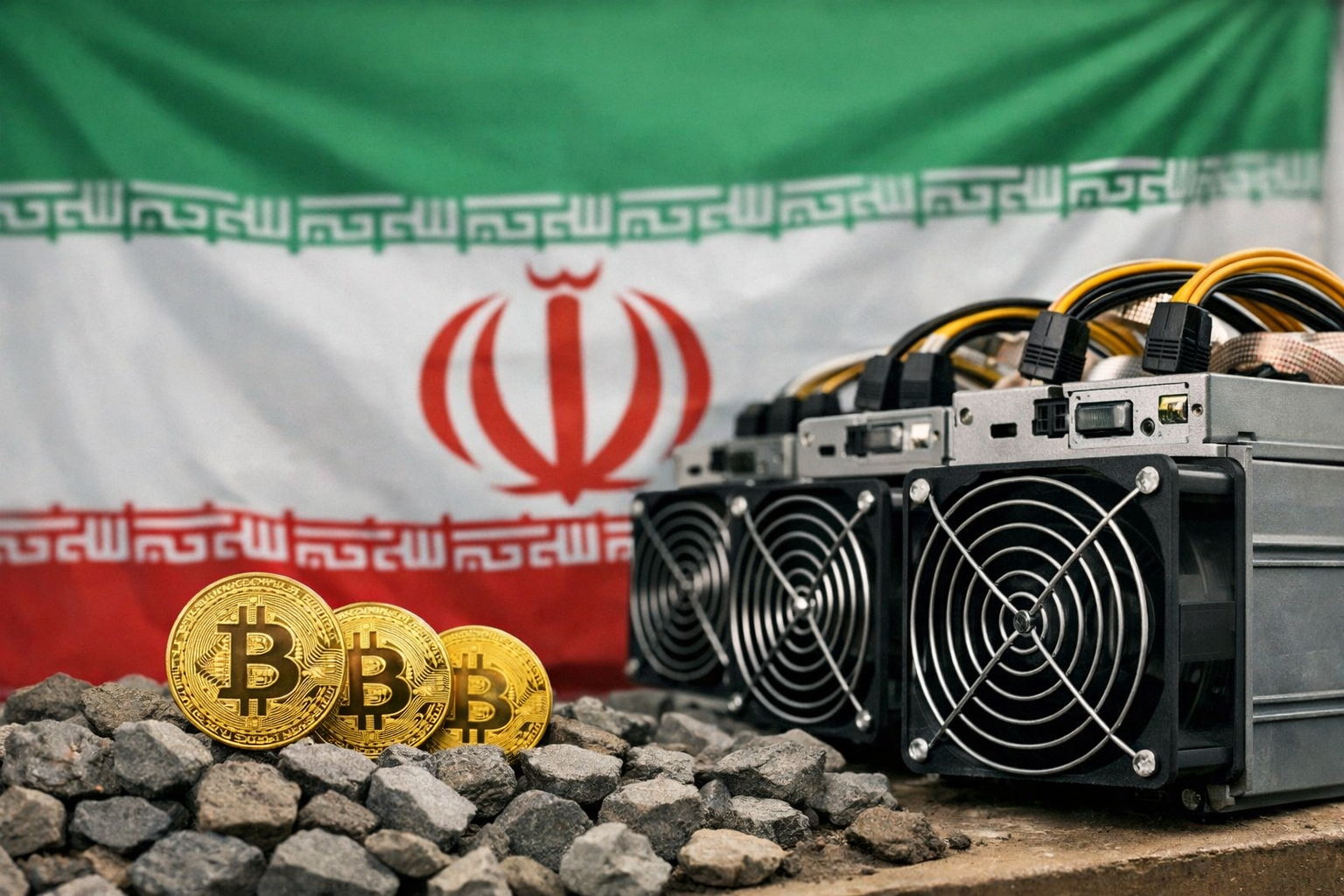
As international sanctions cut off many of its banking connections, Iran has turned to Bitcoin mining as an unconventional way to keep its economy connected to global markets. With many traditional financial channels restricted, the country has looked for alternative ways to move money and support international trade. Cryptocurrency offers one such path, allowing value to move across borders without relying on banks or global payment networks.
A major factor behind this strategy is Iran’s access to relatively cheap electricity, much of it subsidized by the government. Large mining farms use this power to run specialized computers that produce Bitcoin. Once mined, the digital asset can be used for international payments, exchanged for foreign currency, or held as a reserve. Because Bitcoin operates on a decentralized network rather than through banks, it offers countries under financial restrictions another way to move value and reach global markets.
Bitcoin Mining Powers Iran Amid Sanctions
Industry estimates suggest this activity could be large. By early 2026, Iran was believed to be mining 20 to 30 Bitcoin per day, with very low production costs thanks to cheap, government‑backed electricity. When Bitcoin traded above $80,000, the difference between the cost and market price was huge.
Today, Bitcoin’s price is lower, hovering around $68,000–$71,000 in early March 2026, a noticeable drop from its previous highs. This matters for mining: smaller gaps between production costs and the market price can squeeze profits and limit the value miners can earn per coin.
Even with these changes, the core story stays the same. Iran’s mining operations are still turning cheap electricity into Bitcoin that can move across the globe, creating liquidity and access to international markets despite the country’s blocked banking channels.
Sanctions Push Iran Toward Alternative Financial Systems
For years, Iran has faced heavy economic sanctions, mainly from the United States and its allies. These measures have cut the country off from the SWIFT international payment network, the system most banks use for cross-border transactions. Without it, Iranian businesses find it hard to receive payments or pay for imports using regular banking channels.
To work around these limits, Iran has increasingly looked to cryptocurrencies, especially Bitcoin. Unlike traditional money, Bitcoin runs on a decentralized blockchain and doesn’t rely on banks or central payment networks. This makes it possible to move funds across borders without going through institutions that enforce sanctions, giving the country an alternative way to keep trade and finance flowing.
Legalizing Bitcoin Mining as a National Strategy
In 2019, Iran officially recognized cryptocurrency mining as a legal industry, creating a regulated framework for companies and individuals to operate mining farms. The government encouraged this move by providing state-funded electricity, making mining operations far more cost‑effective than in most parts of the world.
Iran has turned Bitcoin into more than just a tech curiosity. It has become a key part of the country’s financial toolkit. Much of the Bitcoin mined is sold to the central bank to help pay for imports, while some wallets connected to the IRGC (Islamic Revolutionary Guard Corps) reportedly received billions of dollars in cryptocurrency in 2025. The central bank has also built up hundreds of millions in stablecoins like USDT, giving authorities another way to move and store value internationally.
Analysts estimate that Iran now controls around 2–5% of the global Bitcoin mining network, making it a notable player in the international crypto market. By legalizing mining and leveraging its cheap, subsidized electricity, the country has created a new source of revenue and a way to turn domestic energy resources into digital assets usable worldwide.
How Iran Uses Mined Bitcoin to Bypass Sanctions
To make sure the state benefits from the growing cryptocurrency sector, Iran introduced regulations requiring licensed miners to sell part or in some cases all of their mined Bitcoin to the government or the central bank. This system allows the state to capture revenue from mining while maintaining oversight of the digital assets flowing in and out of the country.
Under this system:
- Mining companies must obtain official licenses from authorities.
- Licensed miners gain access to heavily economically supported electricity, helping keep operations profitable.
- In return, they must transfer a portion of their mined Bitcoin to state-controlled wallets.
The government uses these bitcoins for international payments, trade settlements, or other transactions that bypass traditional banking channels, giving Iran a way to conduct cross-border business despite sanctions.
Using Bitcoin to Pay for Imports
One of the key ways Iran is putting its mined Bitcoin to work is by using it to pay for imports. Officials have confirmed that Bitcoin and other cryptocurrencies can be used to buy goods from foreign suppliers, providing an alternative to traditional dollar-based payments.
For example, in 2022, Iran completed a $10 million import order using cryptocurrency, according to a Reuters report. The transaction highlighted how digital assets can help the country maintain trade despite international financial restrictions. Because these payments run on blockchain networks rather than through traditional banks, they can bypass many of the hurdles imposed by sanctions, allowing goods and services to flow even when conventional channels are blocked.
Iran’s Energy Advantage in Bitcoin Mining
Industry experts say Iran’s rock-bottom electricity prices, some of the cheapest in the world, have quietly turned the country into a powerhouse for Bitcoin mining. Analysts believe that with its cheap energy, existing mining infrastructure, and potential access to global investment, Iran could rapidly expand its operations if economic and political conditions were to open. Such a development could position the country as a major player in the global cryptocurrency market, giving it far greater influence in international digital finance than ever before.
Final Thoughts
Iran has found an unexpected way to stay connected to the world economy through Bitcoin mining, at a time when sanctions have shut down most of its normal financial options. The idea is straightforward. Cheap electricity and a legal mining setup allow Iran to turn power into digital currency that can cross borders freely, no banks needed. It is not a perfect solution, but it works. Those coins help pay for goods coming into the country, top up reserves, and keep trade moving. Without this, Iran would have almost no way to participate in the global economy. Over time, Iran has built up enough mining capacity to become a serious name in the crypto world. But what stands out is not just its scale. It is the fact that a country under this much financial pressure found a way to adapt. When the system works against you, you find another system.
Frequently Asked Questions
Why is Iran turning to Bitcoin mining?
Iran uses Bitcoin mining to bypass international sanctions, allowing the country to move value across borders without relying on banks or traditional payment systems.
How does cheap electricity help Iran mine Bitcoin?
Subsidized electricity lets Iran run large mining farms at very low cost, making Bitcoin production highly profitable and sustainable for state use.
When did Iran legalize cryptocurrency mining?
In 2019, Iran officially recognized crypto mining as a legal industry, creating a regulated framework for miners and providing government-supported electricity.
How does the Iranian government benefit from mined Bitcoin?
Licensed miners must sell part or all of the mined Bitcoin to the government or central bank, which uses it for international payments, trade, and reserves.
How much Bitcoin does Iran mine daily?
By early 2026, estimates suggest Iran mined 20 to 30 Bitcoin per day, leveraging low energy costs to generate substantial revenue despite market price fluctuations.