Key Takeaways
- Crypto lending lets investors earn passive income by lending digital assets or borrowing against their holdings, providing access to liquidity without selling their crypto.
- Choosing a platform depends on factors such as security, supported assets, interest rates, liquidity, and reliability, which vary across crypto lending services.
- Crypto lending is typically overcollateralized, enabling faster access to funds without credit checks while retaining ownership of assets under set loan conditions.
In 2026, crypto lending has become a popular method for investors to earn passive income from held digital assets or access liquidity by borrowing against their crypto without selling it. Users can lend their crypto to earn interest or use it as collateral to borrow funds, making it a flexible option for managing portfolios. Both centralized finance (CeFi) and decentralized finance (DeFi) platforms now offer competitive rates and support a wide range of assets, but they differ in terms of custody, transparency, and overall risk.
As the space matures, choosing the right platform depends on factors such as security, interest rates, supported tokens, and platform reliability. CeFi platforms tend to offer a more managed and user-friendly experience, while DeFi platforms provide greater control through smart contracts. This article explores the 9 best crypto lending platforms in 2026 to help you compare your options and make a more informed decision.
What Is Crypto Lending?
Crypto lending is a financial process that allows holders of digital assets to either lend their crypto to borrowers in exchange for interest or use their crypto as collateral to obtain loans in cash or stablecoins. Instead of relying on credit scores, these loans are typically secured by the value of the deposited crypto, reducing the need for traditional credit checks. In most cases, transactions are processed quickly, and users can access funds while still retaining ownership of their underlying assets, depending on the loan terms and platform structure.
Top 9 Crypto Lending Platforms in 2026
1. Aave (DeFi Powerhouse)
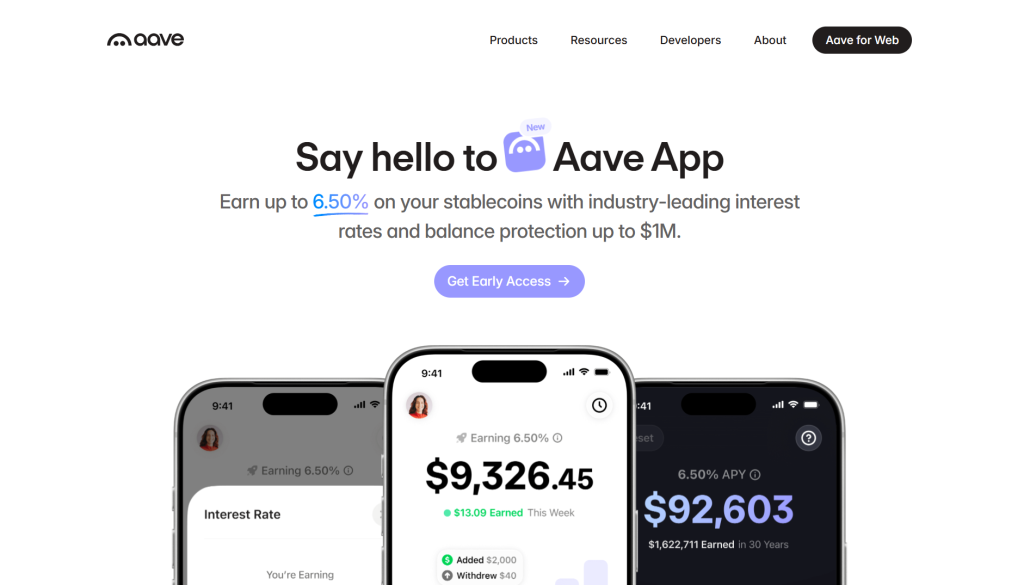
Aave remains one of the leading decentralized lending protocols, known for its strong security, deep liquidity, and wide range of supported assets across multiple blockchains. With the rollout of Aave v4, the platform introduces a modular “Hub-and-Spoke” architecture that improves capital efficiency while isolating risk between different markets.
This design helps reduce systemic exposure and allows assets to be managed more effectively within separate pools. Aave also offers features such as variable and stable interest rates, overcollateralized loans, and permissionless access, making it a core part of the DeFi lending ecosystem.
2. Binance Loans (CeFi Lending Platform)
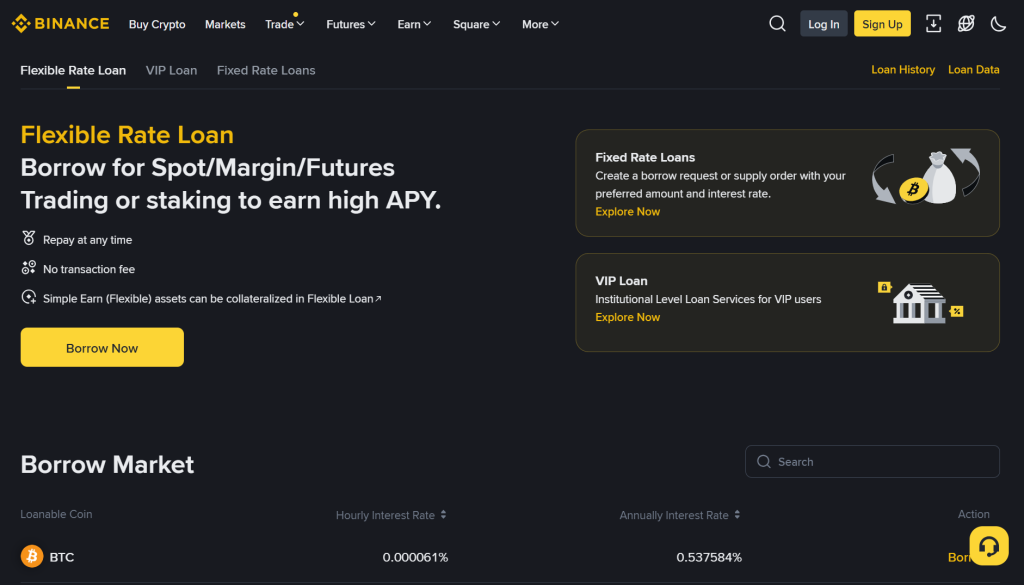
Binance Loans is a centralized lending service offered by one of the world’s largest crypto exchanges, providing users with access to crypto-backed loans and a wide range of supported assets. The platform allows users to deposit collateral and borrow funds in various cryptocurrencies or stablecoins, with loan terms that include flexible durations and interest options.
Because it is directly built into the Binance ecosystem, users can easily manage loans alongside trading, staking, and other financial products within a single account. Binance Loans also benefits from high liquidity and fast processing, making it convenient for users who need quick access to funds while maintaining exposure to their crypto holdings.
3. Nexo (Flexible Credit Lines)
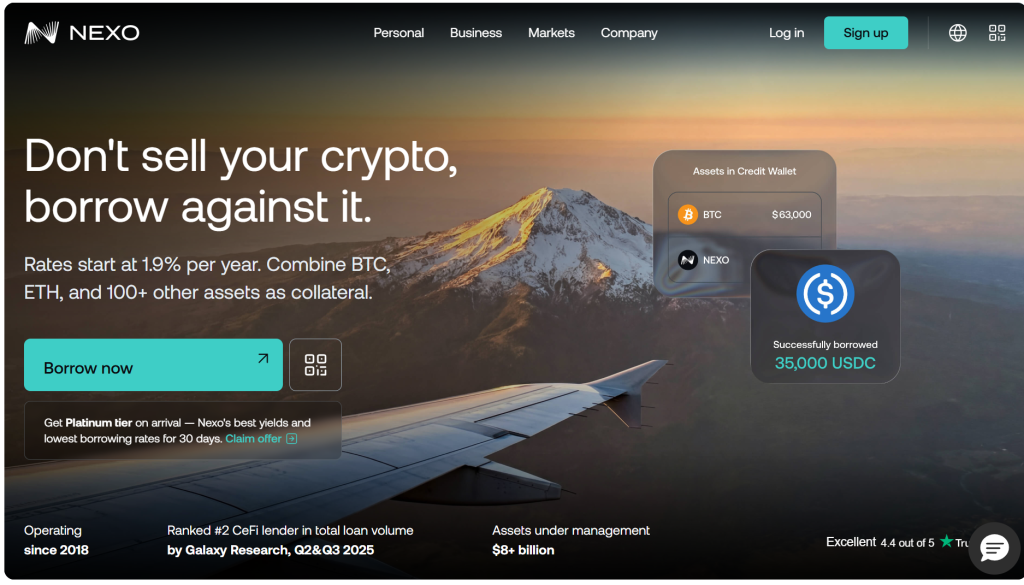
Nexo is a long-established crypto lending platform that offers credit lines rather than traditional fixed-term loans. Instead of locking users into a repayment schedule, it allows them to borrow against their crypto holdings and pay interest only on the amount they actually use. Collateral is held by the platform while the loan is active, and users can typically adjust their borrowing limits based on the value of their assets.
Nexo supports a wide range of cryptocurrencies as collateral and provides additional features such as interest-earning accounts, where users can earn yields on supported assets even while accessing credit. The platform also includes benefits tied to its native token, which can influence rates, rewards, and account tiers.
4. CoinRabbit (High LTV and Security)
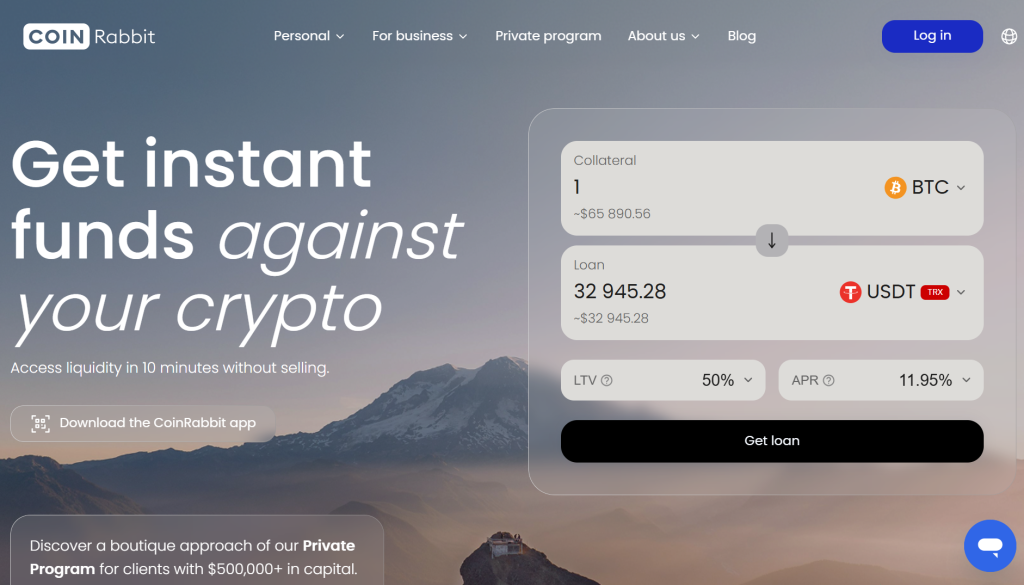
CoinRabbit is a crypto lending platform known for offering high loan-to-value (LTV) ratios of up to 90%, allowing users to borrow a large portion of their collateral’s value. The platform places strong emphasis on security through a no-rehypothecation policy, meaning user collateral is not reused or lent out to other parties. This approach reduces counterparty risk and gives users more control over the safety of their assets while their loan is active.
CoinRabbit also supports a wide selection of cryptocurrencies as collateral, giving users flexibility when choosing which assets to deposit. The platform is designed to provide fast loan processing and an easy-to-use borrowing experience, making it suitable for users who want access to liquidity without giving up ownership of their crypto.
5. YouHodler (User-Friendly CeFi Platform)

YouHodler offers a simplified approach to crypto lending while still providing a range of borrowing and earning features. Users can take out crypto-backed loans by depositing collateral and receiving funds in stablecoins or fiat, with multiple loan-to-value options and repayment terms available. Alongside lending, the platform offers yield products that let users earn interest on supported assets, all managed through a clean, easy-to-use interface.
The platform is built to make crypto lending more accessible, especially for those who prefer a guided, less technical experience than DeFi services. It also provides fast loan processing and flexible conditions, making it easier for users to unlock liquidity or earn returns without dealing with complicated setups or on-chain transactions.
6. Unchained Capital (Bitcoin-Focused Lending)

Unchained Capital focuses on Bitcoin-backed loans, offering a more specialized option for users who hold BTC. Instead of fully taking control of your funds, the platform uses a shared custody system with multi-signature wallets, so both you and the platform share responsibility for securing the Bitcoin. This setup helps reduce risk while still allowing you to borrow against your BTC.
Loans are overcollateralized, meaning you need to deposit more Bitcoin than the loan’s value, with clear limits to help manage price fluctuations. By focusing solely on Bitcoin, the platform is designed to give BTC holders a more secure and focused way to access liquidity without selling their assets.
7. Clapp (Flexible Credit Lines)
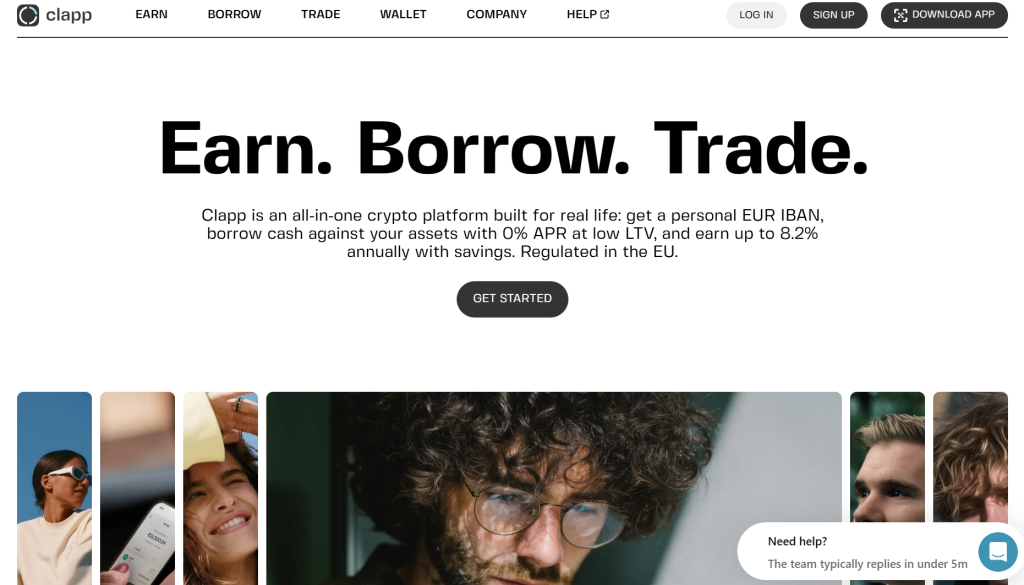
Clapp offers a revolving crypto credit line that gives users ongoing access to funds without needing to take out a new loan each time. Users can typically borrow between 50% and 70% of the loan-to-value, depending on the asset used as collateral, and interest is charged only on the amount actually withdrawn, not on the total approved credit line. Repayments are flexible, with no fixed schedule, allowing users to pay back partially or in full at any time and reuse the available credit.
The platform supports a wide range of cryptocurrencies as collateral and is built for quick access to liquidity, with fast approvals and minimal requirements compared to traditional loans. This setup makes it useful for users who need on-demand borrowing while keeping their assets invested and maintaining exposure to market movements.
8. JustLend (USDT Liquidity Hub)
JustLend is the primary lending protocol on the TRON network, designed to support high-volume stablecoin activity with low transaction costs. It focuses heavily on USDT lending and borrowing, allowing users to supply assets to liquidity pools and earn interest while borrowers access funds by providing collateral. The platform operates through smart contracts that automatically adjust interest rates based on supply and demand within each asset pool.
TRON’s network typically processes 2,000+ transactions per second with average fees often close to $0.01 or lower per transaction, which helps JustLend maintain fast and cost-efficient lending activity. Its simplicity and strong transaction capacity have also contributed to its popularity in Asia-Pacific markets, where users often prioritize quick, low-cost access to USDT liquidity.
9. Crypto.com Loans (App-Integrated)
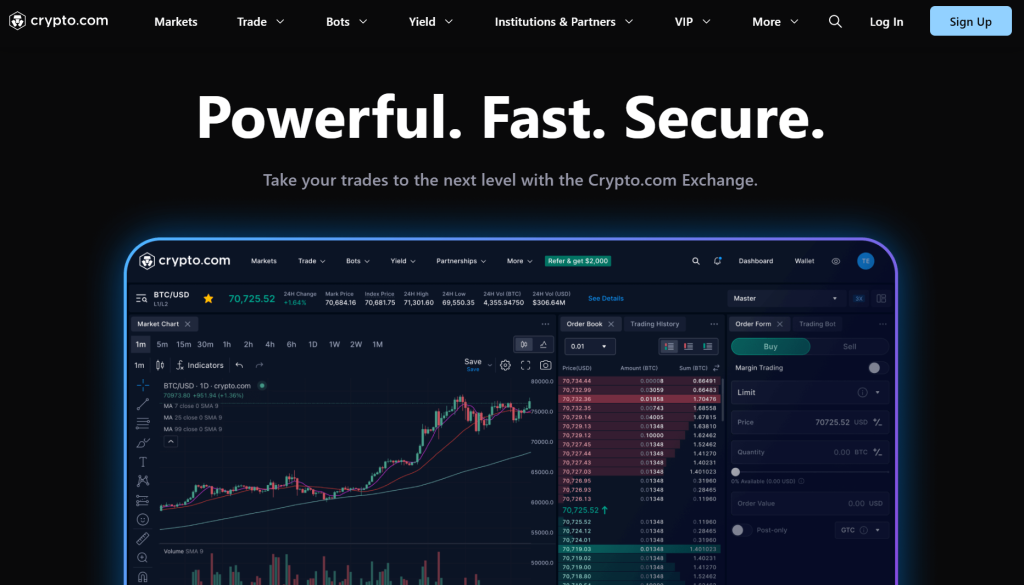
Crypto.com offers crypto-backed loans that are built directly into its app, allowing users to borrow without leaving the platform. Users deposit supported cryptocurrencies as collateral and can borrow up to around 50% of their collateral value, depending on the asset. Interest rates vary based on the loan terms and collateral type, giving users some flexibility in how much they pay to borrow.
The platform supports a range of major cryptocurrencies and uses automated processes to handle approvals, so loans are usually funded quickly once collateral is provided. Since lending, trading, and payments are all available in one place, users can manage their assets and loans easily within a single account.
CeFi vs DeFi: What’s the Difference?
CeFi (Centralized Finance)
Platforms like Binance, Nexo, and YouHodler manage your funds on your behalf and handle the lending process internally. This usually means a more familiar experience, with simple interfaces, customer support, and quicker onboarding. The trade-off is that you’re trusting the platform to keep your assets safe, which introduces custodial and counterparty risk.
DeFi (Decentralized Finance)
Protocols like Aave and JustLend run on blockchain-based smart contracts without a central company holding your funds. You keep full control of your assets through your own wallet, and everything operates transparently on-chain. This gives you more independence, but it also means you need to manage your own security and be aware of risks like smart contract issues, liquidation events, and network fees.
Picking a Lending Platform That Fits You
Crypto lending in 2026 continues to grow as a useful way to put digital assets to work while retaining ownership. The platforms covered in this article show that there is no single “best” option, since each one is built with different features, levels of control, and risk considerations. Some focus on ease of use and managed services, while others give users direct interaction with on-chain systems. Before choosing a platform, it is important to think about how you plan to use your assets, how much control you want, and how comfortable you are with different types of risk. By comparing features like security, asset support, and repayment terms, users can find a platform that fits their needs and use crypto lending in a way that supports their overall financial strategy.
You Might Also Like: