Aave has launched its V4 lending protocol on Avalanche, the first time the platform has expanded its latest infrastructure beyond Ethereum. The launch is built around dedicated credit markets for tokenized real-world assets and institutional finance. The move gives institutions a second network, alongside Ethereum, to access Aave’s newest lending infrastructure for tokenized collateral.
What Changes With Aave V4 on Avalanche
The V4 deployment builds on Aave’s existing presence on Avalanche, where V3 has already processed billions of dollars in liquidity. It also comes as Aave has faced its own volatility this year, including a 15 billion deposit drop that rattled the protocol earlier in 2026.
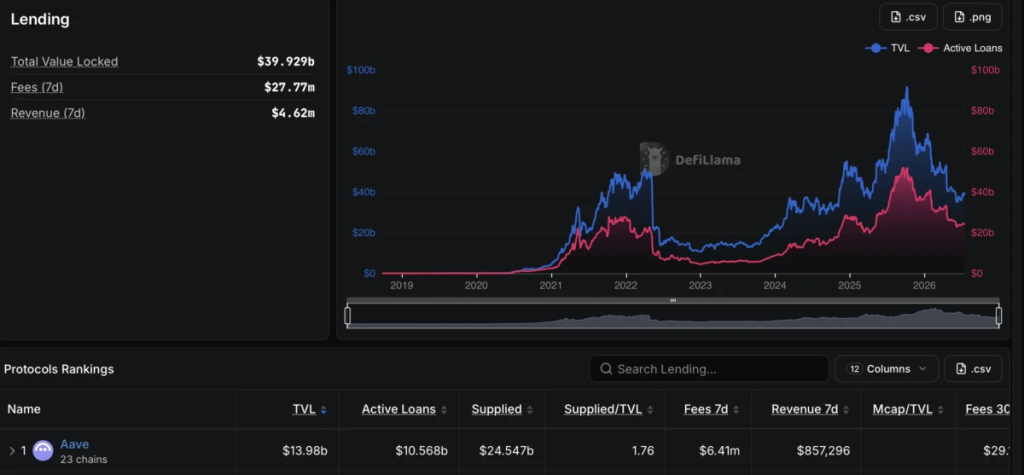
Source – DeFiLlama
V4 introduces a Hub and Spoke design, letting individual markets set their own collateral rules and risk parameters while still drawing on shared liquidity across the protocol. Aave remains the largest decentralized lending protocol by total value locked, holding close to $14 billion in assets across 23 blockchains, according to DeFiLlama.
Aave said the first markets under this structure will support borrowing against tokenized assets. Future markets could extend to US Treasuries, money market funds, private credit, and corporate bonds, each with its own collateral requirements.
The architecture is designed to handle a wider range of collateral types than earlier versions of the protocol supported, according to Aave’s statement.
What This Means for DeFi Users
Avalanche users now have access to Aave’s latest lending infrastructure without moving funds to Ethereum. If you’re still getting familiar with how crypto lending works, this expansion is part of a larger transition: tokenized assets like Treasurys and corporate bonds are moving from pilot programs into markets people can actually borrow against. The DeFi sector has been building toward this kind of institutional-grade lending for some time.
More Firms Are Racing to Tokenize Collateral
Aave’s move lands alongside a string of institutional pushes into tokenized collateral. Franklin Templeton partnered with Binance in February to let institutions use tokenized money market fund shares as off-exchange collateral.
Nasdaq followed in March with plans to integrate its collateral platform with Talos, and you can check our coverage of Nasdaq’s tokenized securities push for more on that integration. DTCC reported in May that it would build Chainlink technology into its own tokenized collateral platform ahead of a fourth-quarter launch.
What this means for you: If you’re new to crypto, this launch shows that things like bonds and Treasuries are becoming something you can borrow against in DeFi, not just assets you hold and wait on. It also means that more networks beyond Ethereum will likely offer this kind of lending as more large institutions get involved.