The CLARITY Act could create new opportunities for banks and financial firms to expand their Bitcoin services, potentially increasing demand for crypto-focused jobs across custody, compliance, trading, and infrastructure.
The opportunity is significant because US commercial banks held about $25.7 trillion in assets as of July, according to Federal Reserve data, compared with Bitcoin’s much smaller market capitalization. Greater regulatory clarity could make it easier for TradFi institutions to commit more resources to digital assets.
However, any hiring impact remains hypothetical, as the CLARITY Act passed the House in July 2025 but still faces a major Senate test, with a procedural vote expected on September 15.
Banks Could Build More Bitcoin Services
The CLARITY Act is designed to establish a clearer federal market structure for digital assets by defining responsibilities between the Commodity Futures Trading Commission (CFTC) and the Securities and Exchange Commission (SEC).
The House-passed legislation gives the CFTC jurisdiction over qualifying digital commodity markets while establishing registration, custody, and customer-protection requirements for companies operating in the sector. The official House report describes the bill as a framework intended to provide greater regulatory certainty for digital asset businesses.
For banks, clearer rules could make it easier to justify expanding crypto operations. Potential areas include Bitcoin custody, brokerage, risk management, compliance, and infrastructure supporting institutional digital asset activity, eventually creating demand for employees with experience across both TradFi and crypto.
| Area | Potential Banking Need |
| Digital asset custody | Wallet security, asset segregation and operations |
| Compliance | AML, KYC and regulatory reporting |
| Trading and brokerage | Institutional crypto execution and market access |
| Risk management | Crypto exposure, collateral and counterparty risk |
| Blockchain infrastructure | Nodes, settlement and technical operations |
| Legal | Digital asset regulation and product structuring |
Table 1. Banking Roles That Could Grow With Crypto Adoption
Notably, the legislation itself does not guarantee that banks will create these jobs, as hiring would depend on whether the bill becomes law, how regulators implement it, and how much customer demand develops.
The US Banking Market Is Much Larger Than Bitcoin
The size of the traditional banking system helps explain why even limited adoption could matter.
Federal Reserve data shows total assets at US commercial banks reached approximately $25.66 trillion in July 2026.
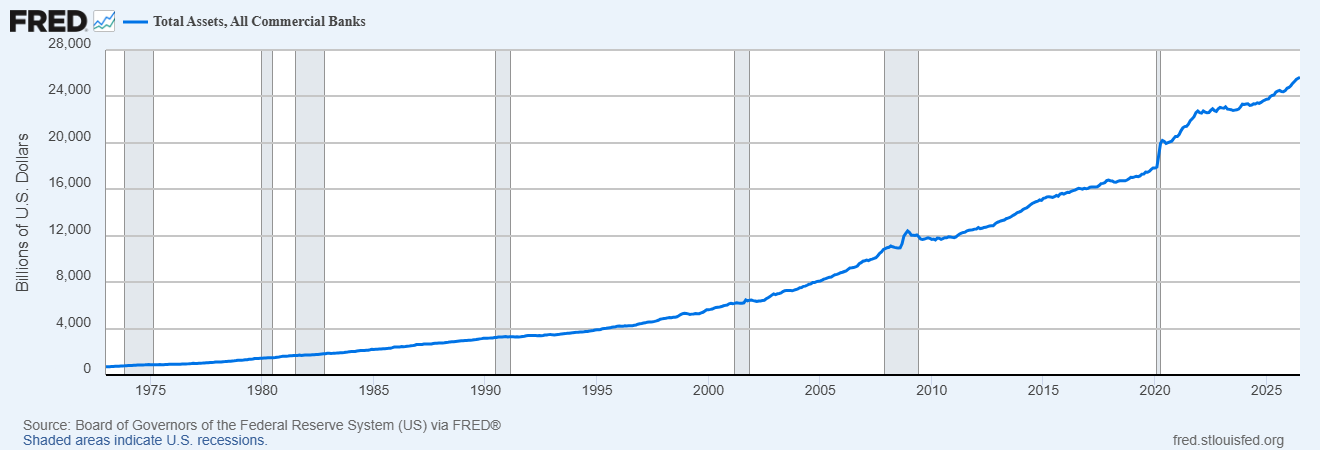
That does not mean trillions of dollars would suddenly move into Bitcoin. Instead, it shows the scale of the financial institutions that could expand their involvement if regulatory barriers become clearer.
Banks have already been developing digital asset custody, tokenization, and trading infrastructure without waiting for the CLARITY Act. Passing federal market structure legislation could give them more confidence to invest further, but the process would likely happen gradually.
Bitcoin Developers Could Also Gain More Legal Protection
The House version of the legislation contains protections covering certain blockchain developers and decentralized infrastructure. The bill’s structure includes provisions addressing non-controlling blockchain developers, alongside rules covering registration, custody and digital commodity intermediaries.
Supporters argue that clearer boundaries could reduce uncertainty for developers working on non-custodial wallets, nodes and other infrastructure that does not directly control customer assets.
That could matter for Bitcoin developers because legal uncertainty around whether software providers should be treated like financial intermediaries has become a major issue in the US,
However, the final protections will depend on what language survives the Senate process and any negotiations between the two chambers.
September 15 Is Not a Final Passage Vote
A procedural vote is expected on September 15 and would require 60 votes to advance the legislation. Republicans hold 53 Senate seats, so the bill would need Democratic support to move forward.
Importantly, that vote would not send the CLARITY Act directly to the president. It would be a procedural step toward further Senate consideration.
The legislative calendar adds another complication, as the House is expected to have limited voting time in Washington before the November midterm elections, potentially leaving little time to consider a Senate-amended version of the bill.
| CLARITY Act Milestone | Status |
| House passage | Completed in July 2025 |
| House vote | 294–134 |
| Senate procedural vote | Expected Sept. 15, 2026 |
| Votes needed to advance | 60 |
| Final Senate passage | Not completed |
| Signed into law | No |
Table 2. CLARITY Act Legislative Status
Even if the Senate advances the legislation, regulatory implementation could take months or longer after passage.
Crypto Hiring Would Likely Start With Compliance
A CLARITY Act-driven hiring boom would probably not happen immediately, as financial institutions generally need regulatory guidance, internal risk policies, and operational infrastructure before launching new products. That means legal, compliance and risk teams could expand before large trading or Bitcoin infrastructure teams.
The CFTC would also face substantial implementation work if Congress gives it broader authority over digital commodity markets.
Previous crypto legislation reminds us that passing a bill and putting the rules into practice are two different stages. The regulatory buildout could therefore take considerably longer than the legislative vote itself.
What Comes Next
September 15 will be the next major test for the CLARITY Act, but investors should distinguish between a procedural Senate vote and final passage.
If the legislation advances, attention will shift to amendments, negotiations with the House and the timetable for implementing a new digital asset framework. Banks would then have greater visibility into the rules governing their expansion into crypto-related services.
The longer-term employment opportunity could be meaningful given the scale of the US banking sector, but it depends on legislation becoming law and institutions deciding that customer demand justifies further investment.
What this means for you: The CLARITY Act could bring Bitcoin deeper into traditional banking and create new crypto-focused jobs, but the expansion would likely happen gradually and still depends on Congress getting the bill across the finish line.