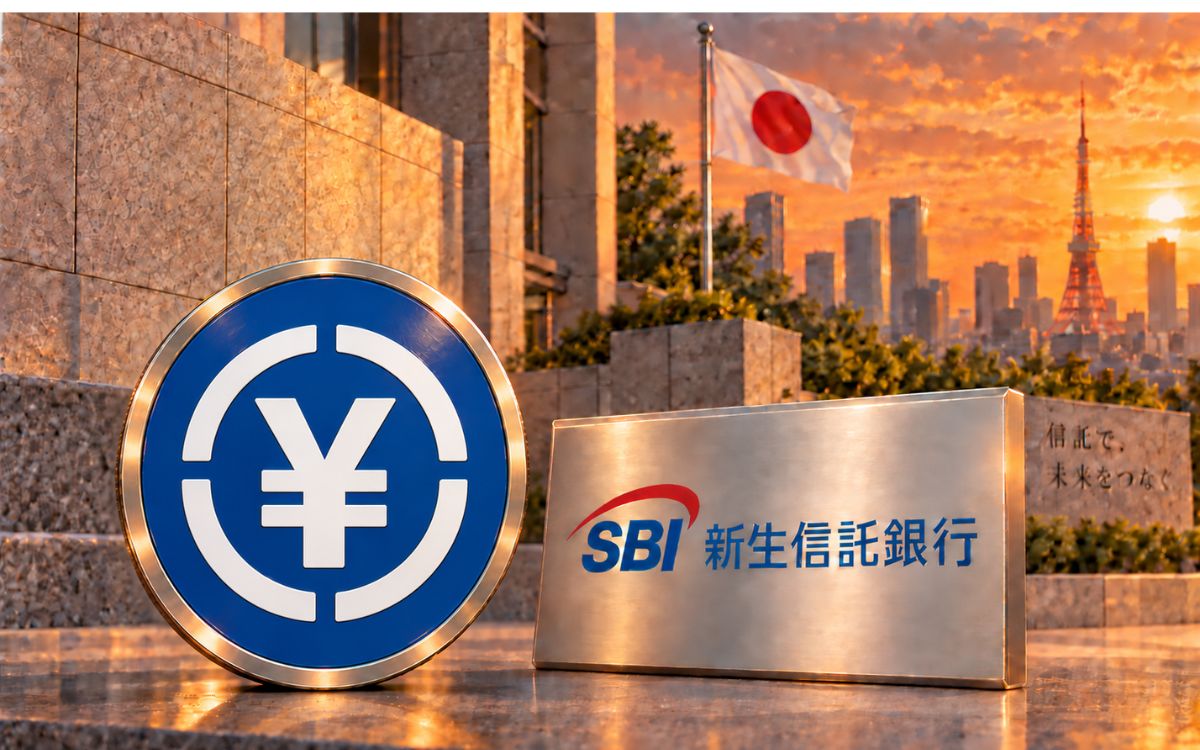
SBI Shinsei Trust & Banking and SBI VC Trade have started investing part of the reserves backing JPYSC in short-term Japanese government securities.
The change follows an amendment to Japan’s Payment Services Act that expanded the assets permitted to back trust-structured stablecoins. JPYSC remains designed to track the Japanese yen at a one-to-one ratio.
What SBI Actually Changed
The companies announced on September 7 that ¥1 billion of the trust assets backing JPYSC had been allocated to short-term Japanese government bills.
Japan’s revised Payment Services Act and related regulations took effect on June 1. Under the new framework, as much as 50% of a trust-based stablecoin’s issuance value may be managed through qualifying government securities with maturities of no more than three months, or through time deposits.
Before the amendment, reserve funds for this type of stablecoin generally had to remain in demand deposits, including ordinary bank accounts, a regulatory backdrop our guide on buying and selling cryptocurrency in Japan covers more broadly.
| JPYSC Reserve Detail | Position as of September 7, 2026 |
| Outstanding JPYSC | Approximately ¥20.1 billion |
| Reserves placed in government bills | ¥1 billion |
| Approximate share of outstanding supply | 5% |
| Permitted government-bill maturity | No more than three months |
| Legal investment ceiling | Up to 50% of the issuance amount |
| JPYSC lending applications | Approximately ¥6.9 billion |
| Issuance and lending combined | Approximately ¥27 billion |
Table 1. JPYSC’s Reserve Allocation and Reported Scale
Japanese crypto outlet CoinPartner summarized the reserve change, highlighting the ¥1 billion allocation and JPYSC’s reported outstanding supply.
SBI Shinsei Trust & Banking issues JPYSC and manages its trust assets. SBI VC Trade acts as the commissioning party and registered electronic-payment-instrument service provider responsible for issuance, distribution, and broader user access.
What This Means for JPYSC Holders
Moving part of the reserves into short-term government securities could let the trust assets generate income while remaining in relatively liquid yen-denominated instruments.
However, the announcement doesn’t say that income earned from those securities will be distributed to JPYSC holders. The reserve-management change shouldn’t be interpreted as turning JPYSC into a yield-bearing token, a distinction worth understanding alongside our guide on how stablecoins hold their peg across different reserve models.
The allocation also represents only about 5% of the reported outstanding supply, well below the 50% legal ceiling. Most of the backing remains outside the newly disclosed government-bill allocation.
What Still Needs Watching
The companies said they intend to expand JPYSC into domestic and international payments, onchain foreign-exchange markets, and settlement for real-world and tokenized assets.
The next details to watch are whether the government-securities allocation increases, how frequently the reserve composition will be disclosed, and whether independent reserve reports will identify the securities and their maturities.
What this means for you: JPYSC’s issuer has begun using short-term Japanese government securities for a portion of its reserves, but the stablecoin remains designed for yen-linked payments rather than providing bond income directly to holders. Reserve transparency, redemption liquidity, and future disclosures will remain important as issuance grows.
This is not financial advice. Stablecoins can involve issuer, custody, liquidity, redemption, regulatory, and smart-contract risks.