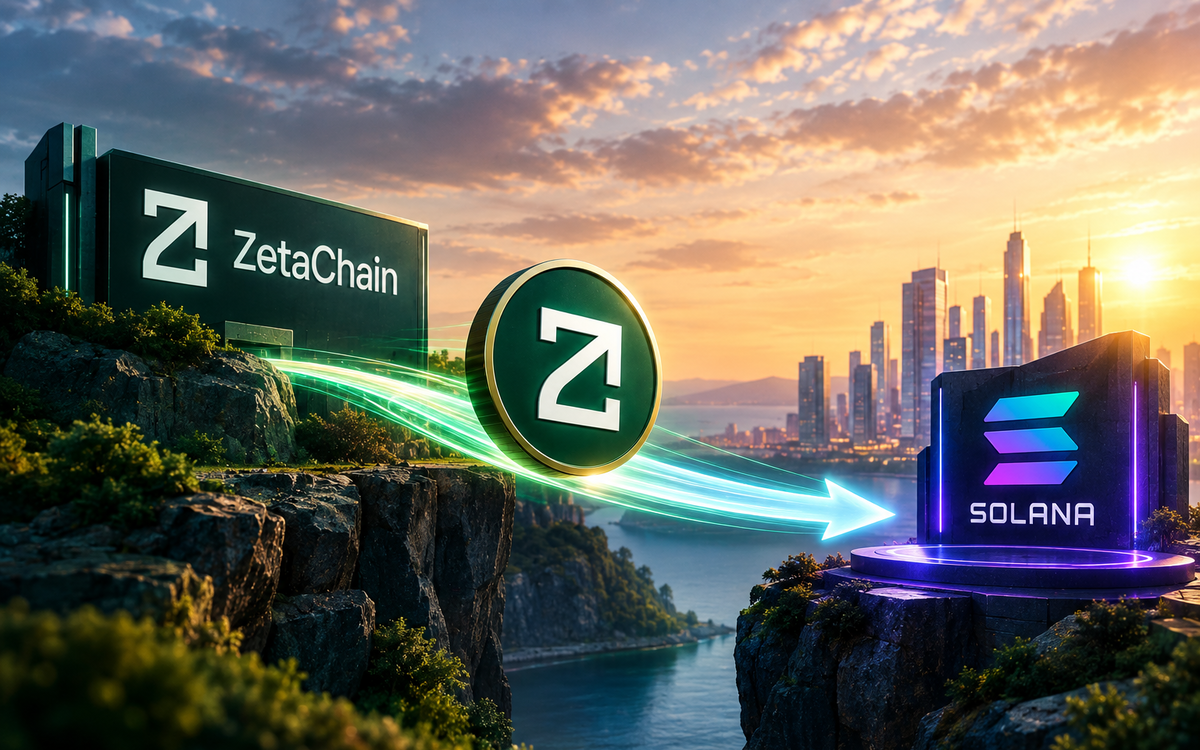
ZetaChain token holders have approved Proposal 68 to shut down the network’s Layer 1 blockchain and migrate its native ZETA token to Solana, according to the announcement, with 99.4% of votes supporting the proposal.
The vote reached 58% participation, well above the 40% quorum required for the proposal. Votes against and abstentions each accounted for 0.3%.
The decision does not immediately shut down ZetaChain or move ZETA to Solana. A second governance proposal will still need to establish the migration process, final snapshot, exchange coordination, and shutdown schedule.
ZetaChain Proposal 68 Passes With 99.4% Support
Proposal 68 was designed to approve the direction of ZetaChain’s planned migration from its own blockchain to Solana.
The proposal received 99.4% support when voting closed on September 20. Participation reached 58% of eligible stake, exceeding the 40% quorum requirement.
The vote gives ZetaChain’s core contributors permission to prepare the next stage of the transition. The existing blockchain remains operational while the project works on the technical details required to move ZETA and eventually wind down the Layer 1.
Validators will continue operating the network, and ZETA staking remains active until the shutdown process is formally established.
ZETA Would Become a Native Solana Token
Under the proposal, ZETA would become a native Solana SPL token through a 1:1 conversion. The token would retain its ZETA ticker and existing total supply, with no new tokens created as part of the migration. Existing vesting schedules would also continue under their original terms.
The proposal includes a change in token precision. Native ZETA currently uses 18 decimal places, while the proposed Solana token would use nine. Amounts below the supported precision could therefore be rounded down during conversion.
The proposal applies to ZETA native to the ZetaChain blockchain. ZETA already issued on Ethereum and BNB Chain is outside the scope of this particular migration plan.
For holders weighing what the move actually means for them, it helps to understand what makes Solana a good investment in the first place, since ZETA’s value going forward will be tied more closely to that network’s performance.
Second Vote Will Set the Shutdown Details
The most important next step is a second governance proposal. Proposal 68 does not specify the final block at which ZetaChain will stop operating. It also does not immediately take a snapshot of user balances or execute the token conversion.
The follow-up proposal is expected to establish the block height for the final balance snapshot, the migration mechanism, the process for claiming Solana-based ZETA, and the timeline for halting the existing Layer 1.
Exchange coordination will also be required. ZetaChain has said exchanges must confirm their token-swap procedures before submitting the second proposal.
The follow-up plan is also expected to address connected-chain assets and the window available for users to withdraw them before the network shuts down.
Anuma Will Move to Solana With ZETA
The migration is also part of a broader shift in ZetaChain’s focus toward Anuma, its private AI application.
ZetaChain says Anuma has more than 300,000 users and has processed more than 1 million requests across 35 AI models. The figures are based on data published by the project.
Anuma uses an encrypted memory system that lets users retain information across different AI models. ZetaChain plans to move Anuma and its Private Memory Layer to Solana as part of the broader transition.
ZETA already has a role in the application. Users can lock ZETA to receive credits for AI services. ZetaChain plans to continue developing this utility as the project moves its focus away from operating an independent blockchain.
ZetaChain Has Started Preparing for the Migration
Technical work related to the proposed transition has already appeared in ZetaChain’s development activity.
The project’s public GitHub repository includes migration-related tooling for exporting ZETA state and calculating balances by address. This type of tooling could be used to establish the data needed for a final snapshot.
The actual snapshot date and migration mechanism have not yet been finalized, however. Those details remain subject to the second governance proposal.
After the migration, Solana would become the canonical network for ZETA under the proposed structure, while ZetaChain would no longer operate its own independent validator network for the token.
What the ZetaChain Migration Means for ZETA Holders
| Detail | Proposed Plan |
| Governance proposal | Proposal 68 |
| Vote support | 99.4% |
| Participation | 58% |
| Required quorum | 40% |
| New token network | Solana |
| Token standard | Native SPL |
| Vesting schedules | Continue |
| Conversion | 1:1 |
| Final snapshot | Not yet set |
| Staking | Continues until shutdown details are approved |
Table 1. Key details of ZetaChain’s proposed migration from its Layer 1 to Solana.
The main distinction for holders is that the 99.4% vote is an approval of the migration plan, not completion of the migration. ZETA remains on ZetaChain for now, and holders should wait for official instructions covering the final snapshot and conversion process.
What Comes Next
ZetaChain’s next step is to coordinate with exchanges and prepare the second governance proposal. That proposal will need to establish the snapshot height, migration process, connected-chain withdrawal period, and final Layer 1 shutdown schedule.
The project has not yet announced a final date for the ZetaChain shutdown. Until the second proposal is approved and the transition begins, validators will continue operating the existing network, and ZETA staking will remain active.
If the full plan is completed, ZETA would move from ZetaChain’s own blockchain to Solana as a native SPL token, while the project shifts its focus toward Anuma and its AI infrastructure.
What This Means for You: If you hold native ZETA on ZetaChain, the 99.4% vote does not require an immediate token transfer. Wait for ZetaChain’s follow-up proposal and official migration instructions before moving or converting your tokens. The treatment of exchange-held ZETA, connected-chain assets, and the final snapshot will be determined in the next stage.