Meria Finance is a French crypto platform focused on staking, crypto investing, and validator infrastructure. Founded in 2017 as Just Mining, it’s now led by Owen Simonin, known online as Hasheur, a French crypto YouTuber and Web3 entrepreneur.
Status: No airdrop or token announced
Community Allocation: N/A, no token exists to allocate
TGE Date: N/A, no token generation event has been announced
Regulatory Status: MiCA PSCA approved (AMF license A2026-020)
Networks Supported: 30+ proof-of-stake networks
Minimum Deposit: €25
Yield opportunities in crypto are everywhere right now, from Earn sections on centralized exchanges to DeFi protocols offering token incentives for early users. Most of these options ask you to manage your own funds, pick the right platform, understand lock-up terms, and take on the risk yourself if something goes wrong. That friction is a big reason people search for a Meria Finance airdrop before committing any capital: they want to know what they’re actually signing up for.
Meria Finance’s MiCA Approval
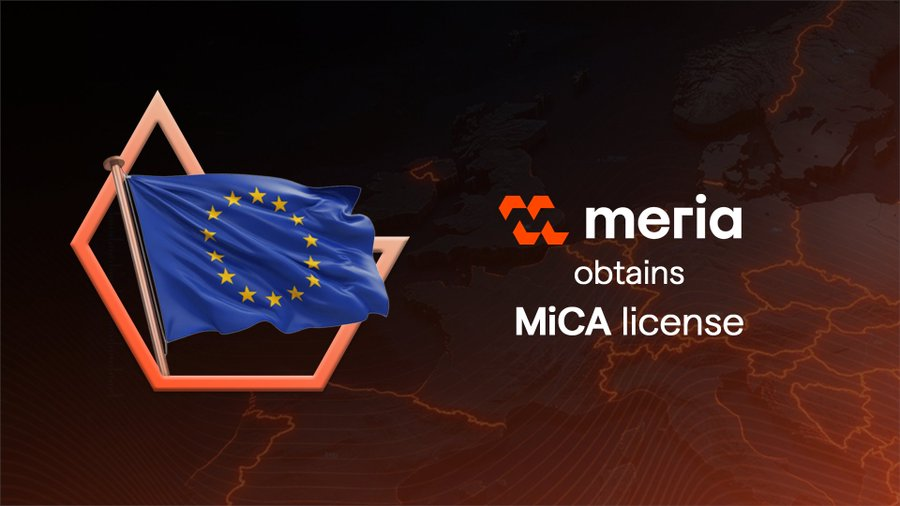
One thing that sets Meria apart is that it obtained MiCA PSCA approval from the AMF in June 2026 under license A2026-020, according to an announcement on Meria’s X account, covering custody, exchange, advice, and portfolio management. That’s a regulatory position most platforms in this space still don’t have.
Here’s what you can currently earn across Meria’s products:
| Product | Earning Range |
| Staking | Up to 22% APR |
| Lending | Up to 10% APR |
| Stablecoin yield | Up to 7% |
| On-chain staking | Varies by network |
Rates change with market conditions and network activity, so check the live figures on Meria’s site before depositing anything.
Am I Eligible to Use Meria Finance?
Eligibility to use Meria Finance depends only on its access requirements: as of July 2026, there is no token or airdrop to qualify for. Account-based products need KYC and are restricted in some countries, with a €25 minimum (€30,000 for managed portfolios), while on-chain staking needs only a supported wallet and no KYC.
- Country of residence: Some products are restricted by jurisdiction. Not every account type is available everywhere, and Meria’s onboarding flow will confirm which options are available to you based on where you live.
- KYC verification: Required for account-based products. Standard KYC covers your country of residence, an identity document, and a face scan. Advanced KYC may also ask for proof of address and source of funds, depending on which product you use.
- No KYC needed for on-chain staking: If you’d rather skip account creation and KYC entirely, the on-chain staking route only requires a supported wallet and a network Meria’s validators support.
- Minimum funding: €25 for standard products; €30,000 for managed portfolios for larger investors.
If these requirements don’t fit your situation, on-chain staking skips the account and KYC steps entirely.
How to Get Started With Meria Finance
Meria gives you two ways in: an account-based platform or on-chain staking.
Path 1: Account-Based Platform
- Create an account. Go to the Meria Finance website and sign up as an individual or professional user. This path gives you access to buying, selling, and exchanging crypto, DCA, bundles, staking, lending, stablecoin yield, and managed investment products, plus business accounts and advisor tools if you’re managing money for others.
- Complete KYC verification. Standard KYC asks for your country of residence, an identity document, and a face scan. Advanced KYC may also require proof of address and source of funds, depending on the product.
- Choose a product. Once your account is approved, you can access staking, lending, stablecoin yield, DCA, bundles, or managed portfolios, depending on your account type and country.
Path 2: On-Chain Staking
- Connect your wallet. No account or KYC needed. Go to Meria’s on-chain staking portal and connect a supported wallet directly.
- Pick a network and delegate. Choose from more than 30 proof-of-stake networks and delegate straight to a Meria validator. This route runs on infrastructure with more than 800 nodes, 50,000+ delegators, and over $300 million already staked.
- Check the terms before committing funds. Confirm the live APR, validator fee, gas cost, lock-up period, unstaking rules, and slashing risk for whichever network you choose.
Country restrictions apply to some products, so availability depends on where you live.
Risks to Know Before Using Meria Finance
Staking and yield products carry their own set of risks worth understanding before you deposit anything.
1. Lock-Up and Liquidity Risk
Some staking and yield products come with lock-up periods. Funds may not be accessible on demand, and early withdrawal, where it’s allowed, can reduce your returns.
2. Validator and Slashing Risk
On-chain staking ties your returns to the performance of the specific validator you delegate to. Proof-of-stake networks can slash staked funds if a validator misbehaves or goes offline, even when the delegator did nothing wrong.
3. Platform and Custody Risk
Using Meria’s account-based products means trusting the platform with custody of your funds for certain services. Regulatory approval lowers some of that risk but doesn’t remove it.
4. Rate Volatility
Advertised APRs aren’t fixed. Staking rewards track network activity and validator performance; lending rates track borrower demand; and stablecoin yields can drop with liquidity conditions. The 22%, 10%, and 7% figures above are snapshots, not guarantees, so check the live rate before depositing.
5. KYC and Data Exposure
Standard and advanced KYC require personal documents and, in some cases, proof of address or source of funds. Weigh how much data you’re comfortable sharing before starting.
Still Learning How Crypto Airdrops Work?
If this is one of your first airdrop campaigns, start with our crypto airdrops guide page to get a solid foundation on how airdrops work and what to look for. It is also worth checking the most common airdrop farming mistakes before you dive in, since several of them apply directly to campaigns like this one.
Frequently Asked Questions
Here are clear answers to the most common questions about Meria’s token status, eligibility, and staking risks before you sign up.
Is there a Meria Finance airdrop or token?
No. As of July 2026, Meria has not announced a token, airdrop, or points campaign. Its earning options are staking, lending, and stablecoin yield products.
Do I need a Meria account to stake?
No. Meria’s on-chain staking portal lets you connect a personal wallet and delegate to a Meria validator without opening an account.
What’s the minimum amount to start with Meria?
Individual users can start from €25. Managed portfolios for larger investors start at €30,000.
Is Meria regulated?
Yes. Meria holds MiCA PSCA approval from the AMF under license number A2026-020, covering custody, exchange, advice, and portfolio management.
What happens if a Meria validator gets slashed?
The slashing penalty applies to the staked funds regardless of whether the delegator caused the issue, which is why checking a validator’s track record and fees before delegating matters.