Key Takeaways:
- The top blockchain bridges in 2026 process billions in cross-chain transfers monthly
- LayerZero’s Zero blockchain will handle 2 million transactions per second when it launches
- Security models shifted from wrapped assets to Zero-Knowledge proofs and optimistic verification
The top blockchain bridges in 2026 evolved beyond simple asset transfers into comprehensive omnichain protocols. LayerZero dominates with 70% market share and launches a 2 million TPS Layer-1 blockchain. Wormhole supports over 30 networks through decentralized Guardian validation. Axelar pivoted toward chain abstraction after Circle acquired its development team. Chainlink CCIP became the institutional standard through its Coinbase partnership. Across Protocol leads Layer-2 bridging with sub-minute transfer times.
How Does LayerZero Dominate Cross-Chain Messaging?
LayerZero maintains approximately 70% market share in cross-chain messaging volume as of 2026. The protocol revolutionized how blockchains communicate by decoupling oracles from relayers. This separation creates trustless verification without requiring wrapped tokens or liquidity pools.
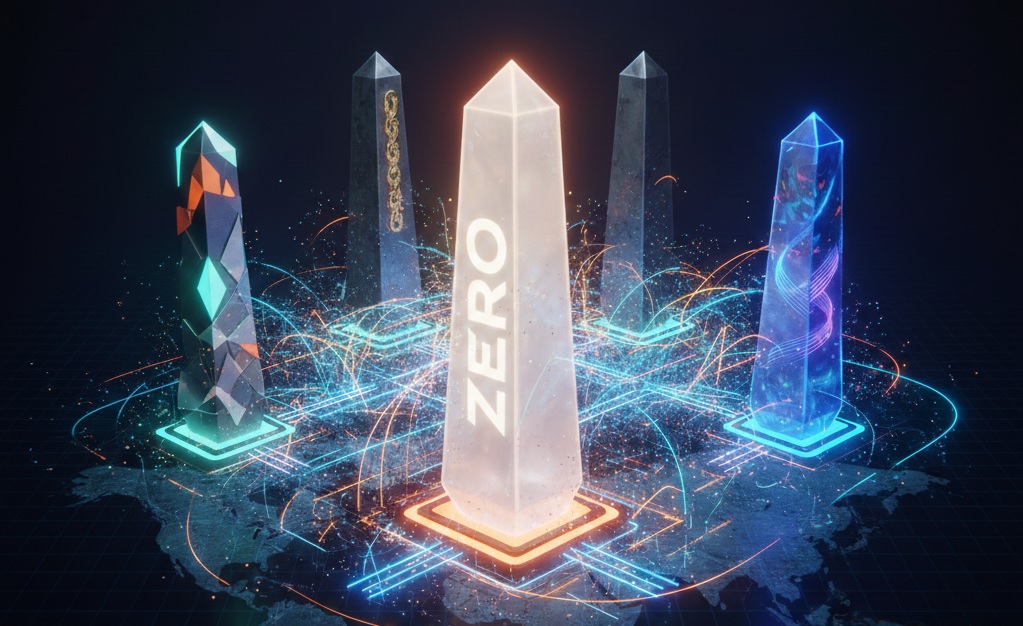
What Is LayerZero’s Zero Blockchain?
LayerZero Labs launches Zero, a new Layer-1 blockchain, in September 2026. The project aims to process 2 million transactions per second per zone. Zero uses Jolt zkVM technology developed by a16z for unprecedented speed.
The technical architecture delivers several breakthrough capabilities:
- Near-Zero Fees: Transaction costs drop to sub-$0.01 levels for internal messaging
- Private Transactions: ZK proofs enable confidential transfers without sacrificing speed
- Execution Decoupling: Separating execution from verification multiplies throughput capacity
- Zone Architecture: Multiple zones run parallel processing for linear scalability
Institutional backing validates LayerZero’s approach. Citadel Securities, DTCC, and Intercontinental Exchange partnered with the protocol. These partnerships explore on-chain clearing, settlement, and asset tokenization. Traditional finance giants rarely commit to crypto projects without rigorous due diligence.
How Does LayerZero’s Security Model Work?
The protocol uses immutable verification through ZK-Light Clients for trustless operation. Oracle and relayer separation means no single entity can manipulate cross-chain messages. Version 2 architecture launched in 2024 underwent over 30 independent audits.
Security firms like Zellic and OtterSec thoroughly examined the codebase. LayerZero maintains a historically clean record with no major exploits. This track record matters when billions flow through bridge infrastructure daily.
Fee structures use a pay-once model for user convenience. You pay source gas plus estimated destination gas in the source token. No wrapped assets or liquidity provider fees complicate the process. Zero blockchain launch will reduce internal messaging costs to fractions of a penny.
Why Did Wormhole Become Essential Infrastructure?
Wormhole supports over 30 blockchain networks through its Guardian validation system. Nineteen validators must sign messages before cross-chain transfers execute. This decentralized approach prevents single points of failure.
What Security Improvements Did Wormhole Implement?
The 2022 hack costing $326 million forced major security overhauls. Wormhole now implements the industry’s largest bug bounty at $10 million. Circuit breakers freeze suspicious flows automatically before damage occurs.
Zero-Knowledge proofs now secure Ethereum-to-Solana transfers. This cryptographic verification eliminates trust assumptions about validator honesty. The ZK implementation works alongside Guardian signatures for layered security.
Recent security enhancements include:
- Multi-Signature Requirements: Supermajority of Guardians must approve transfers
- Real-Time Monitoring: Automated systems detect unusual transaction patterns
- Emergency Pauses: Circuit breakers halt operations during detected anomalies
- Regular Audits: Continuous security reviews by independent firms
What New Features Launched in 2026?
MultiGov represents the first multichain DAO governance system. Token holders can vote on proposals affecting multiple chains simultaneously. This unified governance simplifies coordination across different blockchain ecosystems.
Wormhole Queries enable real-time cross-chain data retrieval. Applications can access information from any supported chain instantly. This feature supports complex DeFi applications requiring multi-chain data.
Tokenomics 2.0 upgrade introduced the Wormhole Reserve accumulating protocol revenue. Stakers earn 4% base yield for governance participation. This incentive structure encourages long-term holding and active governance.
Ripple chose Wormhole for RLUSD stablecoin expansion across Ethereum Layer-2 networks. The Native Token Transfers standard facilitates this deployment. Major institutional adoption validates Wormhole’s reliability and scalability.
How Did Axelar Pivot Toward Chain Abstraction?
Axelar positioned itself as the chain abstraction layer making underlying networks invisible to users. The AXL token captures value through increased cross-chain message volume. This business model differs from fee-based revenue approaches.
What Happened with Circle’s Acquisition?
Circle completed acquisition of Interop Labs, Axelar’s core development team, in early 2026. The Axelar Network, Foundation, and AXL token remain independent entities. Common Prefix now provides stewardship for the decentralized protocol.
This separation preserves decentralization while giving developers resources at Circle. The arrangement represents a new model for crypto project transitions. Development continues under well-funded corporate support without compromising token holder interests.
Axelar’s 2026 roadmap includes several ambitious features:
- Blue-Chip Co-Staking: Economic security through staking established assets
- Gasless Bridging: Leveraging idle gateway capital eliminates user gas fees
- Privacy Features: Institutional-grade confidential transactions
- Compliance Tools: Built-in regulatory reporting for enterprise users
Which Networks Does Axelar Connect?
Axelar provides first cross-chain connectivity for XRP Ledger EVM sidechain. This integration connects XRPL to over 80 different blockchains. The connection opens DeFi opportunities for XRP holders previously limited by network isolation.
The protocol uses Proof-of-Stake consensus through its Cosmos-based blockchain. Validators vote on cross-chain events democratically. Security ties directly to AXL token market capitalization through economic security models.
Ackee Blockchain and NCC Group conduct regular security audits. Axelar maintains a clean exploit record since launch. The protocol’s security depends on validator honesty incentivized through token economics.
Fee structures recently simplified through Gas Receiver contracts. The system automatically converts source tokens to destination tokens. A small 0.05% to 0.1% spread covers conversion costs. This automation removes complexity from the user experience.
Why Do Institutions Choose Chainlink CCIP?
Chainlink’s Cross-Chain Interoperability Protocol became the institutional standard for high-value bridging. Coinbase selected CCIP as exclusive infrastructure for all Coinbase Wrapped Assets in late 2025. This partnership validates CCIP’s security and reliability.
What Makes CCIP’s Security Different?
The Risk Management Network provides secondary monitoring of primary bridge operations. This independent network detects abnormal activity before problems escalate. The dual-layer approach creates zero-trust environments required by institutional clients.
CCIP maintains a perfect security record with zero exploits since launch. Traditional financial institutions demand this level of reliability. Banks and asset managers can’t risk customer funds on unproven technology.
Integration with Chainlink’s existing oracle network strengthens security further. Price feeds, randomness, and automation services complement bridging infrastructure. This ecosystem approach makes CCIP attractive for complex financial applications.
Fee structures reflect the security premium. Users pay in LINK tokens or wrapped assets. Risk Management overhead increases costs compared to other bridges. High-value transfers justify the premium through superior security guarantees.
CCIP works best for institutional applications requiring regulatory compliance. The protocol supports detailed audit trails and reporting. These features matter more to banks than retail users seeking cheap transfers.
How Does Across Protocol Optimize Layer-2 Transfers?
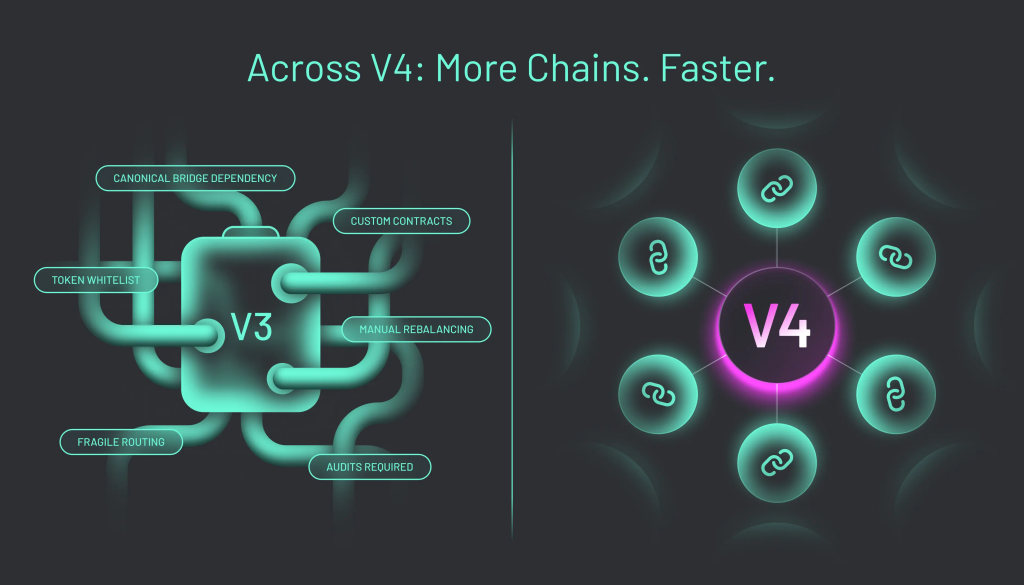
Across Protocol emerged as the fastest and cheapest option for Ethereum Layer-2 bridging. The intent-based architecture delivers transfers in under one minute typically. Speed and cost advantages attract users moving assets between rollups.
What Is Intent-Based Architecture?
The system uses liquidity providers who fulfill transfer requests instantly. Users express intent to move assets. LPs compete to fill orders at best prices. This market-based approach optimizes routing automatically.
Optimistic verification assumes transactions are valid by default. Watchers can challenge fraudulent transfers during delay windows. This model minimizes time assets spend in transit. Faster finality reduces risk exposure.
Key advantages of Across Protocol include:
- Genuine Assets: No wrapped or synthetic tokens required
- Cost Efficiency: Often the cheapest transfer option available
- Speed: Sub-minute execution between major Layer-2 networks
- Simplicity: Straightforward interface without complex parameters
Dynamic LP fees adjust based on available liquidity. Higher liquidity pools charge lower fees. Lower liquidity increases costs to incentivize LP participation. This market mechanism balances supply and demand automatically.
Across specializes in Ethereum Layer-2 connections including Arbitrum, Optimism, Base, and Polygon. The focused approach delivers better performance than generalist bridges. Users moving between these specific networks benefit most.
The protocol maintains clean security record without major exploits. Rebalancing mechanisms minimize asset exposure during transfers. Liquidity providers absorb most risk rather than users.
How Do These Bridges Compare on Security?
Security models vary dramatically among the top blockchain bridges in 2026. Understanding these differences helps users choose appropriate protocols for their needs.
LayerZero’s immutable verification through ZK-Light Clients eliminates trust assumptions. The oracle-relayer separation prevents collusion attacks. Over 30 independent audits validated Version 2 architecture.
Wormhole combines Guardian signatures with Zero-Knowledge proofs. The 2022 hack prompted industry-leading $10 million bug bounty. Circuit breakers now catch suspicious activity automatically.
Axelar’s Proof-of-Stake security depends on validator economic incentives. No major exploits occurred since launch. Regular audits by Ackee Blockchain and NCC Group maintain code quality.
Chainlink CCIP’s Risk Management Network provides unmatched institutional security. Zero exploits and zero-trust design justify premium fees. Banks and asset managers prioritize this level of protection.
Across Protocol’s optimistic verification balances speed with security. Watcher challenges during delay windows prevent fraud. Rebalancing mechanisms minimize exposure time.
Frequently Asked Questions
Which are the top blockchain bridges in 2026?
The top blockchain bridges in 2026 are LayerZero, Wormhole, Axelar, Chainlink CCIP, and Across Protocol. These platforms handle billions in cross-chain transfers with different specializations in speed, security, and supported networks.
Is LayerZero’s Zero blockchain launching in 2026?
Yes, LayerZero Labs launches the Zero blockchain in September 2026. The Layer-1 network will process 2 million transactions per second per zone with near-zero fees using Jolt zkVM technology.
How secure is Wormhole after the 2022 hack?
Wormhole implemented major security upgrades including Zero-Knowledge proofs, circuit breakers, and a $10 million bug bounty. Nineteen Guardian validators must approve transfers, and real-time monitoring detects suspicious activity.
Why did Coinbase choose Chainlink CCIP?
Coinbase selected CCIP as exclusive bridging infrastructure for Coinbase Wrapped Assets due to its institutional-grade security. The Risk Management Network and zero-exploit record meet banking standards for high-value transfers.
Which bridge is fastest for Layer-2 transfers?
Across Protocol typically delivers the fastest Layer-2 transfers, often under one minute. The intent-based architecture with liquidity providers competing for orders optimizes speed and cost for Ethereum rollup connections.