Buying Bitcoin without submitting identification is still possible in some cases, but the options are much narrower than they once were.
Most centralized exchanges (CEXs) require Know Your Customer (KYC) verification, while some peer-to-peer (P2P) platforms let buyers and sellers trade directly without the platform collecting identity documents.
Buying without ID should not be confused with buying Bitcoin anonymously. Bitcoin transactions are permanently recorded on a public blockchain, and addresses can sometimes be connected to real-world identities through exchanges, payment methods, and blockchain analysis. Bitcoin.org describes Bitcoin as pseudonymous rather than fully anonymous.
Many users therefore aim for financial privacy rather than invisibility. This guide explains the legitimate ways to buy Bitcoin without giving an exchange a government-issued ID, how the main methods compare, and why local laws and payment methods still matter.
What Does Buying Bitcoin Without ID Mean?
Buying Bitcoin without ID generally means acquiring BTC without submitting documents such as a passport, driver’s license, or national identity card to the trading platform.
Financial businesses use KYC procedures to verify their customers. Large CEXs typically collect identifying information because of anti-money laundering and other regulatory requirements in the jurisdictions where they operate.
A no-ID Bitcoin purchase works differently. For example, a decentralized P2P platform may connect a buyer directly with another individual without holding the buyer’s fiat money or requiring the platform to verify the user’s identity.
That does not necessarily make the trade anonymous. A bank transfer, payment app, or other payment method may still reveal information to the counterparty or payment provider.
Is Bitcoin Anonymous?
No. Bitcoin is better described as pseudonymous. Bitcoin addresses do not automatically include your name, but every confirmed transaction is stored publicly and permanently on the blockchain. Anyone can inspect an address’s transaction history and balance.
The privacy problem appears when an address becomes connected to a person. For example, if BTC is withdrawn from a verified exchange to a personal wallet, the exchange may hold information that links the customer to the withdrawal address. Reusing addresses or publicly sharing an address can make further connections easier.
Bitcoin.org recommends using a new address for each payment because address reuse can make separate transactions easier to associate with the same user. This is why “no KYC” and “anonymous” are not interchangeable terms.
Can Bitcoin Transactions Be Traced?
Yes. Bitcoin’s public ledger lets you follow transactions from address to address. Blockchain analytics can then combine onchain information with information from exchanges, businesses, or other sources to identify patterns and possible ownership.
That transparency also means Bitcoin is not an invisible payment network. Bitcoin.org explicitly notes that transactions are public, traceable, and permanently stored.
At the same time, a Bitcoin address does not contain a person’s legal identity by default. How easily a transaction can be connected to someone depends on how Bitcoin was acquired, stored, and used.
Can You Legally Buy Bitcoin Without ID?
In some jurisdictions and under some transaction structures, yes. Whether a provider must collect identification depends on local law, the type of service being offered, transaction size, and other regulatory requirements.
A decentralized P2P trade between individuals does not necessarily operate under the same rules as opening an account with a CEX.
However, users should not treat no-KYC services as a way to evade legal requirements, sanctions, taxes, or AML controls.
A platform that does not request identification may still have its own restrictions, and the payment provider used for a trade may impose separate verification requirements.
The safest approach is to check the rules that apply where you live before using a no-ID method.
Ways to Buy Bitcoin Without ID
The available methods differ considerably in privacy, convenience, cost, and counterparty risk.
| Method | ID Required by Platform? | Main Advantage | Main Limitation |
| Bisq | No platform registration or ID verification | Decentralized and non-custodial | More complex for beginners |
| Hodl Hodl | No platform KYC | P2P trades with multisig escrow | Counterparty and payment-method risk |
| Bitcoin ATM | Depends on operator and local rules | Convenient cash access | Often high fees and verification limits |
| Direct P2P trade | Depends on parties/payment method | Flexible | Higher counterparty and safety risk |
Table 1. Common Ways to Buy Bitcoin Without ID
Buy Bitcoin Through Bisq

Bisq is one of the better-known options for buying and selling Bitcoin without submitting identity documents to a CEX.
The platform is an open-source P2P Bitcoin exchange network that does not require registration with a central authority or identity verification, and trades happen between users rather than through a custodial exchange.
Bisq also routes its network traffic through Tor by default and stores user data locally instead of sending it to a central server.
The trade-off in this platform is usability, as Bisq is not as simple as signing up for a conventional exchange and clicking “Buy.” Users need their own Bitcoin wallet and must understand the selected payment method and trade process.
Its no-KYC design also does not guarantee complete anonymity. A fiat payment method may expose information to the counterparty or financial institution involved.
Buy Bitcoin Through Hodl Hodl

Hodl Hodl is another P2P Bitcoin marketplace that does not require users to complete platform KYC.
Buyers and sellers deal directly with each other, while Bitcoin is temporarily secured in a multisignature escrow address. Notably, Hodl Hodl does not hold users’ fiat funds.
According to the platform, users can create an account with an email address and password without submitting identity verification.
Its current standard trading fee is 0.75% per user, with a lower rate available under its referral system.
Again, no platform KYC does not necessarily mean the entire transaction is private. If the seller accepts a bank transfer, for example, the bank and counterparty can still see payment-related information.
Use a Bitcoin ATM Where Permitted
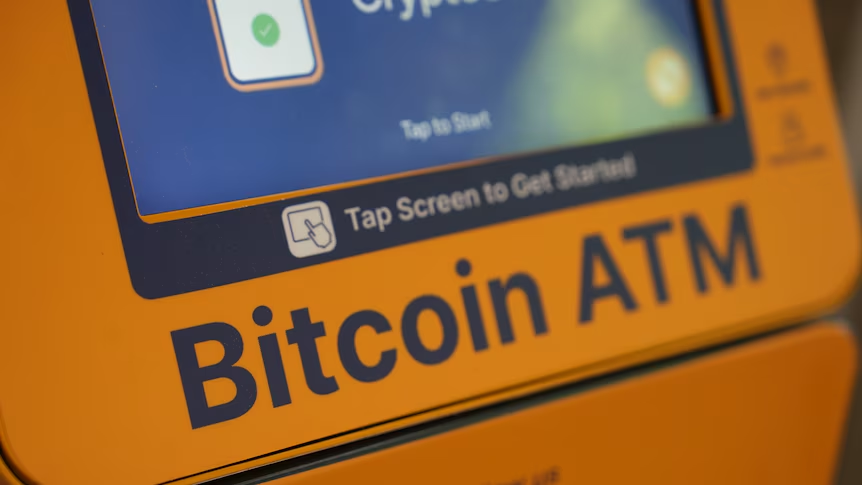
Bitcoin automated teller machines (ATMs) let users buy crypto with cash or other supported payment methods.
Whether an ATM lets you buy Bitcoin without identification depends on the operator, transaction amount, and local regulations. Users should not assume that a Bitcoin ATM is automatically a no-KYC option.
In the United States, for example, crypto kiosk operators can fall under anti-money laundering requirements, and the Financial Crimes Enforcement Network (FinCEN) has specifically addressed customer identification and suspicious activity involving crypto kiosks.
Bitcoin ATMs can also be more expensive than exchanges and P2P marketplaces.
Another important risk is scams. The US Federal Trade Commission (FTC) reported more than $65 million in consumer losses involving Bitcoin ATMs during the first half of 2024 alone. Scammers commonly impersonate businesses or government agencies and tell victims to deposit cash into a crypto ATM.
No legitimate government agency will tell you to move money through a Bitcoin ATM to “protect” it.
Buy Bitcoin Directly From Another Person

A direct P2P transaction is conceptually simple: one person pays another person and receives Bitcoin directly into a wallet.
There may be no centralized exchange account or platform KYC involved. However, this approach carries considerably more counterparty risk when there is no escrow or dispute-resolution system.
The buyer must be confident that the seller will actually send the Bitcoin, while the seller must know that the payment cannot easily be reversed.
In-person cash transactions create additional personal-safety concerns.
For most users who want P2P access, an established platform with escrow and a clear dispute process can provide protections that an informal direct trade does not.
What About Buying Bitcoin With a Credit or Prepaid Card?
Credit and debit cards are usually poor tools for someone specifically trying to buy Bitcoin without ID.
Card payments inherently pass through regulated financial institutions and are connected to an account or payment credential. Crypto platforms accepting cards may also require their own identity verification.
Prepaid cards are sometimes presented online as an “anonymous” alternative, but can still be misleading. Card issuers and merchants can impose activation, transaction, or identity requirements, and crypto sellers may not accept them at all.
A card therefore should not be treated as a guaranteed way to purchase Bitcoin privately.
If your main goal is convenience rather than avoiding KYC, a regulated exchange may provide lower fees and better liquidity than trying to find a seller that accepts prepaid cards.
Why Do People Buy Bitcoin Without KYC?
Not everyone looking for no-KYC Bitcoin is trying to conceal illegal activity.
A user may simply prefer not to give a passport, selfie, and other sensitive information to another online company. Centralized databases containing identity documents can create their own privacy and security concerns.
P2P trading can also matter for users in regions where access to centralized exchanges or banking services is limited. Privacy is therefore a legitimate reason to explore decentralized Bitcoin markets.
At the same time, crypto crime does exist. Chainalysis estimated that identified illicit crypto addresses received at least $154 billion in 2025, although illicit activity still represented less than 1% of attributed crypto transaction volume under its methodology.
No-KYC Does Not Mean No Data Trail
This is one of the most important points missing from many guides about buying Bitcoin without ID.
Suppose you buy BTC on a platform that does not ask for your passport but pay the seller through a bank transfer.
The trading platform may not know your identity, but your bank knows about the fiat transfer, and the seller may see the name attached to the payment.
Likewise, if you later send that BTC to a centralized exchange account verified in your name, blockchain analysis may connect previously separate activity.
Privacy therefore exists in layers:
| Layer | Information That May Be Visible |
| Bitcoin blockchain | Addresses, amounts and transaction history |
| P2P platform | Account and trade information depending on platform |
| Payment provider | Fiat sender and recipient information |
| Counterparty | Details exposed by the chosen payment method |
| Centralized exchange | Identity and linked deposit/withdrawal addresses |
Table 2. Where Information Can Be Exposed in a No-KYC Bitcoin Purchase
Simply removing the exchange’s identity-verification step does not remove every other source of identifying information.
No-KYC Bitcoin Versus Centralized Exchanges
No-KYC P2P trading and CEXs solve different problems.
A CEX generally offers deeper liquidity, straightforward order execution, and easier bank or card integration. The trade-off is that users normally need an account and identity verification.
P2P markets can reduce the personal information you share with a CEX, but liquidity may be lower, prices can differ from the broader market, and users need to evaluate counterparties and payment methods more carefully.
| Feature | No-KYC P2P Market | Centralized Exchange |
| Government ID submitted to platform | Often no | Usually yes |
| Liquidity | Varies by market | Generally higher |
| Trade counterparties | Other users | Exchange/order book |
| Fiat payment choices | Can be flexible | Depends on exchange |
| Ease of use | Usually more involved | Usually simpler |
| Privacy | Potentially higher | Lower due to account verification |
| Counterparty considerations | Higher | Lower for normal order-book trades |
Table 3. P2P No-KYC Bitcoin vs. Centralized Exchanges
Users who do not specifically need a no-KYC route may find a regulated exchange easier. Our guide to the best cryptocurrency exchanges by country can help you compare options available in different regions.
What Are the Risks of Buying Bitcoin Without ID?
The main trade-off for increased privacy is that users often take on more responsibility.
Scams and Counterparty Risk
P2P sellers are individuals, so buyers need to check the platform’s escrow mechanism, reputation system, and dispute procedures.
Never release or confirm a payment outside the marketplace rules just because another trader asks you to.
Higher Prices and Fees
A seller offering a harder-to-find payment method may charge a premium over Bitcoin’s spot price.
Bitcoin ATMs can also carry substantial transaction fees or exchange-rate spreads.
Always compare the final amount of BTC you receive, not just the advertised Bitcoin price.
Lower Liquidity
A major CEX can match buyers and sellers continuously across a large order book.
P2P markets depend on available offers. The payment method, currency, or amount you want may have only a few sellers, especially in smaller markets.
Payment Privacy
A no-KYC exchange does not make an identifiable bank transfer anonymous.
Check what information your chosen payment method reveals before assuming the trade protects your identity from every participant.
Regulatory Differences
Rules vary significantly by country and can change.
A service that operates without customer identification in one jurisdiction may be restricted or unavailable elsewhere. Users remain responsible for complying with applicable laws.
How to Improve Bitcoin Privacy After Buying
Privacy does not stop at the purchase. Bitcoin.org recommends using a fresh address for each payment because address reuse makes it easier for observers to connect transactions.
Keeping separate wallets for different purposes can also reduce unnecessary links between otherwise unrelated transactions.
For long-term holdings, self-custody means you control the private keys instead of leaving Bitcoin with an exchange. That removes exchange counterparty risk, but it also makes you responsible for securing wallet backups and recovery information.
If you plan to hold BTC yourself, our guide to the best cryptocurrency hardware wallets compares popular options for offline key storage.
Use privacy tools for legitimate privacy purposes and in accordance with applicable law. In particular, users should be cautious about services promising to make Bitcoin transactions “untraceable,” since those claims can be misleading and some privacy services may carry additional legal or counterparty risks.
Is Buying Bitcoin Without ID Worth It?
It usually depends on what problem you are trying to solve.
If your priority is minimizing how many companies hold copies of your identity documents, a non-custodial P2P platform can provide a legitimate alternative to a standard CEX. Both currently allow Bitcoin trading without platform identity verification.
But the trade-off is convenience. You may encounter lower liquidity, price premiums, additional steps, and more responsibility for evaluating counterparties and payment methods.
If your goal is complete anonymity, however, buying Bitcoin without KYC does not achieve that on its own. Bitcoin remains a transparent public ledger, and offchain information can still link transactions to people.
For most users, it is more accurate to think in terms of improving financial privacy rather than becoming anonymous.
Frequently Asked Questions
Need a refresher? Here are some common questions about buying Bitcoin without ID.
Can You Buy Bitcoin Without ID?
Yes. Some P2P Bitcoin platforms do not require users to submit identity documents. Bisq requires no central registration or identity verification, while Hodl Hodl currently allows P2P Bitcoin trading without KYC.
Is Buying Bitcoin Without KYC Anonymous?
No. Bitcoin transactions remain publicly visible on the blockchain, and payment methods, counterparties, or later exchange activity may reveal identifying information. No-KYC simply means a particular service does not perform conventional identity verification.
What Is the Difference Between KYC and No-KYC Bitcoin?
A KYC platform verifies a user’s identity, usually using personal details and government-issued documents. A no-KYC platform does not require that conventional identity-verification process from the user, although other parties involved in the payment may still know their identity.
Can You Buy Bitcoin With Cash Without ID?
It may be possible through some P2P arrangements or Bitcoin ATMs, but requirements depend on the service, transaction amount, and local regulations. Users should check the specific provider rather than assuming cash purchases require no verification.
What Is the Most Private Way to Buy Bitcoin?
No method guarantees complete anonymity. Non-custodial P2P platforms can reduce the identity information you share with a CEX, but Bitcoin transactions remain public, and fiat payment methods may expose personal information. Privacy depends on the entire transaction process, not only whether an exchange requests ID.