Key Takeaways
- Crypto remittances have become an integral part of the global economy, enabling users to transact with ease and contributing to global remittances according to the World Bank.
- The use of stablecoins continues to surge worldwide, including in Africa, as many families turn to them as a payment method ahead of traditional banks.
- Speed, low fees, security, data protection, user experience, global acceptance, and other features are driving the adoption of crypto remittances.
The use of crypto remittances has gained strong popularity across many countries, as this digital asset is transforming the financial landscape by providing solutions for cross-border payments and simplifying complex processes associated with traditional finance.
Sending money across the world with traditional finance or banks usually takes 2-5 working days and can take longer due to holidays, weekends, and bank closures, prompting many businesses and users to seek better alternatives for sending and receiving money worldwide.
Crypto remittances have gained significant adoption in the last few years across African countries, as these regions have struggled with cross-border payments and high fees that have left many businesses and users away from traditional payment systems.
Additionally, crypto remittance has become one of the cheapest means of cross-border payment, and it is fast and secure, with all transactions taking place on the blockchain. These features have led to wide adoption. To start with, what is crypto remittance?
What is Crypto Remittance?
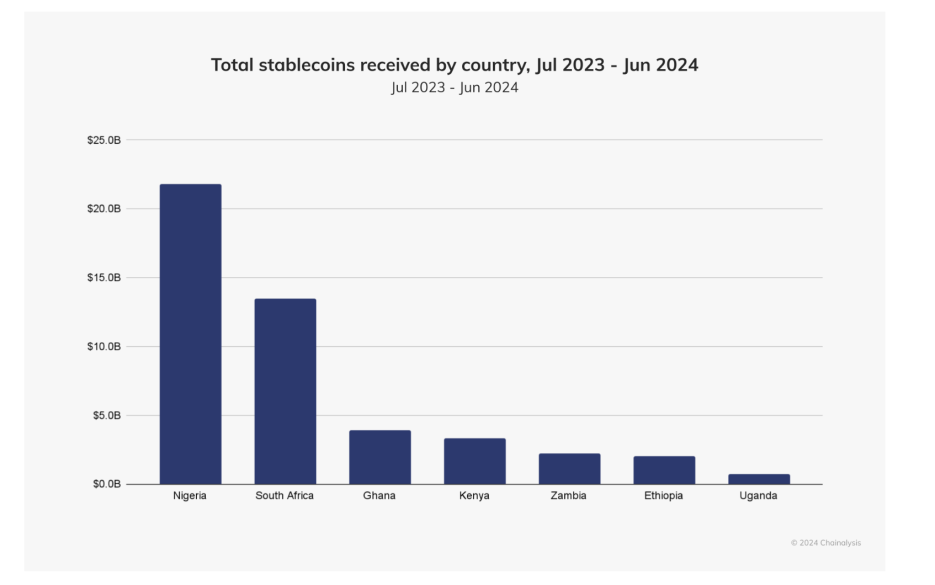
Source – Stablecoin remittance across Africa from Chainalysis
Crypto remittance is the process of transferring money for payment across the world using cryptocurrencies such as Bitcoin, Ethereum, and Solana, as well as stablecoins (USDT, USDC, DAI). The remittance industry has grown significantly over the years, as the World Bank estimates the remittance market is worth over $630 billion, with 1 out of 10 families actively participating.
While the remittance market is seen as contributing to the global economy, it has faced many challenges from retailers who send little money across the world and sometimes face exorbitant charges from traditional banks.
The use of crypto remittances eliminates such fears, as transfer charges range from $0.1 to $1 for stablecoin transfers and from $5 to $10 for other cryptocurrencies. According to Chainalysis data, African countries have contributed significantly to the use of stablecoins for crypto remittances worldwide, with Nigeria contributing the most, as it uses this opportunity to pay for services. Why have crypto remittances gained such recognition and adoption in the last few years?
Why is Crypto Remittance Accepted Globally?
1. Fees and exchange rates
Stablecoin and other crypto fees have made cross-border payments easier, allowing users to make payments worldwide with instant settlement at a reduced fee of around $1.
2. Speed
Crypto remittance takes 10 minutes or less, depending on network congestion. Traditional wire transfers may take 1-3 business days.
3. Ease of use and accessibility
Crypto requires both parties to have digital wallets and internet access, with little to no technical knowledge needed to make successful transactions, making it easy for many users with mobile devices and internet access.
Final Thoughts
Crypto remittances are the lifeline for millions of families worldwide, helping them to eliminate the problems and high costs of traditional banking, underscoring the need for innovative solutions. As we navigate the complexities of the remittance landscape, emerging technologies, blockchain solutions, and cryptocurrencies offer promising avenues for a more inclusive and cost-effective remittance economy.
Frequently Asked Questions
What is the best remittance app?
There is no best remittance app; services like PayPal, WISE, Zelle, and others are all used for payments and money transfers.
What should a remittance include?
A remittance application should include options for users to sign up as new users, log in, select a payer and payee, and should be user-friendly.
Which app is good for international transactions?
There are several applications used for international transfers, including Skrill, PayPal, WISE, and other fintech apps.
How do I withdraw crypto to my bank account?
To withdraw crypto to your bank account on OKX, first convert your crypto assets to fiat inside your account, link and verify your bank account (KYC required), and initiate a fiat withdrawal.
Best app to send money to Mexico
There are various mobile platforms for sending money to Mexico, including Bitso, Wise transfers, and stablecoin payments on the blockchain.
Can I Zelle to Mexico?
No, Zelle only works in the U.S., so users can explore using blockchain technology or exchanges to make transfers to Mexico. Bitso can be used.
Are stablecoins better than Bitcoin?
Stablecoins are much more affordable and faster when it comes to remittances, but both offer users a better alternative for cross-border payments compared to traditional banks.
Related Read Includes:
How to Cash Out Crypto in Nigeria (2026 Guide)
How to Send Money to South Africa Using Crypto