Key Takeaways
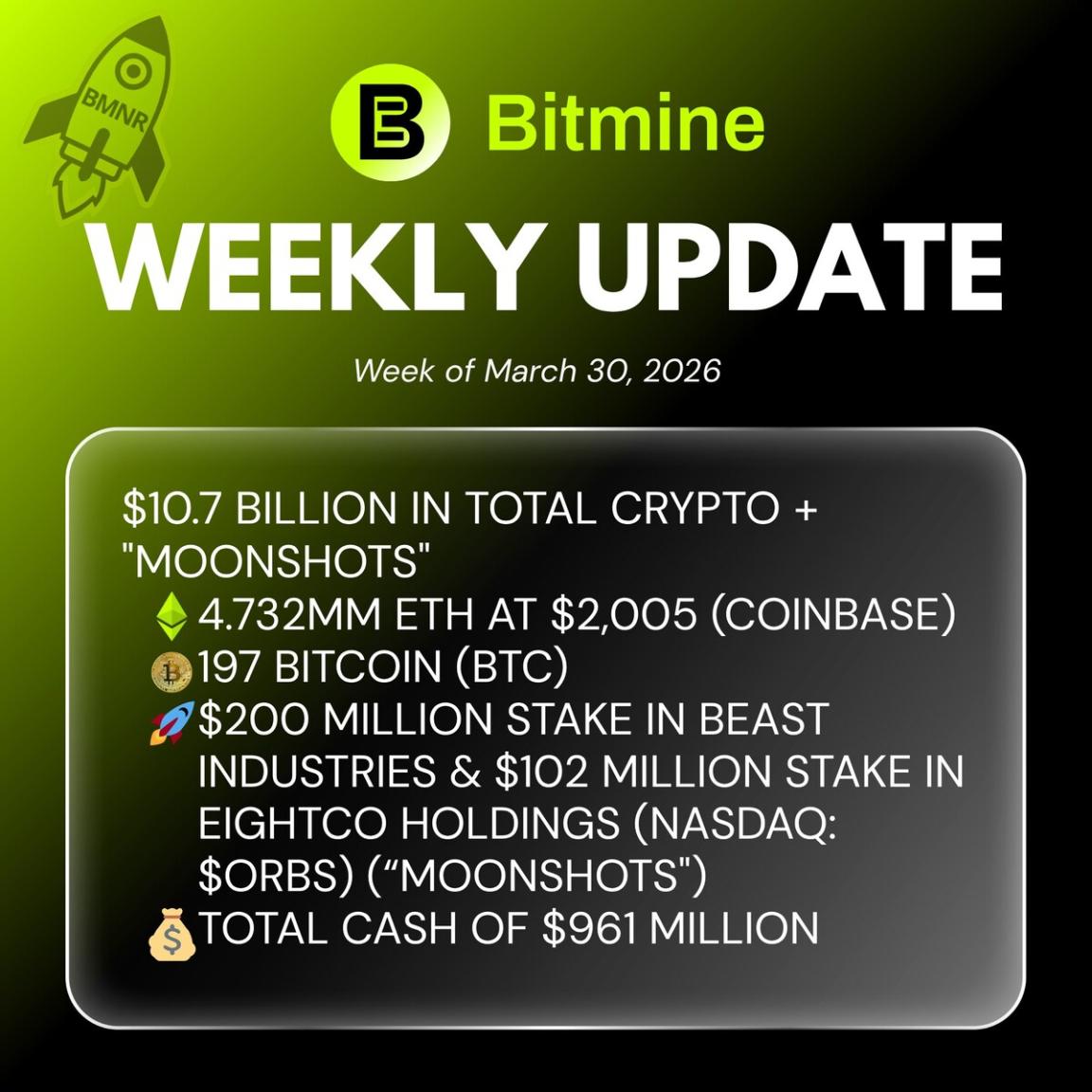
- Companies like BitMine Immersion Technologies are facing unrealized paper losses exceeding $7 billion due to the recent Ether price slide.
- BlackRock’s Bitcoin ETF (IBIT) investors have officially slipped “underwater” as Bitcoin’s price plummeted below the $75,000 mark.
- Extreme winter weather in the US caused a massive drop in public miner production, with daily output falling by over 50%.
BitMine’s ETH paper losses widen
This latest crypto crash is proving to be a “trial by fire” for companies that went all-in on digital assets. Take BitMine Immersion Technologies: with Tom Lee at the helm, the company’s balance sheet is taking a beating now that ETH has dipped under $2,000. We’re talking about a massive 4.28 million ETH treasury that is currently underwater to the tune of $8 billion. Even after recently snagging another 41,000 coins, the firm is feeling the burn. It really goes to show that while “HODLing” sounds great in a bull market, it’s a much scarier game when you’re managing billions in corporate capital.
Is the team panicking? Not according to Tom Lee. He’s doubling down, calling the losses “a feature, not a bug” of their Ethereum-centric strategy. But you can’t ignore the numbers; a deficit this size shows just how much these treasury-heavy firms are at the mercy of the market. For now, it’s just red ink on a screen, but it’s a massive wake-up call for any other business thinking about ditching cash for crypto without a solid hedging plan.
BlackRock Bitcoin ETF holders slip underwater
The volatility hasn’t been limited to corporate treasuries; it is also impacting the newest wave of institutional and retail investors through spot ETFs. BlackRock’s iShares Bitcoin Trust (IBIT), which saw a meteoric rise to $70 billion in assets, is now providing its holders with a firsthand lesson in downside risk.
As Bitcoin extended its decline below $75,000, the average dollar invested in the fund turned negative. This “underwater” status for such a massive pool of capital is a significant psychological milestone for the market, testing the “diamond hands” of traditional investors.
CoreWeave shows how crypto infrastructure became AI’s data center backbone
It’s a tale of two industries: while many are still sweating over price charts, CoreWeave has rewritten its entire future by pivoting its infrastructure. They went from mining Ethereum to becoming an AI-computing powerhouse, providing a perfect survival guide for the tech world.
When Ethereum ditched mining for Proof-of-Stake, the need for GPUs for crypto basically died. CoreWeave didn’t flinch—they pointed their hardware at the AI explosion and secured a massive $2 billion check from Nvidia. It’s a perfect example of how the literal “bricks and mortar” of the crypto age are being reused to build the future of AI data centers.
Final Thoughts
The current market environment is separating purely speculative ventures from resilient infrastructure. While paper losses dominate the headlines, the pivot toward AI-backed computing shows where the real value may lie.
Frequently Asked Questions
Are BlackRock Bitcoin ETF investors losing money?
Yes, as of early 2026, the average investor in BlackRock’s IBIT is currently “underwater” due to Bitcoin’s price drop below $75,000.
How did weather affect Bitcoin mining?
A major US winter storm forced public miners to cut production by over 50% to reduce strain on the power grid.
Why did CoreWeave stop mining crypto?
Following the Ethereum merge, CoreWeave pivoted to provide infrastructure for the AI industry, attracting significant investment from Nvidia.