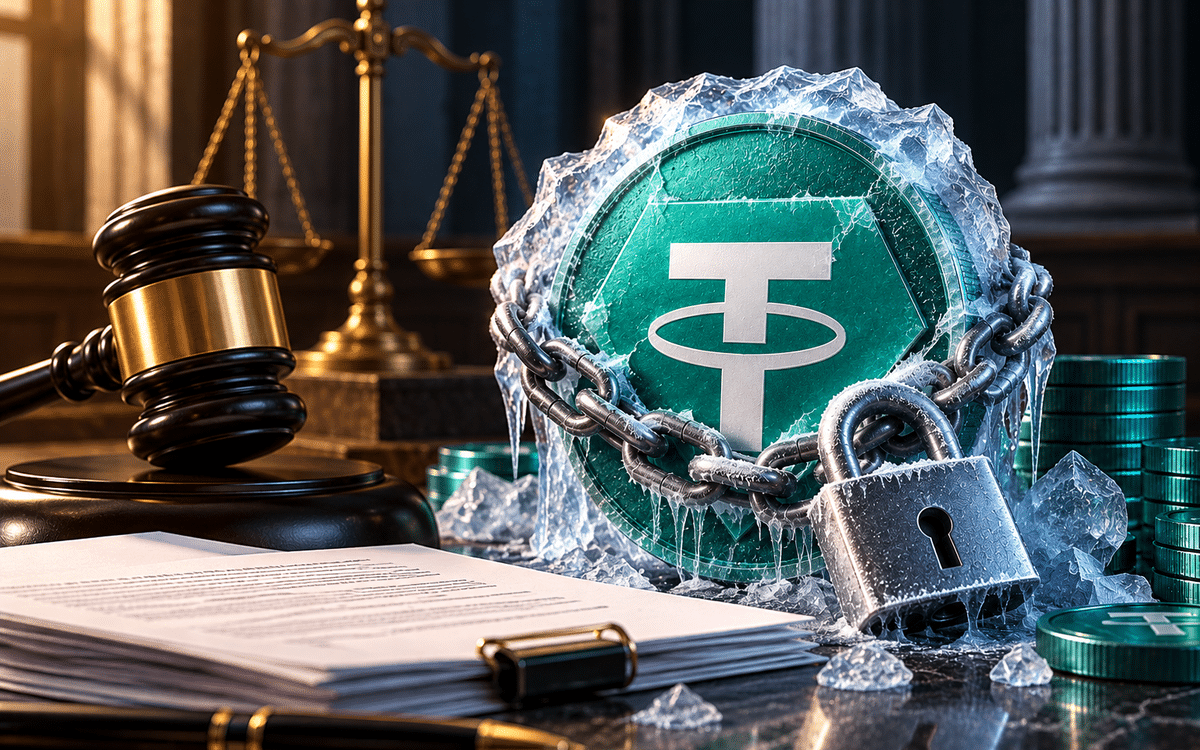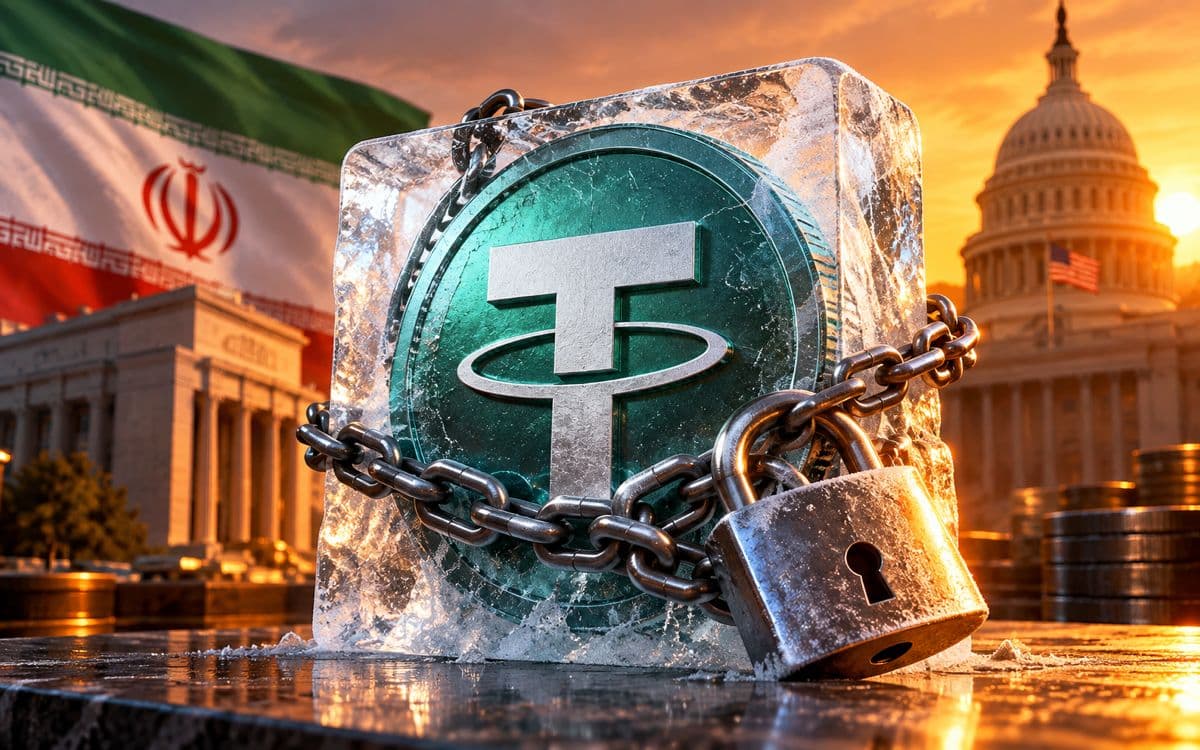
Tether announced on September 28, 2026 that nearly $550 million in USD₮ had been frozen during 2026 across wallets that U.S. authorities identified as connected to Iran’s Central Bank and Iranian sanctions networks.
The disclosure came as U.S. authorities continued expanding sanctions against Iran-linked financial and digital-asset infrastructure under Operation Economic Outcast, the campaign Treasury Secretary Scott Bessent unveiled earlier this year against financial networks supporting the Iranian regime.
Tether CEO Paolo Ardoino said the company has consistently demonstrated that USD₮ is not a haven for sanctioned actors, terrorist organizations, or criminal networks, adding that public blockchains provide authorities visibility into fund movements that simply doesn’t exist with cash, and that Tether can act when credible information is provided by law enforcement.
Tether said the figure came from several enforcement actions during the year, according to the company’s own disclosure: more than $344 million frozen in April, more than $130 million in July, and roughly $75 million through smaller actions between January and September.
How Two Freezes Made Up Most of the Total
In April 2026, Tether said it supported the U.S. government in freezing more than $344 million in USD₮ across two addresses, acting on information from OFAC and U.S. law enforcement.
The following day, OFAC added those addresses as digital-currency identifiers associated with Iran’s Central Bank, with the entry also linking to the Islamic Revolutionary Guard Corps-Qods Force and Hezbollah.
| Iran-Linked USD₮ Actions in 2026 | Reported Amount |
| April freeze | >$344M |
| July freeze | >$130M |
| Other smaller actions, Jan-Sept | ~$75M |
| Tether’s stated 2026 total | ~$550M |
Table 1. Iran-linked USD₮ freezes described by Tether in its September 28 disclosure.
In July, more than $130 million across four wallets was frozen after Treasury expanded the Central Bank of Iran designation to include four additional TRON addresses. The $550 million figure is based on Tether’s own disclosure and shouldn’t be interpreted as a Treasury accounting of all crypto associated with Iran.
A Broader Treasury Campaign Against Iran’s Digital-Asset Networks
The freezes occurred alongside a broader U.S. effort targeting Iran’s financial infrastructure. On June 2, Treasury’s OFAC designated Nobitex, described as Iran’s largest digital-asset exchange, along with three other Iranian exchanges, saying Nobitex processed more than 50% of all Iranian digital-asset inflows in 2025.
Treasury continued in August, targeting Iranian networks that helped move revenue through exchange houses and front companies, its eighth action in 2026 targeting Iran’s shadow-banking apparatus.
On September 17, OFAC designated BitBank, controlled by sanctioned financier Babak Zanjani and used to move hundreds of millions in Bitcoin to the IRGC. The State Department said that day’s action targeted two entities and three individuals under Executive Order 13902, implemented as part of Economic D-Day, and called on nations and the private sector, particularly those operating in digital assets, to exercise vigilance against exploitation by the Iranian regime or its facilitators.
| U.S. Iran-Related Digital-Asset Actions | 2026 Development |
| June 2 | Treasury sanctioned Nobitex and three other Iranian exchanges |
| August 7 | Treasury targeted Iranian financial and exchange-house networks |
| September 17 | Treasury sanctioned BitBank and related entities |
| September 28 | Tether reported ~$550M in Iran-linked USD₮ freezes |
Table 2. Key 2026 developments involving U.S. sanctions and Iran-linked digital-asset infrastructure.
Why Public Blockchains Give Investigators an Edge
Public blockchain transactions can be traced between addresses, though identifying who controls a particular wallet generally requires additional investigative work, a process explained further in how law enforcement uses blockchain analytics to trace crypto. In the cases Tether described, wallet addresses were identified by authorities and subsequently became subject to actions involving USD₮.
A separate case shows what can follow a freeze: prosecutors sought forfeiture of $61.2 million in USDT across ten TRON addresses Tether had frozen in 2025, with a September 14 warrant authorizing the FBI to take custody.
What an OFAC Designation Triggers
Property belonging to designated persons in the U.S. or under U.S. persons’ control is blocked and must be reported to OFAC, with entities owned 50% or more by blocked persons also subject to blocking.
Treasury has warned certain transactions involving designated persons could expose foreign institutions to secondary sanctions, explaining why wallet-level identifiers matter to digital-asset businesses operating internationally.
A Larger Global Enforcement Record Behind the Iran Freezes
The Iran-linked freezes form part of Tether’s broader cooperation with law enforcement. Tether said it works with more than 340 agencies across 67 countries and has supported more than 2,800 investigations globally, resulting in more than $4.9 billion in assets frozen, including more than $2.4 billion connected to U.S. authorities, an enforcement pattern worth understanding alongside what makes NFTs attractive for money laundering.
Tether also described earlier cooperation with Israel’s National Bureau for Counter Terror Financing across more than 40 referred cases. In September 2025, the agency published 187 crypto addresses it linked to the IRGC, and blockchain analytics firm Elliptic later reported that 39 had been blacklisted by Tether, freezing approximately $1.5 million.
What Comes Next
Tether said it will continue cooperating with U.S. and international authorities on investigations involving sanctions evasion, fraud, terrorist financing, and other financial crimes, and has aligned its wallet-freezing policy with the OFAC Specially Designated Nationals list, including secondary-market wallets appearing on it.
The latest disclosure doesn’t mean all cryptocurrency connected to Iran has been frozen, nor does it establish that every wallet in sanctions investigations contains illicit funds.
What this means for you: Tether says nearly $550 million in Iran-linked USD₮ was frozen during 2026 as U.S. authorities expanded sanctions enforcement against Iranian financial and digital-asset networks.
The development shows how public blockchain transactions can become part of sanctions investigations and how a stablecoin issuer can freeze its own tokens in response to information from authorities. The Treasury’s sanctions designations and Tether’s wallet freezes remain separate actions.
This article is for informational purposes only and does not constitute financial, legal, or investment advice. Sanctions designations, wallet freezes, and blockchain investigations can involve complex legal and jurisdictional questions. Figures relating to Tether’s enforcement activity are based on the company’s disclosures and may not represent independently verified totals.