Key Takeaways
- Conduit Technology sued Tether over $2.76 million in USDT that has remained frozen since September 2025.
- Conduit alleges Brazilian authorities never identified its treasury wallet for freezing and that Tether selected the address using its own criteria.
- The payments firm wants its USDT released, at least $2.76 million in damages, and profits allegedly earned from the frozen reserves.
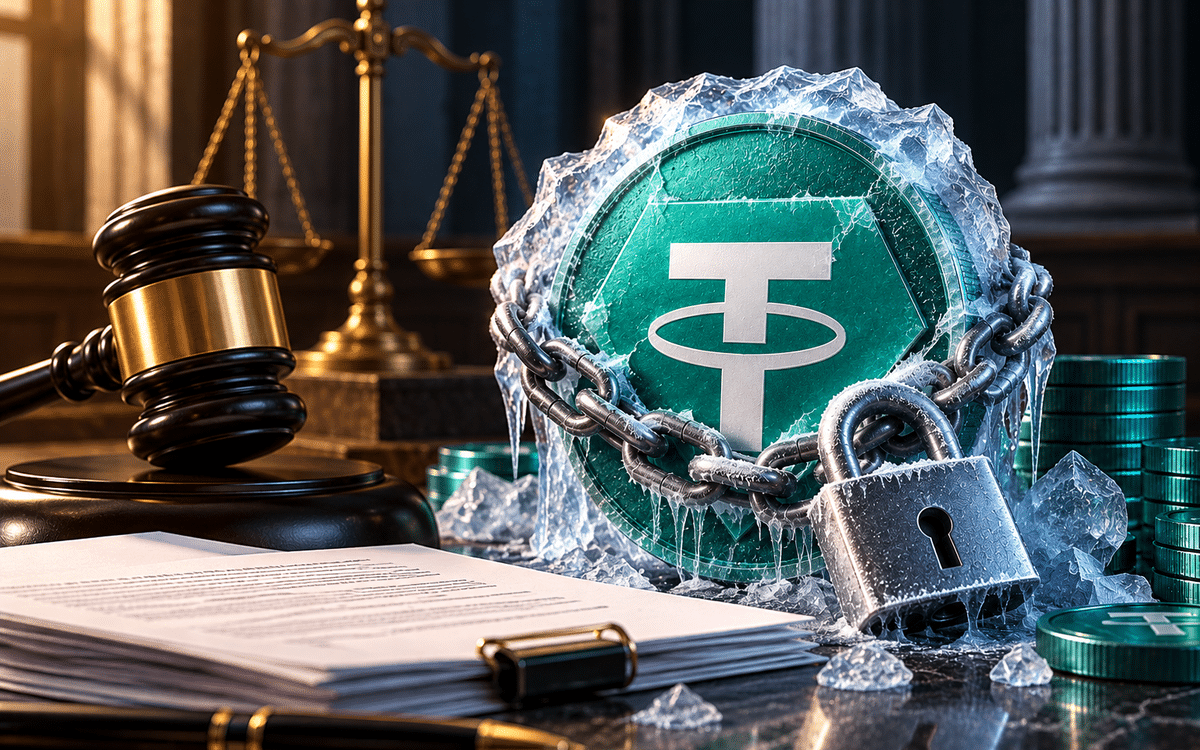
Cross-border payments company Conduit Technology has sued Tether over $2.76 million in USDT that has remained frozen since September 2025, arguing that the stablecoin issuer restricted its corporate treasury wallet without sufficient legal grounds.
Conduit filed the lawsuit on October 5 in the U.S. District Court for the Southern District of New York. The company says the frozen USDT was its own working capital and was not customer money.
The case centers on how Tether can freeze USDT when law enforcement does not directly identify a wallet. Conduit alleges that Brazilian authorities never instructed Tether to freeze its wallet, while Tether’s terms give the issuer broad powers to restrict tokens in certain circumstances. Tether had not publicly responded to Conduit’s allegations.
Conduit Says Brazilian Police Did Not Flag Its Wallet
The dispute traces back to a Brazilian Federal Police investigation that began in 2024 involving financial intermediaries Bull Intermediação de Negócios and Onix Intermediações.
Conduit previously provided payment services to Onix, but says that relationship ended on April 22, 2025. The company created the treasury wallet involved in the lawsuit on May 20, 2025, nearly a month later.
According to Conduit’s complaint, neither Onix nor Bull owned the wallet, deposited funds into it, or used it for transactions.
Brazilian authorities later shared cryptocurrency addresses connected to their investigation with Tether’s T3 Financial Crime Unit. Conduit says its treasury wallet was not included among those addresses.
The company further alleges that Tether identified the wallet independently using its own screening criteria and froze the USDT on September 24, 2025.
Conduit says its lawyers later contacted Brazilian investigators and were told that authorities had not selected the company’s wallet for blocking and did not know why Tether had restricted it. Those claims come from Conduit’s lawsuit and have not been tested by the court.
The Frozen Wallet Held Conduit’s Working Capital
Conduit says the wallet functioned as the equivalent of an operating bank account for its payments business.
Before the freeze, the wallet reportedly processed 4,427 transactions involving 78 counterparties and more than $1.1 billion in total volume between May and September 2025.
The company says the $2.76 million in USDT remaining in the wallet was needed to pre-fund payment routes and support international transactions.
Conduit claims losing access to the funds reduced its operating liquidity and contributed to lower transaction capacity, layoffs, and office closures.
The lawsuit says the wallet still contained approximately $2.76 million in USDT more than a year after the freeze.
The company has continued trying to recover the funds. Conduit says its lawyers contacted Tether in June 2026 and later sent a formal demand on August 19 to lift the freeze.
Tether Has Broad USDT Freeze Powers
The case also highlights an unusual feature of USDT compared with cryptocurrencies such as Bitcoin.
Tether can technically restrict USDT held at specific blockchain addresses. Its current terms say the company may freeze Tether Tokens or blacklist addresses when required by law or when it determines that doing so is prudent under its terms and applicable rules.
Tether’s legal documents also state that the company may take steps to freeze USDT held in external wallets in certain circumstances, including at the request of law enforcement or government authorities.
Tether has used this capability in previous investigations. In 2023, for example, the company said it voluntarily froze about $225 million in USDT after an investigation involving the U.S. Department of Justice and OKX identified wallets connected to an international criminal network.
The company has also frozen roughly $550 million in USDT tied to Iran sanctions and, separately, frozen USDT linked to the Xinbi marketplace. Tether also said it would work with authorities to resolve freezes involving lawful wallet owners where appropriate.
Conduit does not dispute that Tether has the technical ability to freeze USDT. Instead, the lawsuit challenges whether Tether had sufficient legal grounds to use that power against its treasury wallet.
The Case Raises Questions for Stablecoin Users
The dispute could become an important test of the relationship between stablecoin issuers and users who hold USDT in external wallets.
Tether’s ability to freeze tokens is a key part of its compliance model and allows the company to cooperate with law enforcement.
At the same time, Conduit’s lawsuit argues that this power can create problems when an address is restricted even though the wallet owner says it was not the subject of the underlying investigation. That creates a distinction between technical control and legal authority.
Tether may be able to prevent USDT from moving on the blockchain, but the court will have to determine whether the company had the legal right to keep Conduit’s funds frozen under the circumstances described in the complaint.
What Comes Next
The case is still in its early stages. The next developments will likely include Tether’s response to the complaint and any motions challenging the lawsuit.
The court may eventually have to examine why Conduit’s wallet was frozen, what information Tether relied on when making the decision, and whether its terms gave the company sufficient authority to maintain the restriction.
The outcome could also affect how businesses assess counterparty and custody risks when using centralized stablecoins for payment operations.
What This Means for You: The lawsuit does not mean Tether can freeze any USDT without limits, nor does it establish that Conduit was wrongly targeted. It shows that USDT holders face issuer-level freeze risk, and that disputes over those restrictions can ultimately become legal questions rather than purely blockchain transactions.