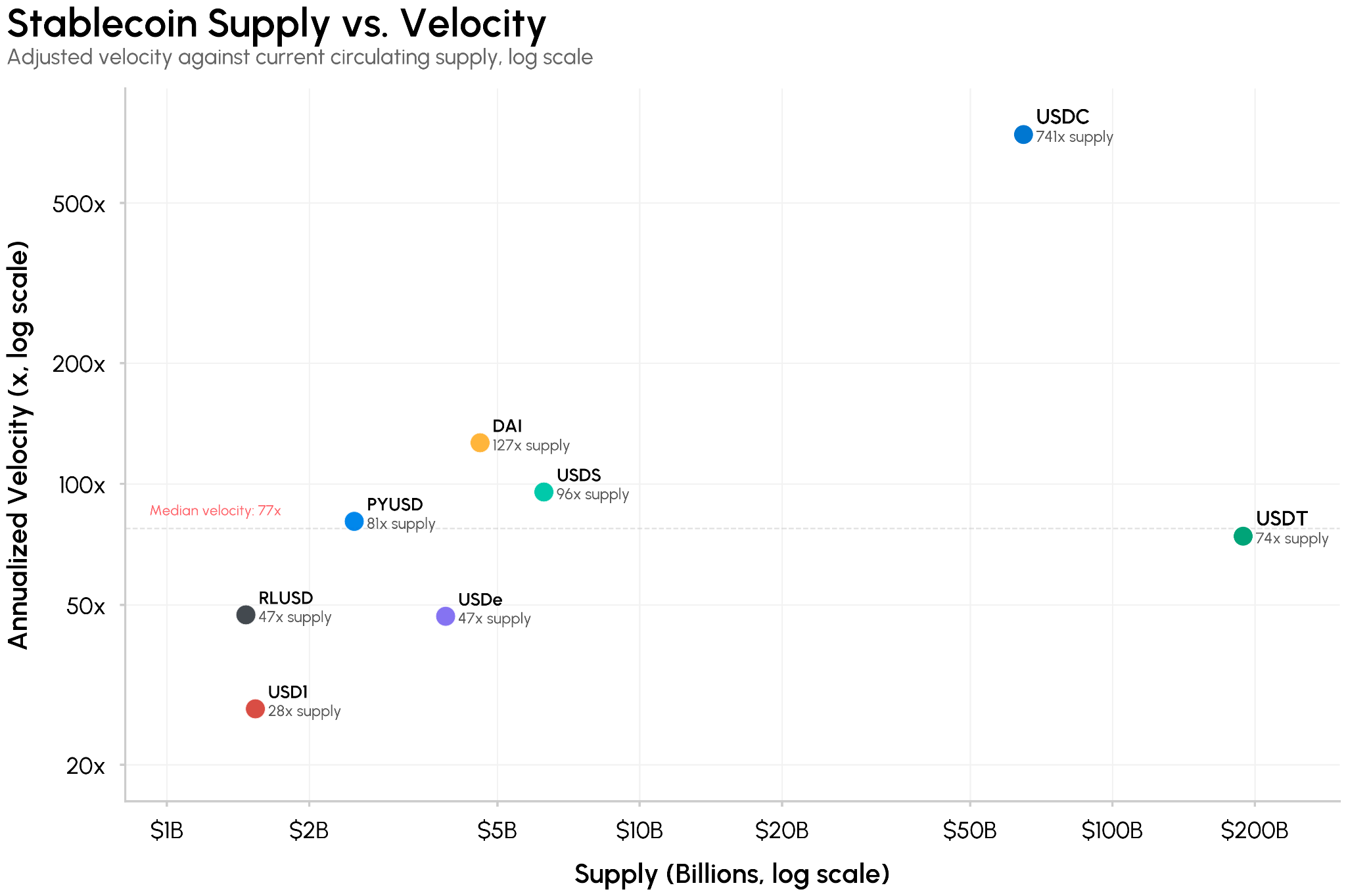
USDC recorded about $32 trillion in adjusted transfer volume through August 2026, according to Coin Metrics, which is far above the roughly $8 trillion recorded by USDT over the same period.
Circle also reported strong growth in its latest quarterly results as USDC generated $14.8 trillion in onchain transaction volume during Q2 2026, up 151% from a year earlier, while circulation reached $73.3 billion.
Despite that growth, the stablecoin issuer still earns most of its money from the assets backing USDC rather than from transaction fees.
In the second quarter, Circle reported $701.3 million in total revenue and reserve income. Around $667.7 million, or 95%, came from reserve income, while transaction revenue contributed just $5.3 million. Transaction revenue accounted for only about 0.76% of Circle’s total revenue and reserve income during the quarter.
USDC Transfer Volume Keeps Rising
Coin Metrics estimates that each dollar of USDC supply turns over at an annualized rate of roughly 741 times, compared with about 74 times for USDT.
However, the $32 trillion figure does not mean consumers and businesses made $32 trillion worth of payments using USDC.
Large transactions account for a significant share of USDC’s daily transfer volume. Data from Glassnode on August 29 showed about $34.5 billion in USDC transfers above $10 million, compared with roughly $4.7 billion across all smaller transaction-size categories combined.
Moreover, a large share of the activity comes from DeFi. Coin Metrics found that on Base, about 69% of analyzed USDC volume came from DEX liquidity provision, while 23% came from flash loans. On Ethereum, flash loans accounted for about 65% of analyzed USDC transfer volume.
| Network | Activity | Share of Analyzed Volume |
| Base | Liquidity provision | 69% |
| Base | Flash loans | 23% |
| Ethereum | Flash loans | 65% |
Table 1. What Drives Analyzed USDC Volume
Flash loans and automated liquidity strategies can move the same funds repeatedly within blockchain transactions, which can push transfer volume higher without representing the same amount of new consumer or business activity.
For Circle, this distinction matters because the company does not collect a fee every time USDC moves.
Circle Still Depends on Reserve Income
USDC is backed by reserves that include cash and short-term U.S. government securities. These assets generate interest, which remains Circle’s largest source of income.
Higher USDC circulation gives Circle a larger reserve base, while changes in interest rates affect how much those assets earn.
Circle’s SEC filing estimates that a 100-basis-point decline in interest rates could reduce reserve income by about $737 million over the following 12 months, based on USDC circulation as of June 30 and other assumptions.
| Rate Decline | Estimated Reduction in Annual Reserve Income |
| 25 bps | ~$184 million |
| 50 bps | ~$369 million |
| 75 bps | ~$553 million |
| 100 bps | ~$737 million |
Table 2. Simple proportional estimates based on Circle’s disclosed 100-basis-point sensitivity. Actual results could differ.
Distribution and transaction costs could also decline by around $360 million under the same scenario.
Circle also recorded $324.6 million in distribution costs related to Coinbase during Q2 2026, meaning part of the income generated from USDC reserves is shared with distribution partners.
As long as reserve income remains the main driver of revenue, Circle’s financial results will remain sensitive to both USDC circulation and interest rates.
Arc Could Add a New Revenue Stream
Circle is preparing to launch Arc, its own blockchain network, with public mainnet scheduled for September 16, 2026.
Transaction fees on Arc will be paid in USDC, giving Circle a more direct way to earn from network activity.
The company says more than 100 ecosystem and institutional builders are involved with Arc. Firms connected to the network include BlackRock, DTCC, Standard Chartered, Mastercard and Visa, according to Circle’s Arc announcement.
If Arc attracts steady activity in payments, settlement, trading and tokenized assets, it could help Circle build revenue outside reserve interest.
Circle is also expanding its broader payments business. Its Circle Payments Network reached a $14.7 billion annualized transaction rate at the end of Q2, with 175 financial institutions enrolled.
What Comes Next
USDC continues to grow in both circulation and transfer activity, but Circle’s business remains heavily tied to the interest earned on its reserves.
The key areas to watch are USDC supply, interest rates, and revenue from services such as Arc and the Circle Payments Network. If those businesses grow, Circle could become less dependent on reserve income over time.
What this means for you: USDC’s $32 trillion transfer volume shows heavy onchain usage, but much of that activity comes from DeFi rather than everyday payments. For the stablecoin issuer, the bigger question is whether it can turn that usage into direct revenue.