Key Takeaways
- Vitalik Buterin believes ZK payments could become the standard in the “agentic era”, as AI agents start handling money, trading, and payments for users in crypto.
- In this future, privacy is required, not optional. ZK tech lets payments be verified without showing wallet details, identity, or private data.
- ZK payments let AI systems send and receive money safely while keeping user identity hidden, even with frequent activity across platforms.
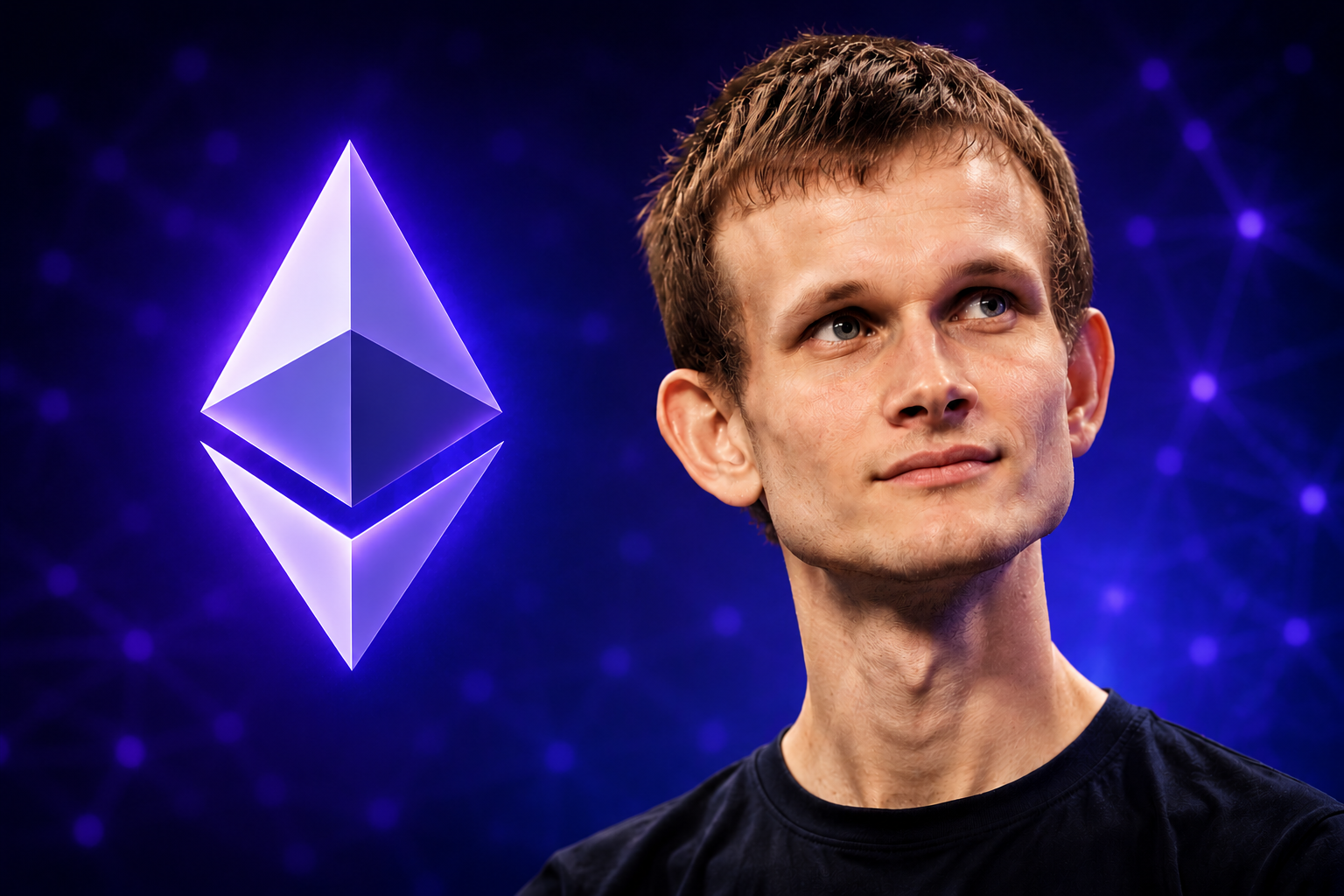
What if AI becomes the new middleman for every payment you make? Ethereum co-founder Vitalik Buterin thinks that the future is nearer than most people realize. He argues that zero-knowledge (ZK) payments could become the go-to standard for a world where AI agents don’t just help humans but independently buy, trade, and pay for things on their behalf.
Buterin calls it the “agentic era,” a world where AI systems handle transactions without waiting for human input. In that world, he says, privacy isn’t a nice-to-have. It’s a necessity.
The timing matters. As the crypto industry races to figure out how blockchain and AI work together, Buterin has a clear answer: the bridge between them is private, verifiable payments, and ZK technology is how you build it.
What Does “ZK Payments” Mean in This Context?
ZK payments are transactions powered by zero-knowledge proofs, a cryptographic method that allows one party to verify a statement is true without revealing the underlying data. Think of it as proving you have enough funds to pay without showing your bank balance, or verifying an identity without handing over a passport.
In practice, this means an AI agent could:
- Pay on-chain without revealing the user’s wallet or identity.
- Prove the payment is valid without exposing transaction details.
- Stay private across platforms without leaving a traceable trail of activity.
Buterin’s concern goes beyond privacy as a feature. He believes future AI agents will not be simple tools you turn on and off. They will run constantly, build transaction histories, and operate across many platforms at once. Without the right protections in place, that kind of continuous activity becomes very easy to track. A nameless wallet offers little cover when spending habits, timing, and recurring payments can be quietly stitched together to reveal exactly who is behind them.
That is why ZK payments matter here. They are not just about keeping information hidden. They are about letting AI agents move freely and safely in a world where every payment can otherwise be watched, recorded, and traced back to the real person behind them.
The Role of ZK APIs and Privacy Layers
Payments are only part of the picture. Buterin has also pointed to “ZK API usage credits” as another building block for this vision. The idea is simple: AI agents should be able to interact with outside services, whether that means pulling data, accessing AI models, or paying for computing power, without leaving a trail that links those actions back to a single user.
The threat here is not just financial. It is behavioral. An agent that calls the same services, at the same times, in the same order, creates a recognizable pattern even without a name attached. ZK API credits are designed to break that pattern by:
- Preventing long-term tracking of how and when AI agents use services.
- Blocking identity correlation attacks that piece together activity across platforms.
- Enabling AI-to-AI and AI-to-service interactions at scale without exposing who is behind them.
For Buterin, this is about more than protecting individual users. It is about building the infrastructure that lets an AI-driven economy function at scale, without trust becoming a vulnerability.
Why This Matters for Crypto and Ethereum
This fits into a bigger transition already happening across blockchain. Developers and researchers have been moving away from systems where every transaction is fully visible, instead pushing toward systems that give users more control over what gets shared and what stays private.
For crypto, that shift has real consequences. Blockchain payments have long struggled to break into everyday finance, and weak privacy is a big part of why. Institutions and everyday users alike are not going to move serious money through systems that expose everything.
Throw autonomous AI agents into that picture, and the pressure grows even more. These systems will need to pay, verify, and act fast, often without a human in the loop. Ethereum could be well-positioned to become the backbone of that kind of activity, at least according to some industry observers. If Buterin’s vision gains traction, ZK proofs would not just be a privacy feature. They would be the core technology on which the whole system runs.
Challenges Ahead
The vision is compelling, but the road to get there is far from simple. ZK-powered AI payments face real technical, regulatory, and security hurdles that the industry has not yet fully figured out.
A. The Technology Is Still Catching Up
Zero-knowledge proofs have come a long way, but they are still heavy on computing power. Running them at the speed and scale autonomous AI agents require remains a major engineering challenge. Connecting ZK systems to existing payment networks adds another layer of difficulty, since most financial infrastructure was not built with this kind of privacy in mind.
B. Regulation Is an Open Question
Anonymous AI-driven payments sit in uncomfortable territory for regulators. Most financial oversight rules are built around knowing who is transacting and why. A system designed to hide that information by default will face tough questions from regulators around the world, and those conversations are only just getting started.
C. Accountability in Autonomous Systems Is Unsolved
Perhaps the hardest challenge is not even technical. When an AI agent makes a bad payment, a fraudulent transaction, or gets exploited, who is responsible? Researchers studying agent-to-agent blockchain payments have flagged intent verification, accountability, and misuse prevention as some of the biggest unsolved problems in this space. Building a system that is both private and accountable remains one of the toughest problems the industry has to crack.
Final Thoughts
Vitalik Buterin believes crypto payments are moving toward a future in which AI agents handle transactions autonomously. In this “agentic era,” zero-knowledge (ZK) payments could become the standard because they allow transactions to be verified without revealing private data. This would allow AI agents to pay and interact across platforms while keeping user identity and activity hidden. Still, there are big challenges ahead. ZK technology needs to scale better, regulators’ rules are not yet clear, and it’s still unclear who is responsible when AI agents make mistakes. Even with these issues, Buterin’s idea shows a clear trend: as AI plays a bigger role in finance, privacy-focused systems like ZK payments may become essential for the future of crypto.
Frequently Asked Questions
What are ZK payments in crypto?
ZK payments use zero-knowledge proofs to verify transactions without revealing private details such as wallet balances, identities, or full transaction histories.
Why does Vitalik Buterin support ZK payments?
Buterin believes ZK payments are needed for an AI-driven future where agents handle money. He sees privacy as essential, not optional, in this system.
What is the “agentic era” in crypto?
The agentic era refers to a future where AI agents can independently trade, buy, and make payments without waiting for human approval.
What problem do ZK payments solve?
They reduce the risk of tracking and profiling by hiding transaction details, even when AI agents make frequent and cross-platform payments.
What are the biggest challenges for ZK payments?
The main challenges are high computing costs, unclear regulations, and unanswered questions about accountability when AI agents make mistakes.
Are ZK payments already widely used today?
Not yet. They are still developing and need better scaling and integration before they can support large-scale AI-driven financial systems.