Key Takeaways
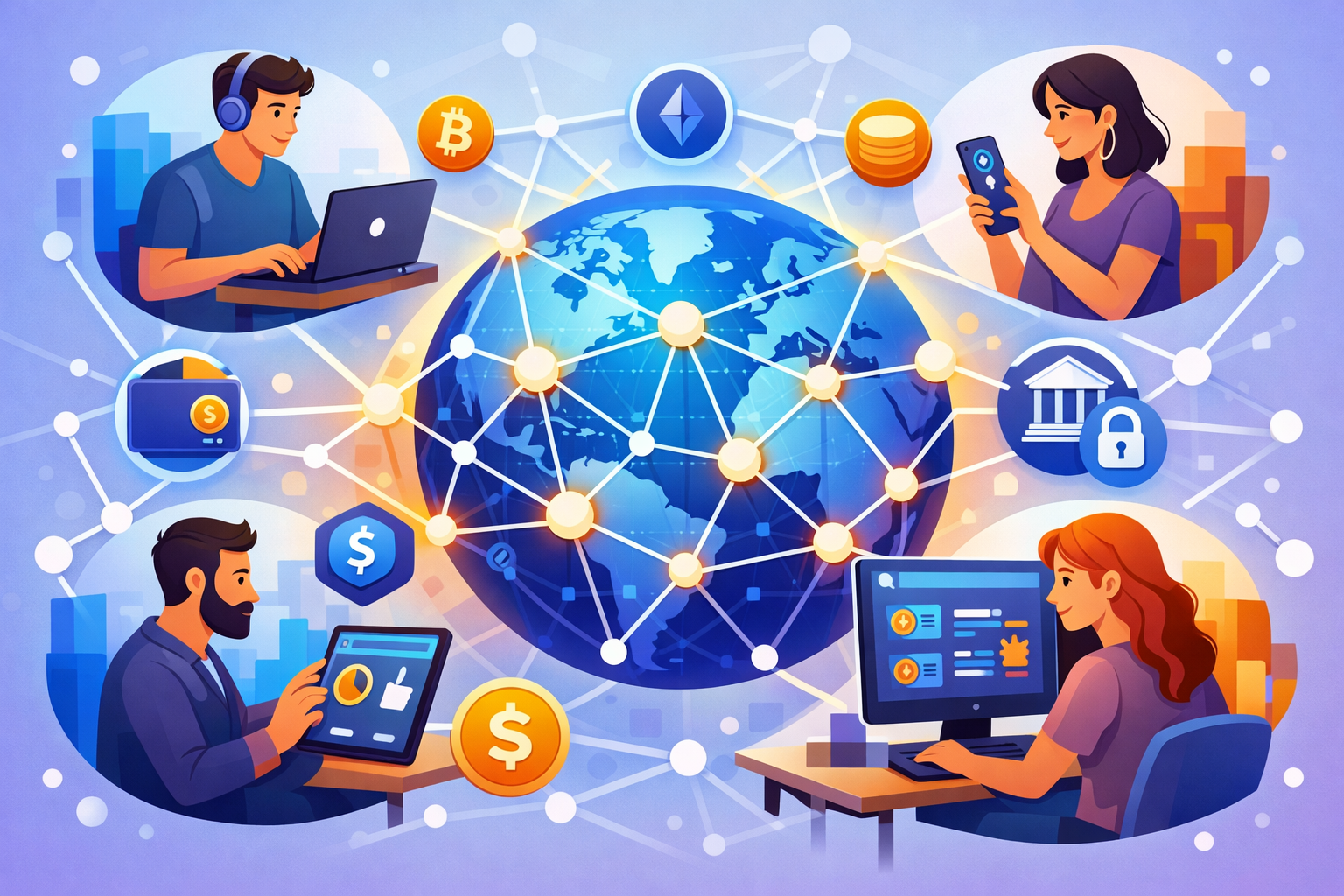
- DeFi gives everyone access to financial services worldwide, needing only an internet connection, unlike banks with strict requirements.
- Users maintain full control of their funds with DeFi, using digital wallets and private keys without relying on banks or facing restrictions.
- Transactions on DeFi platforms are fast, often completing in minutes or seconds, unlike slow bank transfers, especially internationally.
Decentralized Finance (DeFi) is redefining the way people manage money, borrow, and invest. Unlike traditional banks that act as middlemen, DeFi platforms use blockchain technology to let users lend, borrow, and trade directly with one another. This approach not only speeds up transactions and lowers costs but also makes financial services more accessible to anyone with an internet connection.
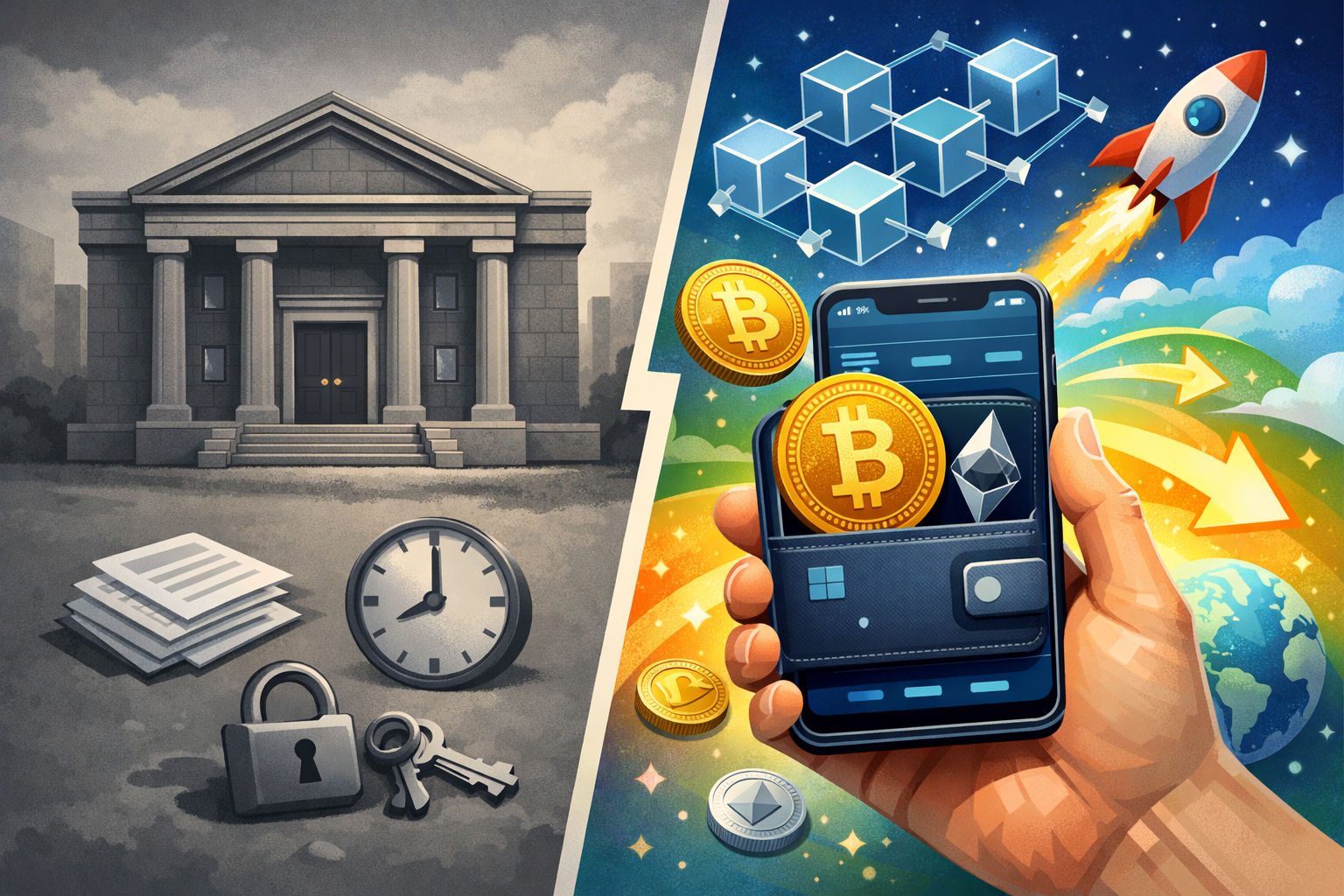
For decades, banks have controlled who can access loans, savings accounts, and investments, often with strict requirements and high fees. DeFi flips that model by giving users more control over their assets, offering opportunities for higher returns, instant transactions, and transparent systems that anyone can verify. In this article, we explore seven key benefits that show why DeFi is emerging as a true alternative to traditional banking.
1. Accessibility for Everyone
DeFi puts financial power directly into people’s hands, no matter where they are. Unlike traditional banks, which often require ID checks, credit history, or minimum deposits, DeFi platforms only need an internet connection.
Anyone can lend, borrow, or trade without a bank account, making financial services reachable to millions who have been left out by conventional banking. This is especially impactful in regions where banks are scarce or difficult to access, giving people a real chance to participate in the global economy.
2. Full Control Over Funds
One of the biggest differences between DeFi and banks is who’s really in charge of your money. In a traditional bank, your funds are managed by the institution, which means withdrawals can be delayed, accounts can be frozen, and transfers might require approvals. With DeFi, you hold your assets directly in a digital wallet, protected by private keys.
This puts you in the driver’s seat. You can send, trade, or use your funds instantly, without waiting for a bank or facing unexpected restrictions. It’s financial freedom in the truest sense, giving you control over your money like never before.
3. Lower Fees
Banks often hit you with all kinds of fees, including monthly account charges, wire transfers, overdrafts, and especially international payments, which can really add up. DeFi works differently. It runs on blockchain networks without all the middlemen, so costs are much lower.
You still pay small transaction fees, but they are usually far less than what banks charge, especially for sending money across borders. This makes DeFi a smarter and more affordable way to move and manage your money, giving you more value for every dollar.
4. Transparency and Security
DeFi operates on public blockchains, meaning every transaction is permanently recorded and visible to anyone. Unlike traditional banks, where internal processes are often hidden, DeFi allows users to verify and track transactions in real time. Smart contracts are self-executing programs on the blockchain that automatically enforce the rules for lending, borrowing, and trading.
This reduces the risk of human error, fraud, or manipulation, and ensures the system runs exactly as programmed. By combining open records with automated security, DeFi builds trust without relying on a central authority, giving users confidence that their funds are safe and the rules are fair.
5. Faster Transactions
Traditional banks can take several days to process payments, especially international transfers, due to multiple intermediaries and verification steps. DeFi platforms, by contrast, execute transactions directly on the blockchain, often completing them in minutes or even seconds.
This speed is especially valuable for sending money across borders, participating in real-time lending, or trading digital assets, where delays can be costly. By eliminating unnecessary middlemen and automating processes, DeFi provides a smooth, efficient financial experience that traditional banking systems often cannot match.
6. Innovative Financial Products
DeFi has opened the door to financial tools and opportunities that go far beyond what traditional banks offer. People can try yield farming, liquidity mining, trade on decentralized exchanges, or invest in tokenized assets. These options let users earn passive income, manage risks, and diversify their investments in ways banks rarely provide.
DeFi platforms are continually introducing new tools, giving users access to advanced financial services without the delays, paperwork, or restrictions of conventional banking. This innovation gives people more freedom and control over how they grow and protect their money.
7. Community-Driven Governance
Unlike traditional banks, where decisions are made by a small group of executives, many DeFi platforms use decentralized governance models. Users can participate in decision-making by voting on proposals, protocol upgrades, and the allocation of funds through governance tokens.
This approach encourages active community involvement and ensures that users have a voice in how the platform evolves. It shifts power away from centralized institutions and creates a financial ecosystem guided by collective input, aligning the platform’s development and priorities with the needs and interests of its users.
Final Thoughts
Decentralized Finance is changing the way people access, manage, and grow their money. By cutting out middlemen, lowering fees, and giving users full control over their assets, DeFi makes financial services faster, clearer, and more flexible than traditional banks. With innovative tools, real-time transactions, and community-driven decision-making, it opens up new ways to earn, invest, and take part in shaping the platforms you use. While it may not replace banks entirely, DeFi is creating a financial world where accessibility, efficiency, and user empowerment come first, giving people the freedom to truly take charge of their money.
You Might Also Like: