Key Takeaways
- South Korea’s stock market gained ₩485 trillion on May 21 after Samsung avoided a planned 18-day worker strike.
- The KOSPI surged as much as 7.5%, Samsung shares jumped 7.6%, and SK Hynix rose as much as 12%.
- Samsung and its union signed a tentative wage deal on May 20, just one hour before the strike deadline.
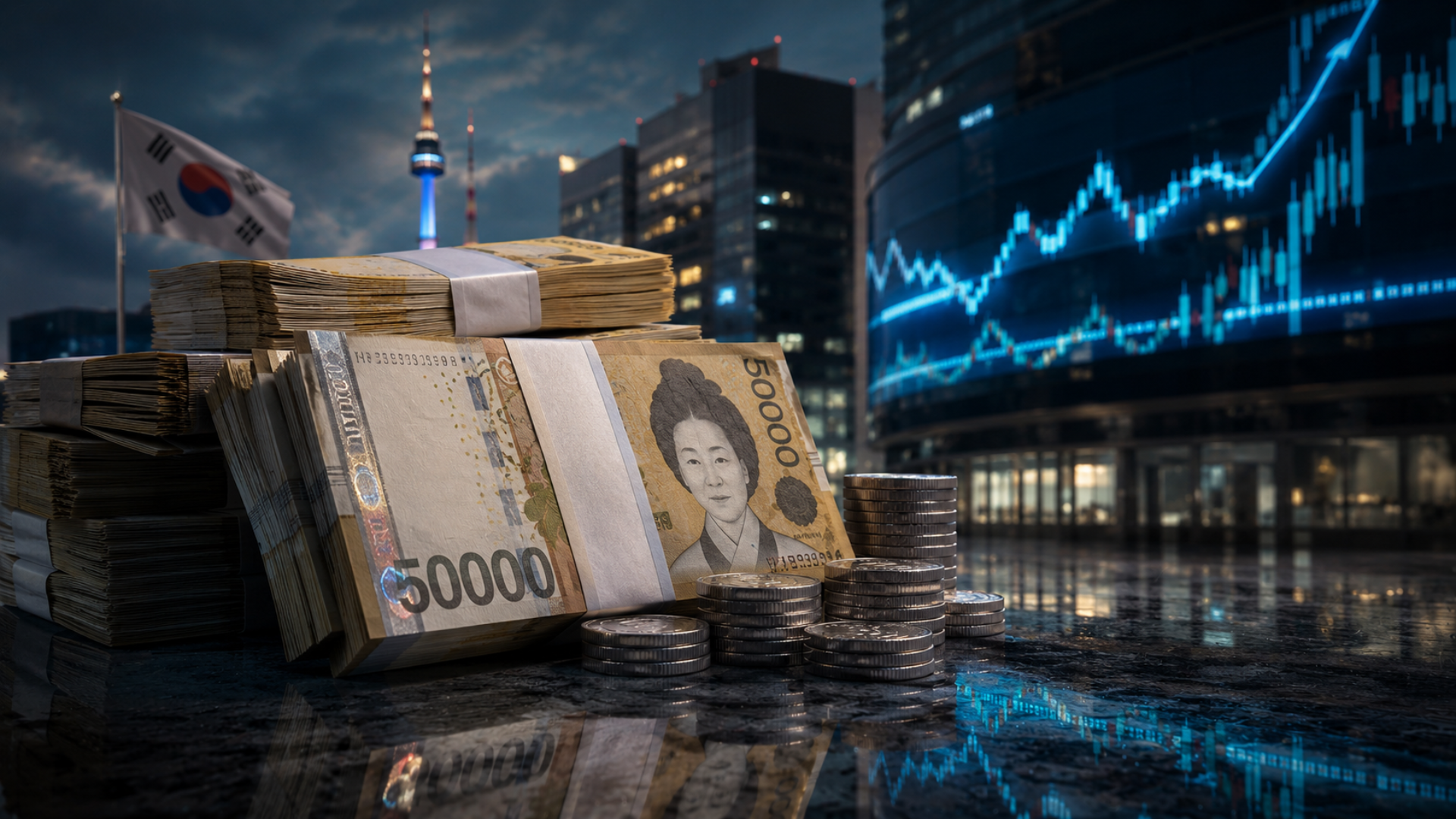
₩485 trillion flooded into South Korea’s stock market on May 21, 2026. That figure equals roughly $332 billion added in a single trading session. Samsung Electronics reached a last-minute deal with its labor union, stopping an 18-day strike just one hour before it was set to begin.
The KOSPI benchmark surged as much as 7.5% during the session. Samsung shares jumped up to 7.6%, and rival chipmaker SK Hynix gained as much as 12%. Korea Exchange triggered a sidecar halt as KOSPI 200 futures soared 5% at the open.
How Large Was the South Korean Stock Market Surge?
The scale of May 21’s rally was historic by any measure. Adding ₩485 trillion to equities in a single session is far from a routine market move. Every major South Korean index posted strong gains, and multiple circuit breakers activated during the session.
Here is the full breakdown of the key moves:
- Samsung shares surged as much as 7.6%
- The benchmark KOSPI gained up to 7.5%
- SK Hynix rose as much as 12%
- The small-cap KOSDAQ index climbed 4.2%
- KOSPI 200 futures jumped 5%, triggering a Korea Exchange sidecar halt
What Is a Sidecar Halt?
A sidecar halt pauses algorithmic and basket trading linked to futures for five minutes. Korea Exchange uses this mechanism when futures move too fast for orderly price discovery. The sidecar activated in the upward direction on May 21, which is rare. It signals the market was gaining momentum faster than normal circuit conditions allow. Korean retail investors also piled in during the session, buying billions of won in shares and amplifying the gains.
Why Did Avoiding a Samsung Strike Move Markets This Much?
Samsung sits at the center of South Korea’s economy. Samsung Electronics makes up 12.5% of the country’s GDP. The company also accounts for roughly a quarter of South Korea’s total exports. A major disruption at Samsung ripples across every connected industry.
A planned 18-day strike by some 48,000 union members had been set to begin May 21. JPMorgan estimated the strike could impact Samsung’s operating profit by 21 trillion won to 31 trillion won. The government also warned of losses reaching up to 1 trillion won per day for the broader economy.
Why Global Chip Markets Were Watching
Samsung produces a major share of the world’s memory chips. The AI boom is pushing demand for those chips to record levels. More than 45,000 workers threatening to strike would have reduced production of memory chips that are key components in AI data centers, smartphones, and laptops.
US-listed chip stocks also moved on the news. Micron, SanDisk, and Western Digital all posted gains after the deal was announced. Markets read the averted strike as a stabilizing signal for global semiconductor supply.
What Did Samsung Agree to in Order to Stop the Strike?
Samsung Electronics reached a tentative wage agreement with union leaders, averting the strike scheduled for May 21. The deal suspends a strike planned from May 21 to June 7, pending a union member vote. South Korea’s Labor Minister Kim Young-hoon stepped in as emergency mediator. The two sides signed the agreement late on May 20, less than one hour before the deadline.
The key terms Samsung agreed to include:
- A 6.2% average salary increase for 2026
- A new 10.5% profit-linked stock bonus for the semiconductor division, with no distribution cap
- Bonuses paid in after-tax shares, with one-third eligible for immediate sale and the remaining two-thirds locked for one and two years respectively
- Each of the 28,000 chip division employees can receive up to KRW 600 million (approximately $400,000) in post-tax company stock
Workers pushed for these terms after SK Hynix settled much better deals with its union in 2025. SK Hynix workers were set to earn average payouts of $460,000 to $477,000 per person in 2026. Samsung’s chip division posted strong profits, but workers felt those gains were not reaching them.
What Does This Market Surge Mean for Crypto Investors?
South Korea ranks among the world’s most active crypto markets. South Korea’s cryptocurrency market shrank from 121.8 trillion KRW in January 2025 to 60.6 trillion KRW by February 2026. Average daily trading volume across South Korea’s five major crypto exchanges dropped from $11.6 billion in December 2024 to $3 billion by early 2026.
Stock market surges often pull short-term capital away from digital assets. Stronger economic confidence, however, tends to support broader investor risk appetite over time. That confidence typically flows into crypto markets as well. The crypto section at UseTheBitcoin tracks how global market events connect to digital asset prices. For those just getting started, UseTheBitcoin’s starter guide covers the basics clearly.
Is the Samsung Agreement Final?
The deal is tentative. The agreement is put to a vote between May 22 and May 27. The union’s leader expects it to be ratified. If the vote fails, the planned 18-day strike could resume.
Long-term conditions also come with the agreement. Bonuses would be conditional upon the chip division achieving more than 200 trillion won in annual operating profit from 2026 to 2028 and 100 trillion won from 2029 to 2035. Full payouts depend entirely on Samsung hitting those performance targets.
Frequently Asked Questions
How much did South Korea’s stock market gain on May 21, 2026?
South Korea’s stock market added ₩485 trillion in a single trading session. That equals roughly $332 billion. The KOSPI benchmark surged as much as 7.5% on the day.
Why did avoiding the Samsung strike cause such a large market rally?
Samsung represents about 12.5% of South Korea’s GDP and a quarter of its exports. Removing the threat of an 18-day production halt triggered immediate relief across local and global markets.
How many Samsung workers were set to go on strike?
About 48,000 unionized Samsung Electronics workers were scheduled to strike from May 21 to June 7, 2026. That would have been the largest work stoppage in semiconductor industry history.
What did Samsung offer workers to stop the strike?
Samsung agreed to a 6.2% salary increase for all employees. Chip division workers also received a 10.5% profit-linked bonus with no cap, plus up to KRW 600 million in post-tax company stock.
Is the Samsung tentative deal confirmed?
No. Union members vote on the agreement between May 22 and May 27, 2026. The union leader expects it to pass. A failed vote could restart the planned 18-day strike.
How does the South Korean stock market surge connect to crypto?
South Korean crypto trading volumes had dropped sharply by early 2026. Stock market surges can briefly pull capital away from digital assets. Stronger economic confidence typically supports broader risk appetite over time, and that includes crypto.