Key Takeaways
- New U.S. stablecoin rules could reshape how USDC and USDT are used, with stricter reserve, audit, and compliance standards.
- USDC may benefit from regulation as banks and institutions favor compliant stablecoins for payments, settlements, and treasury use.
- USDT could face limits in the U.S. due to its offshore structure, even as it remains dominant in global crypto markets.
Stablecoins have quietly become one of the most important parts of crypto, used for trading, payments, remittances, and storing dollars on-chain. What started as a niche workaround for volatile crypto markets has grown into a multi-trillion-dollar layer of the global financial system, touching everything from DeFi protocols to everyday cross-border transfers.
The two biggest stablecoins today are Tether’s USDT and Circle’s USDC. Both grew during a time when crypto regulation was minimal, but that is now changing. U.S. lawmakers are pushing forward with the GENIUS Act and the CLARITY Act, two bills that would require stablecoin issuers to hold full reserves, undergo regular audits, and meet strict anti-money laundering standards.
If passed, these rules could change where USDC and USDT are accepted, who is allowed to issue them, and how they function in the broader financial system.
Why Stablecoin Regulation Is Becoming a Major Issue
Stablecoins are no longer just a crypto trading tool. They now handle billions of dollars in daily transactions and are being used by payment companies, banks, and everyday users for cross-border transfers and digital payments. As their role in the financial system grows, regulators are paying closer attention.
U.S. lawmakers have several core concerns:
- Whether stablecoins are fully backed by real reserves.
- How quickly users can redeem them for dollars.
- Whether issuers are transparent about their holdings.
- The risk of money laundering and sanctions violations.
- The possibility of a stablecoin “run” during periods of market stress.
The GENIUS Act is the most prominent response to these concerns. It would require stablecoin issuers to maintain 100% reserve backing, conduct regular audits, publish their holdings, and guarantee redemptions.
Larger issuers would also fall under direct federal oversight. Supporters argue these rules would make stablecoins safer and more widely trusted. Critics warn they could slow innovation and push offshore issuers like Tether out of the U.S. market entirely.
How USDC Could Benefit From New Rules
Circle, the company behind USDC, has long positioned itself as the regulation-friendly stablecoin, already publishing regular reserve attestations and backing USDC almost entirely with cash and short-term U.S. Treasuries. That groundwork could pay off as stricter rules take shape, with USDC already closer to meeting proposed U.S. standards than most competitors.
A. Institutional Adoption
Banks, fintech firms, and payment providers are more likely to work with stablecoins that clearly comply with U.S. law. Regulatory clarity could push larger companies to integrate USDC into payment systems and treasury operations, an area where analysts are already seeing a gradual shift toward USDC in institutional payment flows.
B. Banking Partnerships
Regulated financial institutions may become more comfortable working with compliant issuers. This could expand USDC’s role across several areas:
- Cross-border payments
- Settlement systems
- Tokenized assets
- Corporate treasury management
C. Consumer Confidence
Clear redemption rules and audited reserves could also build trust among everyday users. The GENIUS Act would reportedly guarantee that users can cash out their stablecoins and be first in line to recover funds if an issuer goes bankrupt, making USDC a safer option for users who want less regulatory uncertainty.
How USDT Could Face More Pressure
Tether is the world’s largest stablecoin and dominates global crypto trading, especially in Asia and emerging markets. But its offshore structure and past transparency issues could make it difficult to meet U.S. regulatory standards. That does not mean USDT disappears, but new rules could limit where and how it is used in the U.S. market.
A. Reduced Access to U.S. Financial Infrastructure
Exchanges, banks, and payment firms operating in the U.S. may start favoring stablecoins that clearly meet federal requirements. For large institutions, the compliance risk of using an offshore stablecoin could outweigh the convenience.
B. More Restrictions on Institutional Usage
Large financial firms may avoid stablecoins that do not meet U.S. regulatory standards. For USDT, this could mean losing ground on trading platforms, corporate accounts, and regulated payment services.
C. Pressure to Build a Compliant Alternative
Some reports suggest Tether has already looked into building U.S-compliant products and banking partnerships. If true, it shows that even Tether sees the pressure coming.
This dynamic could eventually create a clear divide in the stablecoin market:
- Offshore stablecoins like USDT continuing to dominate global and emerging markets.
- Regulated U.S.-based stablecoins like USDC becoming the go-to option for institutions and domestic use.
Stablecoin Yield Could Change Too
Regulation may not just affect who issues stablecoins. It could also change how users earn from them. Recent U.S. proposals suggest regulators may ban stablecoin issuers from paying passive interest simply for holding their coins, a feature that has made stablecoins popular as a savings alternative in crypto.
If that rule moves forward, the impact would be felt across a wide range of products:
- Crypto lending platforms
- Exchange reward programs
- DeFi stablecoin incentives
- On-chain savings products
For everyday users, this could mean lower returns and a shift toward rewards earned through activity rather than just holding. It would also separate stablecoins more clearly from savings accounts, which is something regulators have wanted for a long time. Platforms that promoted stablecoins as a way to earn high interest would likely be hit the hardest.
Related Article: Stablecoin Rewards vs Stablecoin Yield: What’s the Difference?
DeFi Could Feel the Impact
Stablecoins are the backbone of decentralized finance. They power lending pools, liquidity pairs, derivatives, and decentralized exchanges, and without them, most DeFi protocols would not function. Any major transition in how stablecoins are issued or regulated will ripple through the entire DeFi ecosystem.
If new rules tighten compliance standards, DeFi protocols may be forced to adapt in several ways:
- Adding stricter compliance checks for users and transactions
- Favoring regulated stablecoins like USDC over offshore alternatives
- Reducing reliance on stablecoins that do not meet U.S. standards
- Splitting liquidity between regulated and unregulated pools
The short-term effect could be disruptive, particularly for protocols that rely heavily on USDT or other offshore stablecoins. But some experts believe that, over time, clearer rules could attract larger institutional players to DeFi, bringing more capital and legitimacy to the space.
Global Markets May Not Move the Same Way
U.S. regulation will shape the stablecoin market, but it will not affect every part of the world equally. Different regions have different needs, and the stablecoin that wins in New York may not be the one that matters in Lagos or Jakarta.
USDC could strengthen its position in areas where compliance is a priority:
- U.S. financial services and banking
- Institutional settlement and tokenized assets
- Regulated payment systems and fintech platforms
USDT, on the other hand, may hold its ground in markets where regulatory pressure is lower:
- Crypto exchanges and active trading
- Peer-to-peer transfers
- Emerging markets and regions with limited banking access
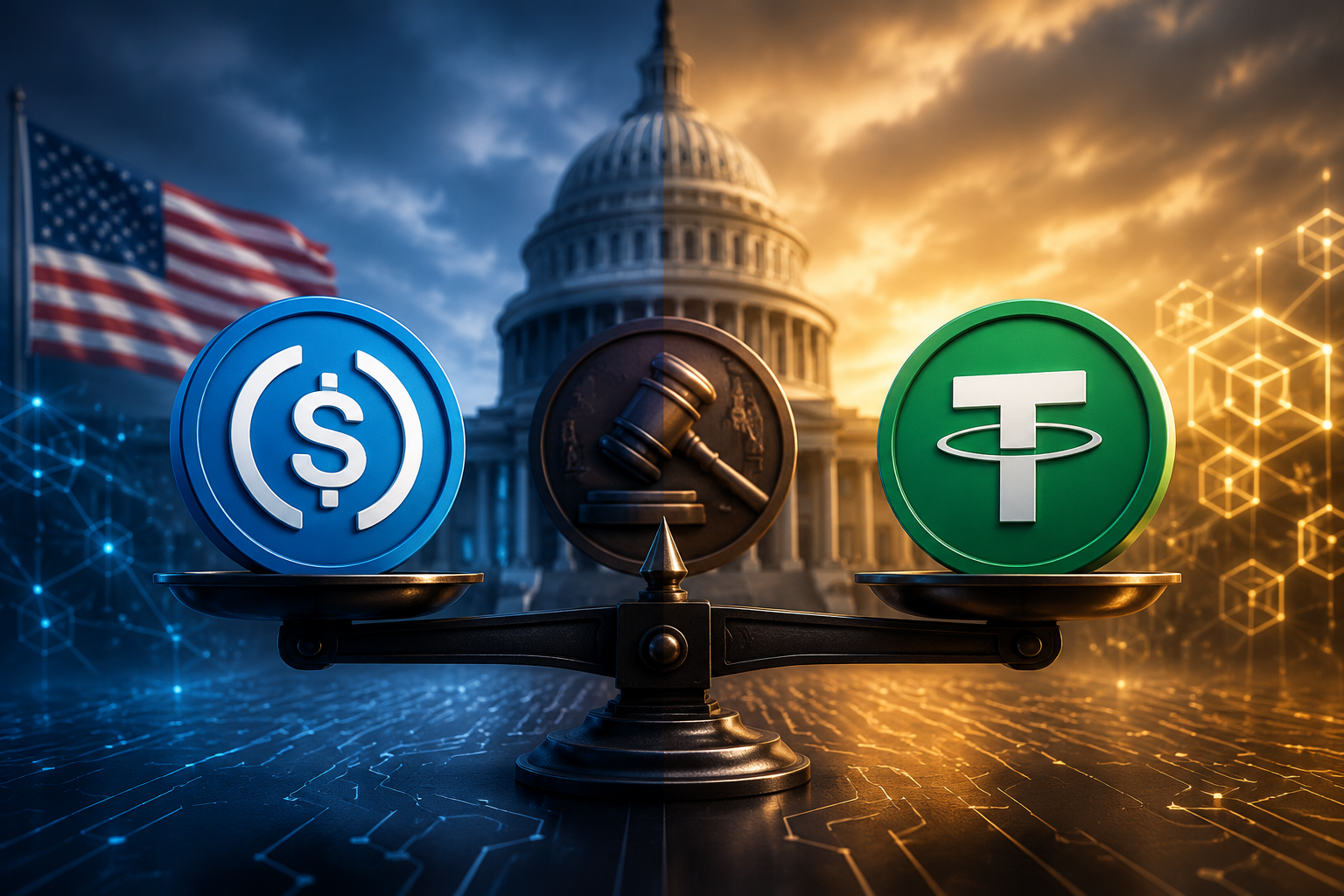
Some analysts already describe the stablecoin market as splitting into two separate ecosystems, one built around regulatory compliance and another built around accessibility and global reach. If that divide continues to grow, USDC and USDT may end up serving very different users in very different parts of the world.
Which Stablecoin Gains Under New Rules?
Regulation will not end stablecoins. Clearer rules could actually bring in more institutions and everyday users who were put off by the lack of oversight. But the laws being shaped in Washington will likely decide which stablecoins grow from that opportunity. USDC looks well-placed for a more regulated market, while USDT’s offshore structure may become a bigger problem in the U.S. over time. What is clear is that the stablecoin market is changing. It is shifting from a space defined by convenience to one shaped by compliance. Both USDC and USDT will likely survive, but they may end up serving very different users in very different parts of the world.
Frequently Asked Questions
What could the GENIUS Act and CLARITY Act change for stablecoins?
The GENIUS Act and the CLARITY Act would introduce stricter rules for stablecoin issuers, including full-reserve backing, regular audits, stronger compliance standards, and guaranteed user redemptions.
How could regulation change the way USDC is used?
USDC could become more widely used by banks, fintech firms, and institutions because Circle already follows many of the standards regulators want, including reserve transparency and treasury-backed reserves.
Why could USDT face more pressure under U.S. regulations?
USDT may face challenges because Tether operates offshore and has faced questions about transparency in the past. U.S. financial firms may prefer stablecoins that fully comply with federal rules.
Could stablecoin regulation affect crypto yield and rewards?
New rules may limit or ban passive interest paid directly by stablecoin issuers. This could impact crypto lending platforms, exchange rewards, DeFi incentives, and on-chain savings products.
You Might Also Like:
- Why Banks Are Fighting Stablecoin Rewards
- 5 Ways Stablecoins Make Cross Border Payments Faster in 2026
- Stablecoin Yield Under New Crypto Laws: What the 2026 Rules Mean for Holders