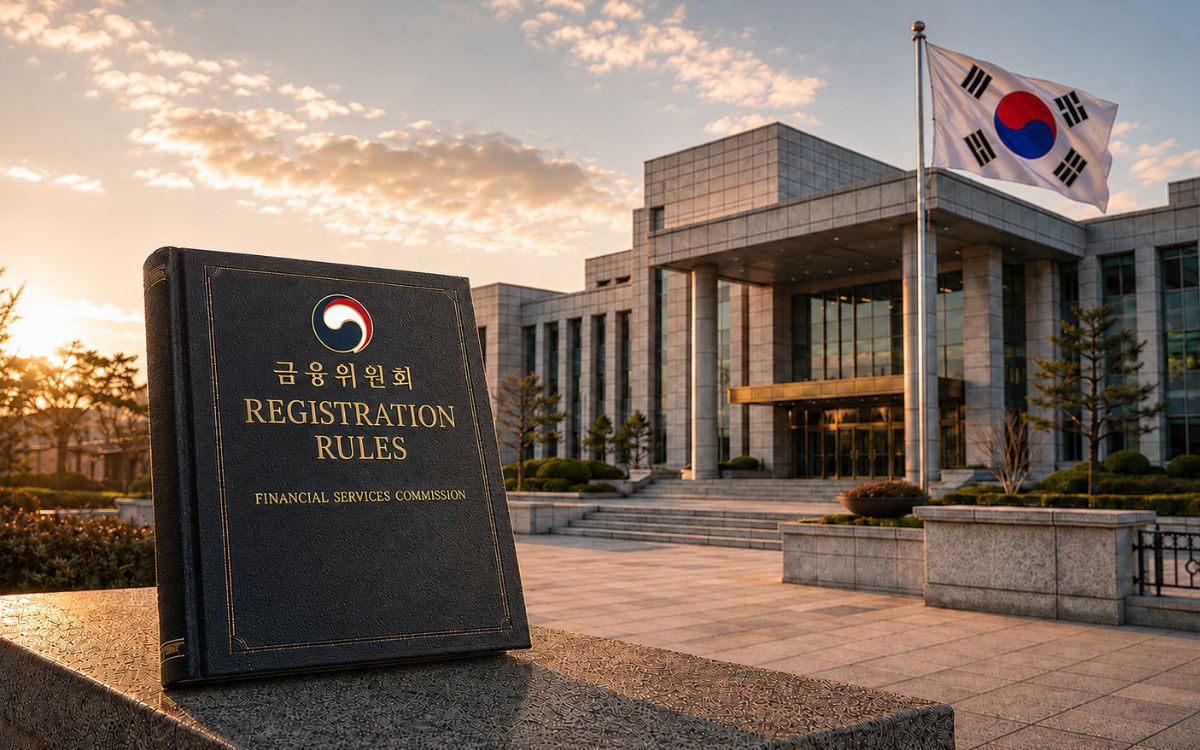
South Korea’s Financial Services Commission began enforcing stricter VASP (Virtual Asset Service Provider) registration standards on August 20, 2026, adding major-shareholder review, a 200 percent debt-ratio cap, and tighter fit-and-proper tests for crypto exchanges operating in the country.
The rules come from Act No. 21358, an amendment to the Act on Reporting and Using Specified Financial Transaction Information, and apply to any platform filing for VASP status with the Korea Financial Intelligence Unit.
BitGo Korea secured registration acceptance on August 18, just two days before the tighter standards took hold, becoming the first foreign-owned subsidiary to win direct VASP status in the country.
Act No. 21358 Adds Shareholder and Debt-Ratio Screening
The new requirements apply to registration renewals as well as first-time applicants. Under the amendment, VASPs must keep a debt ratio at or below 200 percent, show no default history over the prior three years, and demonstrate they have not previously held an operating license that regulators revoked.
Executive officers, including CEOs, must meet governance qualifications set out under the Act on Corporate Governance of Financial Companies, and a VASP’s largest shareholder faces the same insolvency and license-revocation screening as the company itself, according to the Financial Services Commission’s official announcement.
Existing VASPs get up to one additional year to meet related staffing, infrastructure and internal-control requirements, though the shareholder and governance screening began the moment the amendment took effect.
What the Screening Means for Exchanges and Korean Users
For platforms already operating in Korea, the shift raises the bar for keeping registration, not just for entering the market. The shareholder and debt-ratio screening lands alongside a separate rollback of Korea’s won-denominated Travel Rule threshold, part of the same regulatory package our news section has tracked as Seoul rewrites AML requirements for VASPs this year.
Legal analysts at Bae, Kim & Lee wrote in a client newsletter that the expanded review effectively extends fit-and-proper standards used for traditional financial institutions onto virtual asset platforms, a shift that could push under-capitalized operators out before their one-year grace period on staffing and infrastructure ends.
The Grace Period That Still Splits VASPs in Two
The bigger test arrives in six months. The FSC has said the expanded Travel Rule, which removes the won-denominated reporting threshold entirely, takes effect around February 20, 2027, giving exchanges a longer runway to build the transfer-monitoring systems the change requires.
Existing VASPs separately have up to one year to meet the new debt-ratio, staffing and infrastructure requirements that took effect August 20, even though the shareholder and governance screening applies immediately. Whether smaller platforms can absorb both changes on that timeline is a question regulators have not yet addressed publicly.
What this means for you: If you use a Korean crypto exchange, expect tighter identity and ownership checks in the months ahead as regulators phase in stricter registration and transfer-monitoring rules through February 2027.
This article is for informational purposes only and does not constitute financial advice. Do your own research before making any investment decisions.