Key Takeaways
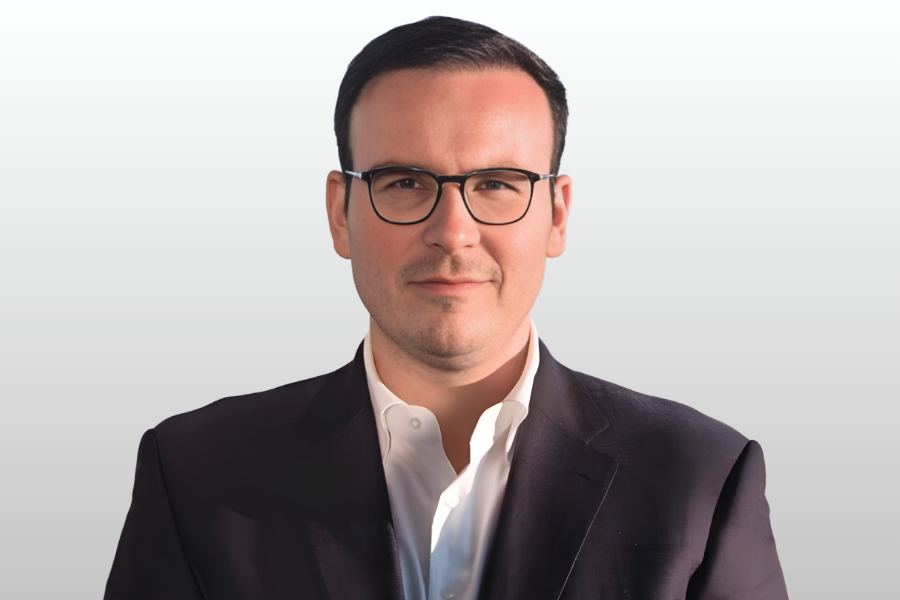
- Michael Dong is the co-founder of Celer Network and Brevis, two blockchain projects aimed at improving scalability, cross-chain connectivity, and on-chain computation.
- He earned a Ph.D. from UIUC and studied Electronics Engineering at Shanghai Jiao Tong University, specializing in distributed systems and protocol design.
- Early roles at Veriflow and Barefoot Networks, along with tech internships, built his experience in networking and large-scale systems.
Michael “Mo” Dong is the co-founder of blockchain projects Celer Network and Brevis. He is a Chinese-American computer scientist, entrepreneur, and investor. His work centers on distributed systems, network protocols, and zero-knowledge cryptography, with an emphasis on improving blockchain scalability and efficiency.
Before working in web3, he was a founding engineer at Veriflow, a network verification startup later acquired by VMware. He studied Electronics Engineering at Shanghai Jiao Tong University (2008–2012), then earned a Ph.D. in Computer Science from the University of Illinois Urbana-Champaign in 2017, where he focused on distributed systems, network verification, and the application of game theory to protocol design.
Early Career in Silicon Valley
Before entering the blockchain space, Michael “Mo” Dong worked in engineering and product roles across Silicon Valley. This early experience helped him build a strong foundation in distributed systems, networking, and large-scale infrastructure, shaping the technical direction of his later projects.
Experience at Veriflow
He was among the early team members at Veriflow, a startup focused on formally verifying computer networks to detect errors, outages, and security risks. Between 2014 and 2018, he worked as an Engineering Team Lead and Product Manager, contributing to both system design and product strategy before the company was acquired by VMware.
Barefoot Networks and Early Internships
Dong also helped found Barefoot Networks as a founding engineer, a company known for building programmable networking hardware later acquired by Intel. Earlier in his career, he interned at Nicira, Microsoft Research, and Google, where he gained practical experience working on advanced networking and large-scale computing systems.
Founding Celer Network
In 2018, he co-founded Celer Network with Junda Liu, Xiaozhou Li, and Qingkai Liang. The team aimed to solve blockchain scalability issues by using Layer 2 solutions that move transactions off-chain. Celer began with state channels to enable fast, low-cost interactions, then expanded into interoperability features such as the Celer Inter-chain Message (IM) framework and cBridge, which support cross-chain communication and asset transfers.
The Launch of Brevis
In 2023, Dong co-founded Brevis as a spin-off from Celer Network and took on the role of CEO. Brevis is a zero-knowledge coprocessor that helps smart contracts go beyond their native limits by allowing decentralized apps to access historical data, run complex computations off-chain, and verify results on-chain through cryptographic proofs, enabling more advanced and data-heavy blockchain use cases.
Cross-Chain Challenges and Celer Network’s Approach
In an interview on the Crypto Coin Show YouTube channel, Michael “Mo” Dong shared insights on the growing fragmentation within blockchain ecosystems. He explained that as more networks emerge, they tend to operate independently rather than as a unified system, which results in isolated environments with limited direct communication. This separation often leads to repeated versions of similar applications across multiple chains, along with fragmented liquidity and added friction for users navigating between different platforms.
He went on to describe Celer Network as a connectivity-focused layer built to bridge these isolated blockchains. Within this architecture, tools like cBridge are used to support the movement of assets across networks, helping reduce the complexity involved in cross-chain interactions. Rather than functioning as a single standalone product, these components are presented as part of a broader framework to improve how blockchains communicate and interoperate.
Brevis and the Infinite Compute Layer Concept
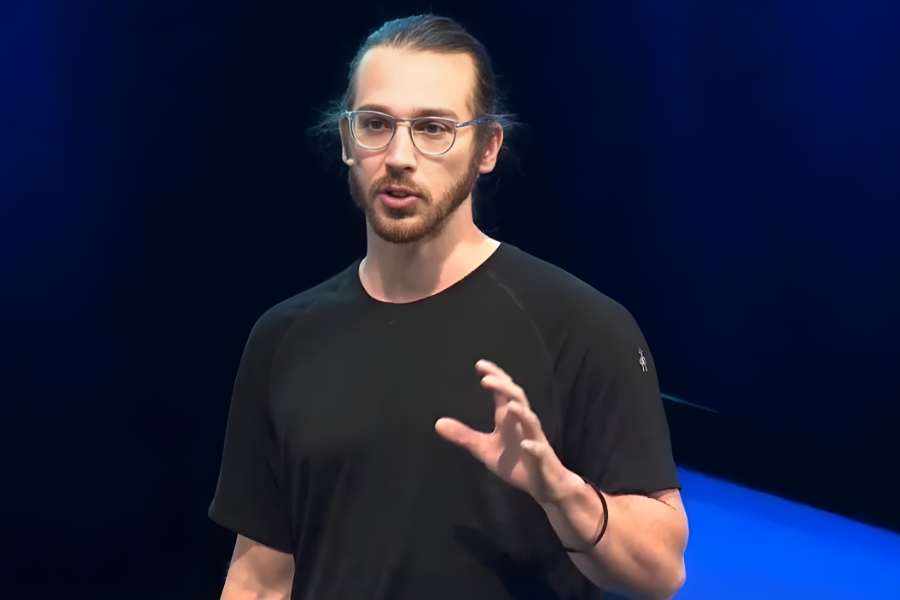
In a December 12, 2025, interview on the Web3Privacy Now YouTube channel and recorded at the Ethereum Cypherpunk Congress (ECC#2) in Buenos Aires, Michael “Mo” Dong discussed the structural limits of current blockchain designs and introduced the concept behind Brevis, which he describes as an “infinite compute layer” for Web3.
He explained that most Layer 1 blockchains achieve consensus by having many nodes independently execute the same computations, a process that, while secure, leads to major redundancy. This repeated execution raises costs and limits what can realistically be built directly on-chain, especially for applications that depend on processing large volumes of historical data, such as analyzing trading patterns or activity across decentralized exchanges.
Vision for Scalable and Connected Blockchains
Michael Mo Dong’s vision focuses on making blockchain systems more scalable, connected, and efficient. With his background in distributed systems, he works to push the limits of current blockchain designs by improving how networks communicate and process data.
Through Celer Network, he aims to connect separate blockchains so they can interact more easily, while Brevis expands this idea by allowing complicated computations to be done off-chain and verified on-chain. Overall, his goal is to support a blockchain ecosystem that works more smoothly, handles more data, and is better suited for advanced applications.
Final Thoughts
Michael “Mo” Dong has focused his work on improving how blockchain systems scale, connect, and handle complex tasks. His background in distributed systems and network design has shaped his approach to building more efficient and reliable infrastructure. Through Celer Network and Brevis, he works to connect separate blockchains and enable more advanced computations than current systems can handle. Overall, his efforts aim to support a more connected and capable Web3 ecosystem that can handle larger workloads and more practical use cases.