Key Takeaways:
- Crypto acquisitions to watch in 2026 include Mastercard’s $2 billion ZeroHash deal and Coinbase’s $2.9 billion Deribit purchase
- M&A activity is projected to surpass 2025’s record $37 billion as traditional finance acquires crypto capabilities
- Vertical integration drives exchanges like Coinbase and Kraken to buy infrastructure providers for complete service stacks
- Regulatory frameworks like MiCA and the GENIUS Act accelerate acquisition activity for licensed market access
The crypto acquisitions to watch in 2026 signal a fundamental shift from speculative retail activity toward institutional-grade financial infrastructure. Traditional finance firms are aggressively acquiring crypto capabilities rather than building internally, while major exchanges pursue vertical integration strategies. Mastercard’s $2 billion purchase of ZeroHash positions the payments giant for seamless crypto-to-fiat settlements globally. Coinbase spent $2.9 billion on Deribit to scale derivatives trading, while Kraken acquired NinjaTrader for $1.5 billion to integrate professional trading tools. Industry experts forecast total M&A activity will exceed 2025’s $37 billion record as consolidation reshapes the competitive landscape.
Which Major Deals Define 2026’s M&A Activity?
The crypto acquisitions to watch this year demonstrate how established players are consolidating market power through strategic purchases. These deals reflect three primary motivations including instant regulatory compliance, vertical integration, and infrastructure control.
The most significant transactions reshaping the industry include:
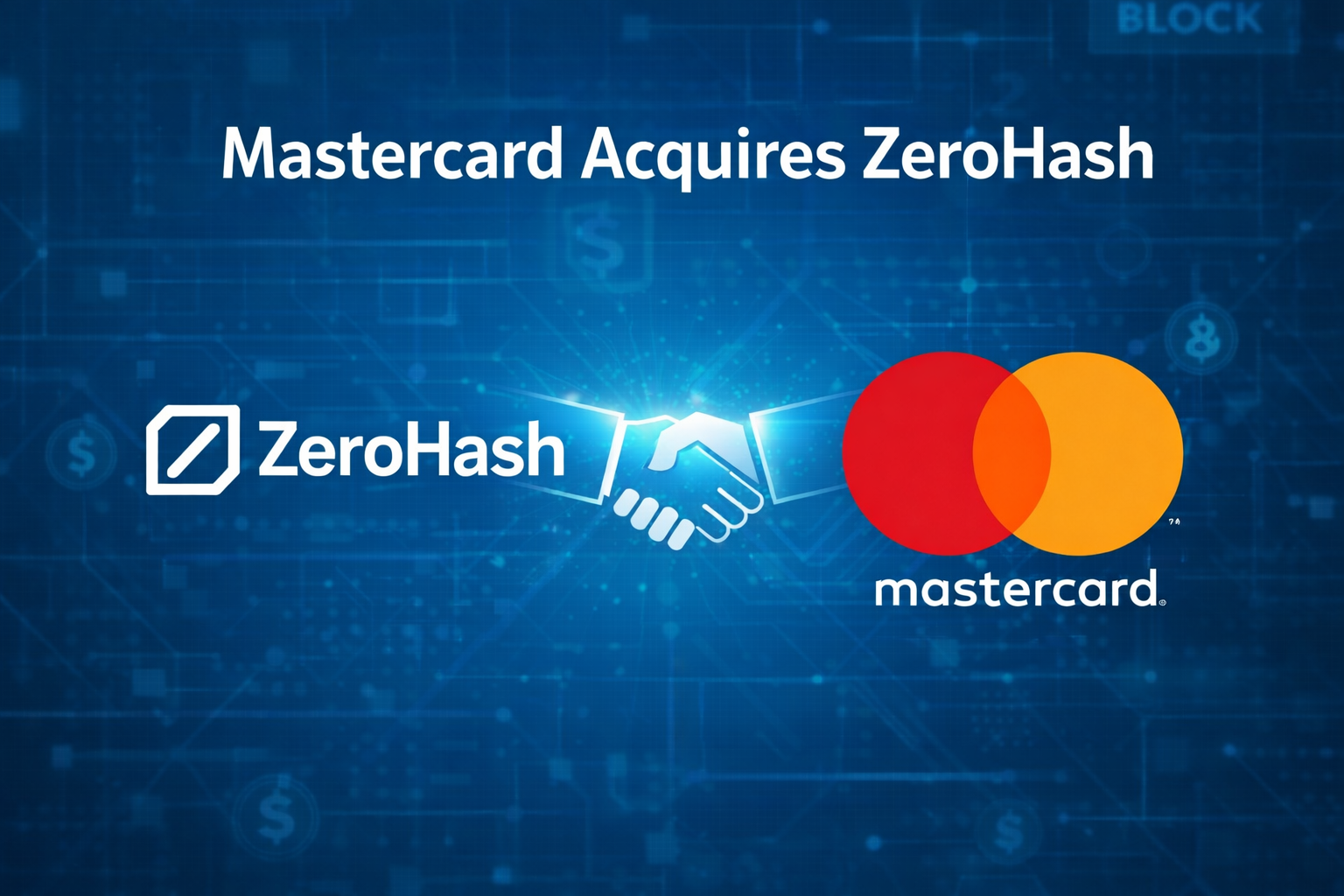
- Mastercard’s $2 billion acquisition of ZeroHash enables the payments giant to offer seamless crypto-to-fiat settlement capabilities globally, positioning Mastercard as a bridge between traditional banking and digital assets
- Stripe’s acquisition of Bridge completes the company’s aggressive expansion into stablecoin infrastructure and global “agentic commerce” that allows AI agents to conduct autonomous transactions
- Coinbase’s $2.9 billion purchase of Deribit significantly scales the exchange’s global crypto derivatives and institutional trading offerings, adding sophisticated options and futures capabilities
- Kraken’s $1.5 billion acquisition of NinjaTrader integrates professional-grade charting and trading tools directly into the Kraken ecosystem, appealing to advanced traders
- Robinhood’s acquisitions of Bitstamp and WonderFi expand the company’s regulated exchange footprint across Europe and North America, gaining instant licensing and compliance infrastructure
- FalconX’s acquisition of 21Shares consolidates prime brokerage services with one of the world’s leading crypto ETP providers, combining institutional trading with retail investment products
- Kraken’s acquisition of Backed Finance accelerates the exchange’s “xStocks” expansion by bringing tokenized real-world equities to its global user base
- Coinbase’s $375 million purchase of Echo focuses on building on-chain capital formation tools that let startups raise funds through compliant token sales
- Animoca Brands’ reverse merger with Currenc Group allows the gaming and metaverse company to bypass traditional IPO hurdles and list on Nasdaq
- Circle’s acquisition of Interop Labs strengthens cross-chain infrastructure to ensure USDC maintains dominance as the “internet dollar” across all blockchain protocols
Why Are Traditional Finance Companies Buying Crypto Firms?
The “buy versus build” decision increasingly favors acquisition for traditional finance institutions entering crypto markets. Banks and brokerages recognize that developing blockchain expertise internally takes years while regulations and market opportunities move faster. Mastercard’s ZeroHash purchase exemplifies this trend by instantly providing crypto settlement capabilities that would have required massive R&D investment.
Stablecoin infrastructure represents a particularly attractive acquisition target for payment processors. Stripe’s Bridge purchase positions the company to handle the trillions in stablecoin transactions projected over the next decade. Building comparable infrastructure from scratch would delay market entry by years while competitors establish dominant positions.
Regulatory compliance provides another powerful acquisition incentive. Robinhood’s purchases of Bitstamp and WonderFi immediately granted the company European and Canadian licenses that would have taken years to obtain through organic applications. Buying established exchanges with existing regulatory approvals shortcuts the lengthy licensing process.
Traditional finance firms also seek proven technology stacks that handle crypto’s unique requirements. Payment rails, custody solutions, and trading infrastructure for digital assets differ fundamentally from traditional systems. Acquiring functioning platforms reduces technical risk compared to untested internal development.
How Does Vertical Integration Drive Exchange M&A?
Leading crypto exchanges are buying infrastructure providers to control entire service stacks rather than relying on third-party vendors. Coinbase’s Deribit acquisition adds derivatives trading to its spot market operations, creating a comprehensive trading platform that keeps users within one ecosystem.
Kraken’s multiple acquisitions demonstrate vertical integration strategy. The NinjaTrader purchase adds professional charting tools, while Backed Finance brings tokenized securities capabilities. This approach lets Kraken offer stocks, crypto, and advanced trading features without depending on external partners.
Custody and staking services represent key infrastructure targets as exchanges seek to capture more revenue from assets sitting on their platforms. Owning these services increases profit margins while improving user experience through tighter integration. Third-party custody adds complexity and risk that vertical integration eliminates.
Layer 2 scaling solutions and cross-chain bridges also attract exchange interest as multichain trading becomes standard. Circle’s Interop Labs acquisition ensures USDC moves seamlessly across blockchains, maintaining the stablecoin’s utility advantage. Exchanges building similar capabilities gain competitive advantages in an increasingly fragmented blockchain environment.
What Role Do Regulations Play in Acquisition Activity?
Regulatory clarity paradoxically drives consolidation by making licensed entities extremely valuable acquisition targets. The passage of the GENIUS Act in the United States and MiCA in Europe created “passportable” licensing frameworks where approval in one jurisdiction grants access to entire regions. Companies holding these licenses command premium valuations.
Robinhood’s acquisition strategy specifically targeted licensed exchanges to gain instant regulatory compliance. Bitstamp’s European licenses and WonderFi’s Canadian approvals would have required years of applications, examinations, and relationship building with regulators. Buying established entities shortcut this process entirely.
The Wyoming DUNA framework enabling legal DAO structures also facilitates new acquisition types. Decentralized organizations can now legally acquire intellectual property and off-chain assets, opening M&A possibilities previously impossible. This regulatory innovation will likely spawn a new wave of DAO-led acquisitions throughout 2026.
Stablecoin regulations particularly drive payment company acquisitions. As governments establish frameworks for digital dollar equivalents, companies with compliant infrastructure become extremely valuable. Circle and other stablecoin issuers are acquisition targets for financial institutions seeking instant compliance with emerging rules.
Which Sectors See the Most Acquisition Interest?
Tokenized real-world assets represent the hottest acquisition category as traditional finance recognizes blockchain’s potential for securities. Kraken’s Backed Finance purchase and similar deals signal that bringing stocks, bonds, and real estate on-chain will be a major revenue driver. Companies with tokenization platforms command premium valuations.
Derivatives and sophisticated trading products attract significant acquisition interest as institutional investors demand complex instruments. Coinbase paid $2.9 billion for Deribit specifically to serve hedge funds and professional traders requiring options, futures, and margin capabilities. This institutional focus drives higher-value deals than retail-focused acquisitions.
Payment infrastructure and stablecoin technology remain prime targets as transaction volume grows. Mastercard and Stripe acquisitions reflect how payment processors view crypto as integral to future commerce. Companies enabling seamless fiat-to-crypto conversion or cross-border stablecoin transfers will continue attracting buyers.
Cross-chain interoperability solutions gain importance as blockchain fragmentation creates user friction. Circle’s Interop Labs purchase demonstrates that ensuring asset portability across networks provides competitive advantages. Infrastructure enabling multichain operations will see continued acquisition activity throughout 2026.
How Will These Deals Reshape Crypto Markets?
The crypto acquisitions to watch in 2026 will concentrate market power among fewer, larger players with comprehensive service offerings. Exchanges evolving into financial supermarkets offering everything from basic trading to derivatives, tokenized stocks, and institutional custody will dominate market share. Smaller specialized platforms face increasing competitive pressure.
Traditional finance integration accelerates as payment processors and banks own crypto infrastructure directly. Mastercard processing crypto transactions natively rather than through partners fundamentally changes how digital assets interact with legacy financial systems. This integration brings crypto closer to mainstream payment usage.
Regulatory arbitrage opportunities diminish as major players acquire licenses across jurisdictions. The strategy of operating from friendly locations while serving global customers becomes harder as compliance expectations rise. Companies with comprehensive licensing across major markets gain sustainable competitive advantages.
Innovation patterns may shift from startups building standalone products toward teams building features within larger ecosystems. Acquisitions like Coinbase’s Echo purchase suggest that capital formation and other financial primitives will be developed inside major platforms rather than as independent services. This could reduce the number of new crypto companies founded over time.
Frequently Asked Questions
Why are crypto acquisitions increasing in 2026?
Crypto acquisitions to watch have increased because traditional finance firms are choosing to buy rather than build crypto capabilities internally. Regulatory clarity from frameworks like MiCA and the GENIUS Act makes licensed entities valuable targets. Vertical integration strategies also drive exchanges to acquire infrastructure providers for complete service control.
Which companies are most likely to make acquisitions?
Major exchanges like Coinbase, Kraken, and Binance actively pursue acquisitions to expand capabilities. Traditional payment processors including Mastercard, Stripe, and PayPal buy crypto infrastructure. Banks and brokerages acquiring licensed exchanges for instant market access also drive M&A activity throughout 2026.
How do acquisitions affect crypto users?
Crypto acquisitions to watch typically improve user experience by integrating services within single platforms. Users gain access to more features without managing multiple accounts. However, consolidation may reduce competition and choice over time. Acquired platforms sometimes change fee structures or service terms post-acquisition.
What makes a crypto company an attractive acquisition target?
Regulatory licenses across major jurisdictions make companies extremely valuable targets. Proven technology handling significant transaction volume attracts buyers. Large user bases provide instant distribution for acquirer products. Infrastructure enabling stablecoins, tokenization, or cross-chain operations also commands premium valuations.
Will acquisition activity continue beyond 2026?
Crypto acquisitions to watch will likely remain elevated for several years as industry consolidation continues. Traditional finance integration still has years to run. However, activity may slow once major players establish comprehensive service offerings and regulatory frameworks stabilize across jurisdictions.