
Key Takeaways
- India is the top global destination for remittances, but traditional transfers are slow, expensive, and often give poor exchange rates.
- Stablecoins like USDT and USDC allow near-instant transfers to India, making cross-border payments faster, cheaper, and more secure.
- INR can be withdrawn directly to major banks such as HDFC, ICICI, SBI, or via UPI for instant access to funds.
India is the world’s top destination for international remittances, yet sending money from abroad often involves high fees, poor exchange rates, and long waiting times. Traditional banking methods can take several days to complete a transfer, creating friction for Non-Resident Indians (NRIs) and other senders.
The rise of digital currencies like stablecoins USDT and USDC is changing this landscape. Transfers can now happen almost instantly, and recipients can access funds quickly and securely, providing a faster, more efficient alternative to conventional methods.
This article explains how to send money to India using USDT or USDC in 2026, highlighting the key steps and best practices for a smooth transfer.
Why Stablecoins Are Revolutionizing Money Transfers to India
India consistently receives the largest share of global remittances. In 2024, it received an estimated $129 to 137 billion, far outpacing other countries. The inflow remained strong in 2025, and projections for 2026 indicate continued growth, highlighting India’s position as the top destination for cross-border money transfers. Despite this, traditional channels such as SWIFT, wire transfers, and bank drafts continue to face limitations.
- High fees: Banks often charge 3–7% of the transfer amount, reducing the funds that reach recipients.
- Poor exchange rates: Currency conversion from USD to INR is often unfavorable, further decreasing transfer value.
- Lengthy delays: Standard transfers can take 30–72 hours to settle, creating uncertainty for both senders and recipients.
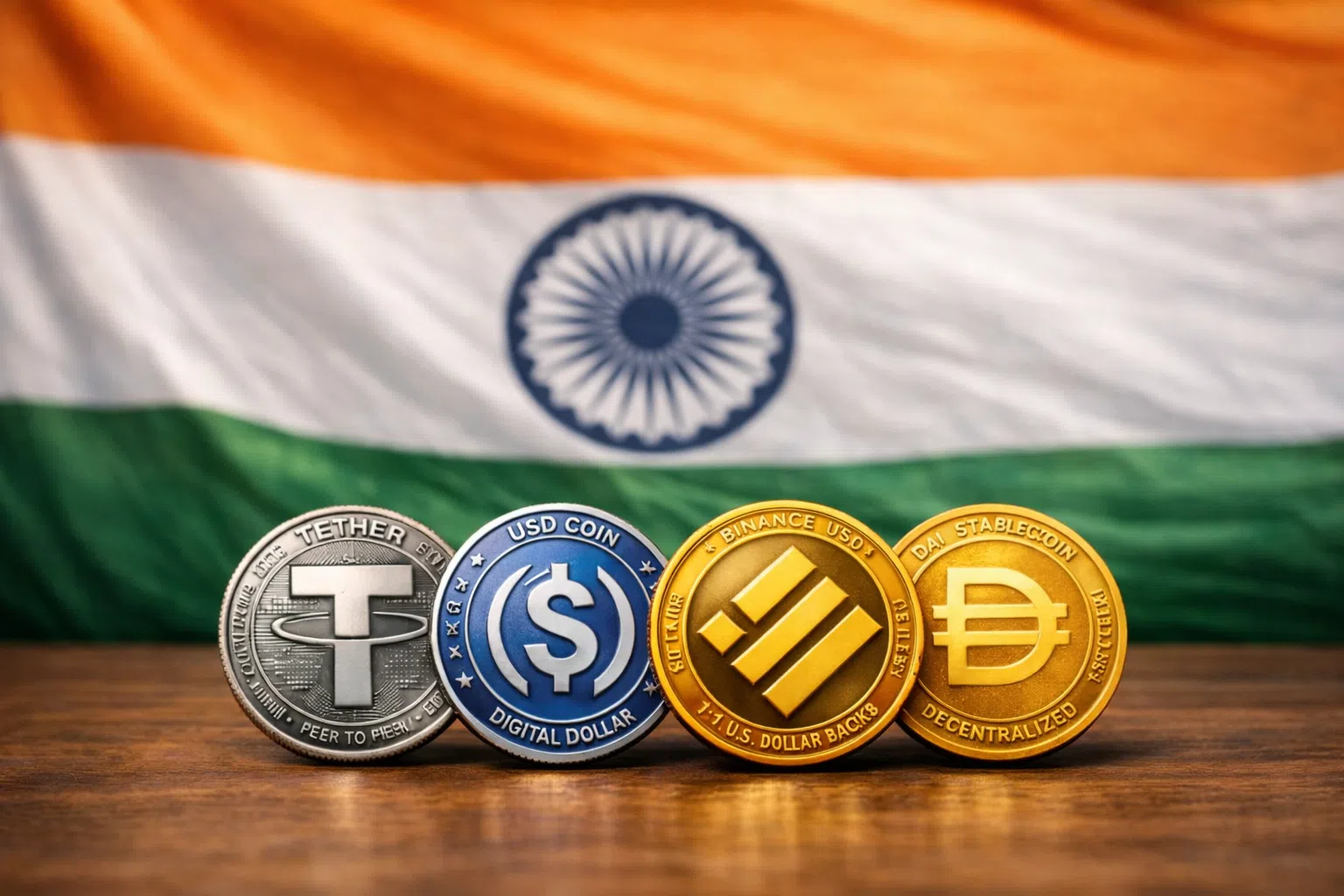
Stablecoins, including USDT and USDC, provide a faster, more cost-effective alternative. Pegged 1:1 to the US Dollar, these digital assets eliminate volatility while enabling near-instant transfers over blockchain networks. When used with local Indian exchanges, stablecoins help ensure regulatory compliance, offer competitive exchange rates, and give recipients immediate access to funds.
As a result, stablecoins are increasingly becoming the preferred method for NRIs and other overseas senders seeking efficiency, security, and transparency in cross-border money transfers.
How to Convert USDT to INR in 2026
Converting USDT or USDC in India involves three main stages. When done step by step, the process is fast, compliant, and cost-efficient.
1. Purchase and Transfer Stablecoins
Step 1: Buy USDT or USDC
Purchase stablecoins on a trusted crypto exchange such as Coinbase, Bitstamp, or KuCoin.
Step 2: Choose a Blockchain Network
Select a network that balances speed and transaction costs:
- Polygon (MATIC)
- Stellar (XLM)
- Solana (SOL)
- Ethereum (ERC-20) – higher fees but widely supported.
Step 3: Transfer to Recipient Wallet
Send the stablecoins to the recipient’s crypto wallet. Double-check the wallet address to avoid errors or loss of funds. Blockchain fees are usually minimal and paid by the sender.
2. Deposit and Convert Stablecoins to INR
This step, called ‘stablecoin cashout’, involves selling USDT or USDC for Indian Rupees (INR) via a regulated Indian crypto exchange.
Step 1: Deposit into an Indian Exchange Wallet
The recipient must have an account with an FIU-registered exchange, such as CoinDCX, WazirX, or CoinSwitch. Transfer the stablecoins into the exchange wallet. Verify the deposit address carefully.
Step 2: Complete KYC Verification
Indian law requires full Know Your Customer (KYC) compliance for crypto-to-INR conversions. Submit valid ID documents (Aadhaar, PAN, or Passport) and ensure the bank account matches your KYC profile.
Step 3: Sell Stablecoins for INR
Once verified, navigate to the USDT/INR or USDC/INR trading pair. Sell at the market rate or place a limit order to sell at a preferred price. This converts your crypto holdings into INR, ready for withdrawal.
Step 4 (Optional): PayPal Integration
Some exchanges allow linking INR to a PayPal account for international use. Note: additional PayPal fees may apply.
3. Cash Out: Withdraw INR to Bank Account
After converting stablecoins to INR, you can withdraw funds to Indian bank accounts. Choose the method based on speed and convenience:
| Cash-Out Method | Example Platforms / Banks | Withdrawal Fee | Estimated Time |
| Bank Transfer (NEFT/IMPS) | HDFC, ICICI Bank, SBI, PNB | ₹0 (Free) | Instant (IMPS) / Up to 2 hours (NEFT) |
| UPI (Unified Payments Interface) | CoinDCX, CoinSwitch | ₹0 (Free) | Instant |
| P2P (Peer-to-Peer) | WazirX P2P, CoinDCX P2P, CoinSwitch P2P | Fee included in rate | 15 minutes – 1 hour |
Important Notes:
- Withdrawal fees on exchanges are often zero.
- Blockchain transaction fees are typically minimal and paid by the sender.
- A 1% Tax Deducted at Source (TDS) applies when converting crypto to INR.
This approach provides flexibility depending on urgency, preferred bank, and transaction cost, ensuring a smooth and compliant cash-out process.
Cost Comparison: Traditional Banks vs Stablecoins
| Method | Typical Fee | Transfer Time |
| SWIFT / Bank Wire | ~2–7% (including FX markup) | 1–5 business days |
| PayPal / Xoom | ~3–8% (currency conversion + transaction fee) | 1–3 business days |
| Stablecoins (USDT / USDC) | Less than 1% plus a small blockchain network fee | Minutes to about one hour |
Why Stablecoin Transfers Are the Best Option in 2026
A. Instant Transactions
Transfers using stablecoins like USDT and USDC can settle in under an hour, eliminating the long delays common with traditional bank wires or SWIFT transfers.
B. Minimal Fees
Blockchain network fees are typically just a few cents per transaction, and most Indian crypto exchanges charge zero fees for INR withdrawals, making this method far cheaper than banks or PayPal.
C. Full Compliance
All transactions go through FIU-registered Indian exchanges, ensuring that KYC and tax regulations are followed. This reduces legal risks for both senders and recipients.
D. Bank Flexibility
Recipients can withdraw funds directly to major Indian banks such as HDFC Bank, ICICI Bank, or SBI, providing convenience and immediate access to funds without extra steps.
E. Global Options
Some exchanges offer PayPal integration, allowing recipients to use funds internationally or transfer them to other PayPal accounts, adding a layer of flexibility for global transactions.
F. Reliable and Secure
Using trusted exchanges and established blockchain networks ensures that funds are secure from fraud and cyber threats while remaining fast and efficient.
Final Thoughts
In 2026, stablecoins such as USDT and USDC have transformed how money is sent to India. By following this method, NRIs can move funds quickly, safely, and without unnecessary costs. From sending and transferring USDT to cashing out directly into INR via HDFC, ICICI Bank, or PayPal, this approach bypasses the delays and high fees of traditional remittance methods, letting more money reach your loved ones faster. Whether it’s for supporting family, handling business payments, or personal use, stablecoins now offer the easiest and most reliable way to send money to India, combining speed, convenience, and peace of mind.
Frequently Asked Questions
What are USDT and USDC, and why should I use them to send money to India?
USDT and USDC are stablecoins, digital currencies pegged to the U.S. dollar. They keep their value steady, making them ideal for sending money to India quickly, securely, and at low cost.
How quickly can money be sent using USDT or USDC?
Transfers usually take a few minutes up to an hour, much faster than banks or PayPal.
What fees do I need to pay when sending stablecoins?
You pay a small blockchain fee, usually a few cents. Most exchanges charge nothing to convert to INR. A 1% tax applies to the INR conversion.
Which banks or payment methods can receive money in India?
HDFC, ICICI Bank, SBI, and other major banks. UPI is also available for instant access. Some exchanges let you use PayPal for international transfers.
What does “stablecoin cashout” mean?
It is selling USDT or USDC for INR through a regulated Indian exchange, so you can safely withdraw your money.
Do I need to verify my identity to convert stablecoins to INR?
Yes. You must complete KYC with Aadhaar, PAN, or Passport and link a matching bank account.
You Might Also Like: