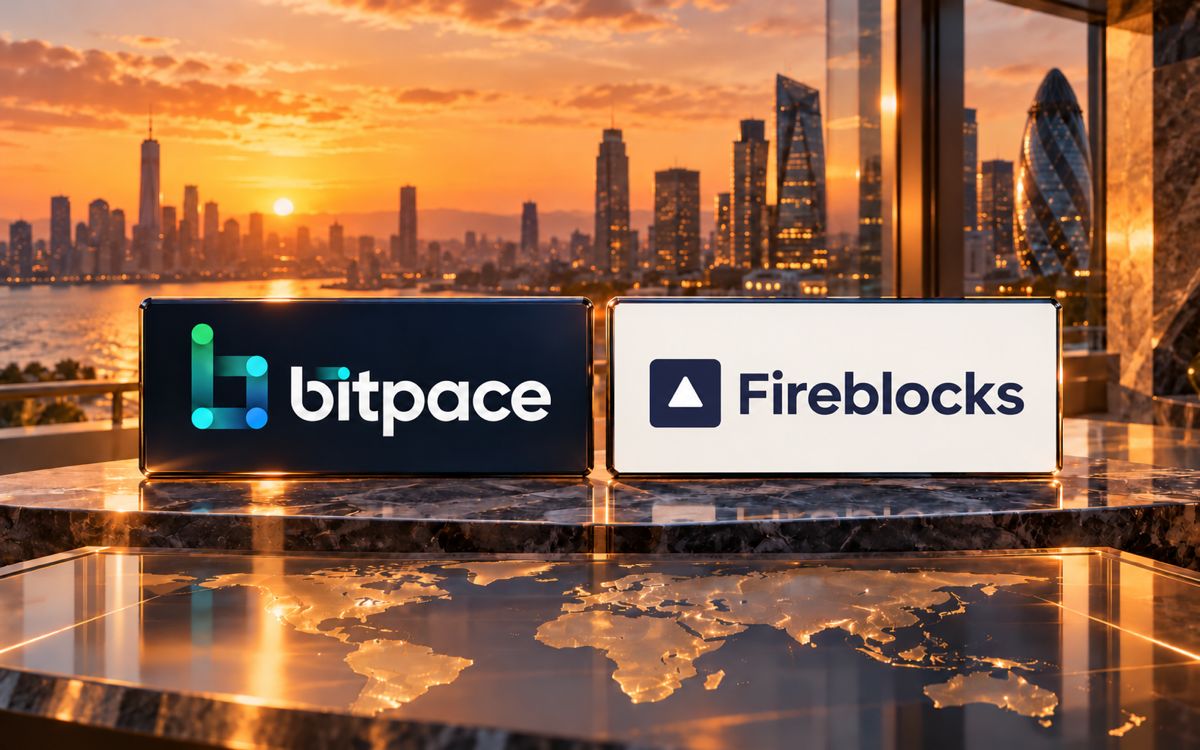
Bitpace announced on September 22, 2026 that it has integrated Fireblocks infrastructure into its payment platform to strengthen digital-asset security and support cross-border stablecoin settlement for businesses.
The deployment lets Bitpace offer clients enhanced digital-asset security, custody controls, and transaction management across global networks, enabling corporate users to route and settle cross-border stablecoin transfers with greater efficiency.
Bitpace CEO Anil Oncu said integrating Fireblocks delivers speed, security, and operational flexibility to its global client base, while Fireblocks VP Head of Network Richard Astle said strong security infrastructure is vital as demand for stablecoin settlement accelerates.
The move comes as Bitpace expands a payment platform that the company says supports settlement across more than 75 cryptocurrencies and 40 fiat currencies.
What the Fireblocks Integration Adds
The Fireblocks integration adds institutional digital-asset infrastructure to Bitpace’s existing platform, according to Bitpace’s announcement.
Bitpace said the partnership strengthens security, custody controls, and transaction management as it expands cross-border payment capabilities, particularly relevant to businesses where processing may involve several blockchain networks, currencies, and settlement destinations, a use case explained in more depth in a guide to how crypto payments reduce processing fees for businesses.
| Integration | Role |
| Bitpace | Payment processing and settlement |
| Fireblocks | Digital-asset infrastructure and security |
| Stablecoins | Cross-border settlement assets |
| Corporate users | Businesses managing international payments |
Table 1. Main components of the Bitpace and Fireblocks integration.
Bitpace said the expanded infrastructure supports plans to handle higher transaction volumes and extend into additional jurisdictions, streamlining multi-currency treasury management and reducing friction with traditional banking rails.
The Growth Behind This Infrastructure Upgrade
The Fireblocks integration comes after significant growth in Bitpace’s reported transaction activity. The company said total transaction value increased 900% between January 2023 and January 2026, while its platform supports settlement in more than 75 cryptocurrencies and 40 fiat currencies, additional context since Bitpace is adding Fireblocks to a platform already handling multiple digital assets and fiat settlement currencies.
Bitpace’s multi-currency model separates the asset a customer pays with from the currency a merchant ultimately receives. Merchants can choose EUR, USD, GBP, or USDC as settlement currencies, with crypto converted into that selected currency, meaning a customer can pay in one cryptocurrency while the merchant receives an entirely different settlement currency, a comparison worth understanding alongside crypto remittances versus Western Union for cross-border payments.
How Fireblocks’ Network Scale Fits Bitpace’s Model
Fireblocks provides infrastructure for digital-asset custody, wallet management, and transaction policies, with its broader Network connecting more than 2,000 institutions for stablecoin custody and payments across more than 100 blockchains, including members such as BNY Mellon, BNP Paribas, and Revolut.
For Bitpace, the integration adds another security layer to a platform already connecting cryptocurrency payments with conventional fiat settlement, increasingly important as businesses use stablecoins for international transfers rather than solely for trading.
The companies have not disclosed the specific Fireblocks products being deployed, the expected transaction volume, or whether the integration will immediately add new cryptocurrencies or settlement currencies.
Stablecoin Settlement Was Already Part of Bitpace’s Model
Bitpace’s existing infrastructure lets merchants select how incoming cryptocurrency is settled, using fiat currencies or USDC, with automatic conversion configured for incoming payments, making the Fireblocks integration relevant to an existing operational model rather than a new payment service.
Bitpace obtained ISO/IEC 27001 certification in June 2026 covering the development, maintenance, and delivery of its payment-processing operations. According to the company, the certification is intended to support its positioning as an intermediary between traditional financial infrastructure and decentralised digital assets, a segment facing increasing scrutiny from institutional counterparties requiring documented security controls before onboarding new payment providers.
Tier-one financial institutions and large global corporations typically require formal, audited security accreditations as a prerequisite for partnership, and crypto-native payment providers without such certification can face barriers when seeking contracts with regulated entities operating under strict third-party risk management policies.
The Fireblocks integration adds a separate layer focused specifically on digital-asset security on top of that certified framework, since businesses processing cross-border payments also need to manage wallet security, transaction authorization, and reconciliation.
What Comes Next for Bitpace’s Expansion
Bitpace said it intends to use the expanded infrastructure to support higher transaction volumes and extend its payment-processing capabilities into additional jurisdictions, though the company has not identified the next markets it plans to enter or provided a detailed implementation schedule.
The integration represents an infrastructure expansion rather than the launch of a new stablecoin or a specific new payment corridor.
What this means for you: Bitpace’s Fireblocks integration adds institutional digital-asset infrastructure to a payment platform that has reported 900% growth in total transaction value since January 2023 and supports more than 75 cryptocurrencies and 40 fiat currencies.
For businesses, the key development is the strengthening of the infrastructure behind cross-border settlement rather than the launch of a new consumer payment product.
This article is for informational purposes only and does not constitute financial or investment advice. Stablecoin payments and digital-asset settlement involve regulatory, custody, liquidity, technology, counterparty, and operational risks. Supported assets, currencies, and jurisdictions may vary.