Key Takeaways
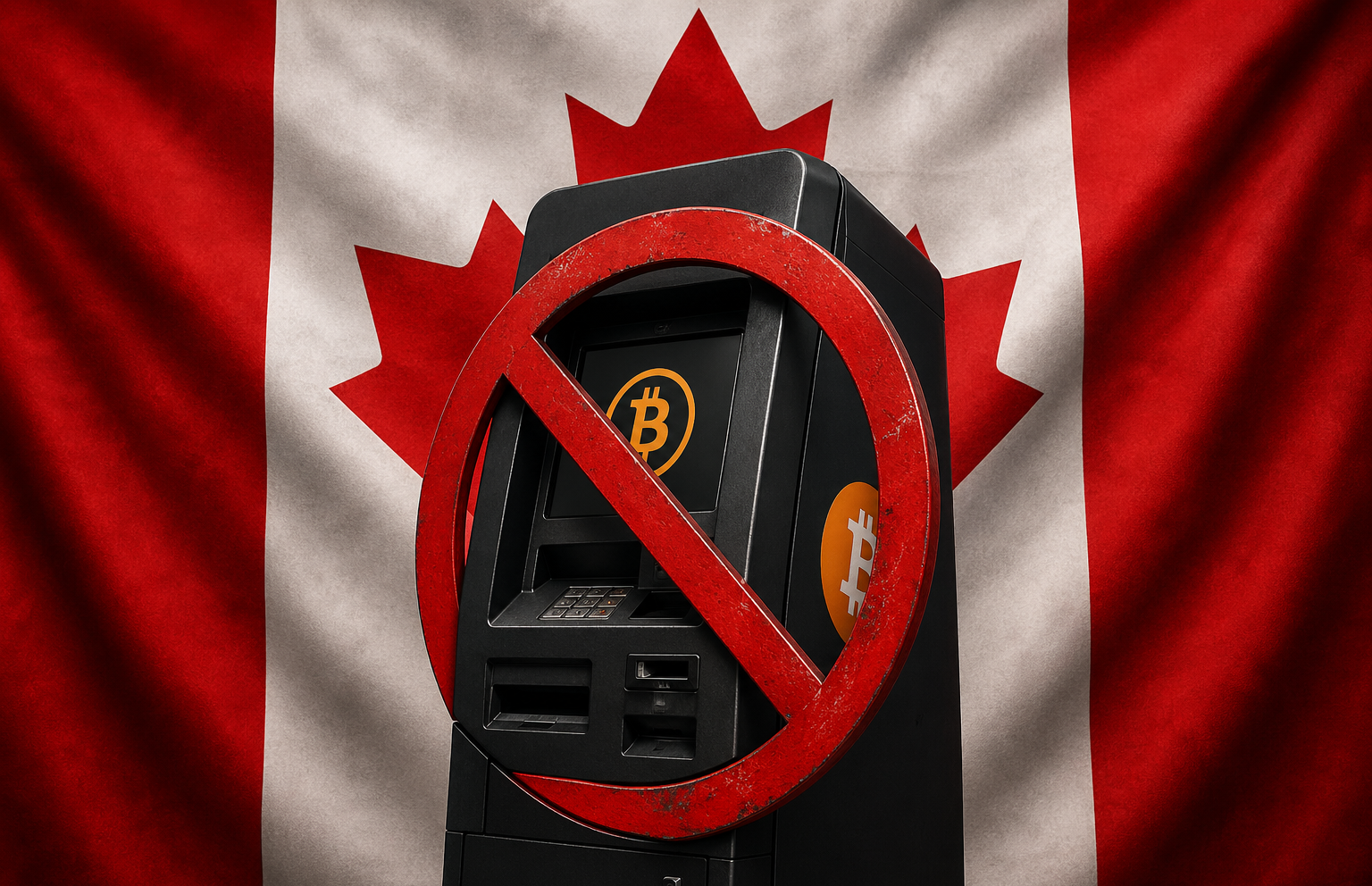
- Canada plans a nationwide ban on crypto ATMs to reduce scams and money laundering and push users toward regulated crypto platforms.
- Authorities say crypto ATMs are heavily used in fraud schemes in which victims are tricked into sending cash that is then converted into untraceable crypto.
- The government argues these machines lack strong identity checks, making them a high-risk channel for illegal fund transfers.
Canada is planning to ban cryptocurrency ATMs across the country, and it is one of the boldest crypto policy moves the government has made in years. The proposal is part of the federal Spring Economic Update 2026 and targets a growing problem: scammers and money launderers have been using these machines to move dirty money into digital assets, slipping past the safeguards that traditional banks have in place.
The proposal has sparked wide debate because crypto ATMs are also used by everyday people who want a simple way to buy digital currency without going through a bank. That puts the government in a difficult spot, balancing the need to stop financial crime against the risk of cutting off a legitimate tool that many Canadians rely on.
Drawing the Line on Crypto Access
If the proposal moves forward, standalone crypto ATMs would be phased out from the convenience stores, gas stations, and malls where they have become a familiar sight. These kiosks, which let users deposit cash and instantly convert it into cryptocurrencies like Bitcoin, are exactly the kind of fast and loosely monitored transaction points the government wants to shut down.
That said, the proposal is not a full retreat from crypto access. Canadians would still be able to buy digital assets through licensed money service businesses and other regulated financial providers, just through channels that come with proper oversight and accountability. The government is essentially drawing a line: crypto is not the problem, but the unregulated door leading to it is.
What remains unclear is when any of this would actually take effect. No final timeline has been announced, which means the proposal is still in early policy stages and could change in major ways before it becomes law.
Evidences Behind the Crackdown
The proposed ban is not based on guesswork. It follows a growing number of investigations and financial reports that all point to the same conclusion: crypto ATMs are appearing in fraud cases far too often to ignore.
- Police agencies have reported a steady rise in cases where victims were told to deposit cash into a kiosk while still on the phone with a scammer.
- Financial watchdogs have flagged these machines as high-risk, noting unusually high volumes of suspicious transactions compared to other ways of buying crypto.
- Some reports suggest crypto ATMs have become one of the most common ways scam money gets converted into cryptocurrency and moved out of reach.
Taken together, these findings gave the government enough reason to act and enough urgency to make the ban one of the biggest proposals in this year’s economic update.
Why Crypto ATMs Are Being Targeted
The push to ban crypto ATMs does not come out of nowhere. For years, law enforcement and financial regulators have watched these machines become less of a gateway to digital investing and more of a go-to tool for financial crime.
1. A Tool for Scams
Regulators say scammers have turned crypto ATMs into one of their most reliable collection tools. Victims are pressured into depositing cash, which is instantly converted and sent to a criminal’s wallet, often before anyone realizes what happened.
Here is how these scams usually play out:
- Fake Government or Tax Demands — Victims are told they owe money and must pay immediately through a crypto kiosk to avoid arrest or penalties.
- Romance Scams — Trust is built over weeks or months before the money request comes.
- Bank or Tech Support Impersonation — Callers pose as officials and guide victims step by step to the nearest machine.
- Fraudulent Account Recovery Schemes — Victims are told their account is at risk and that crypto is the only way to secure it.
What makes crypto ATMs so useful for fraudsters is the same quality that makes them appealing to regular users: they are fast, cash-based, and do not ask many questions.
2. Money Laundering Concerns
Beyond scams, regulators have a second concern. Crypto ATMs make it easy to turn cash into digital assets without the checks that banks are required to carry out. There are no account verifications, no transaction history, and no institution overseeing the process.
Once that cash becomes cryptocurrency, it can be moved across borders within minutes and is far harder to trace than traditional financial transfers. Regulators say this is no longer a theoretical risk but a pattern they are actively seeing in financial crime cases across the country.
3. High Concentration in Canada
The scale of the problem in Canada is hard to ignore. With around 4,000 crypto ATMs operating nationwide, Canada has one of the highest concentrations of these machines anywhere in the world, and regulators say that large footprint has made the country a notable target for ATM-linked financial crime.
The concern is not just about numbers but about who is most at risk. Older Canadians and those less familiar with cryptocurrency are among the most frequent victims, often because they are the most likely to follow a scammer’s instructions without question. The more machines there are, regulators argue, the greater the exposure for the people least equipped to spot the warning signs.
What It Could Mean for Users
If the ban moves forward, the people who will feel it most are everyday Canadians who use crypto ATMs as a quick and simple way to buy digital currency without setting up an account on an exchange. For them, the kiosks offer something that regulated platforms often do not: speed, simplicity, and no lengthy sign-up process.
Here is what the change could look like in practice:
- Fewer Physical Access Points — With kiosks gone, buying crypto would require going through an app, a website, or a licensed money service provider, which may feel like a bigger barrier for less tech-savvy users
- Greater Reliance on Regulated Platforms — Users would need to create verified accounts on licensed exchanges, which come with identity checks and more oversight, but also more consumer protections
- A Potential Slowdown in Scam Activity — Removing ATMs from the equation could disrupt one of the most common ways scammers collect and convert money, making certain fraud schemes harder to carry out quickly
That said, not everyone is convinced the ban will solve the problem. Critics point out that determined criminals are likely to adapt and find other ways to move money, while law-abiding users end up losing a convenient option. It is a trade-off the government will need to defend as the proposal moves through the policy process.
Final Thoughts
The proposed ban is not really about cryptocurrency. It is about criminals who have learned to exploit any system available to take advantage of vulnerable people. Crypto ATMs became a target not because of what they are, but because of what fraudsters turned them into: a fast and largely unchecked way to move stolen money out of reach. Behind every financial report is a real victim, often an older Canadian robbed of their savings in minutes, standing in front of a kiosk in a gas station or a mall. The ban may close one door, but the greater challenge is ensuring vulnerable people are protected no matter which door criminals try to open next.
Frequently Asked Questions
Why is Canada planning to ban crypto ATMs?
Canada is proposing a ban to reduce scams and money laundering, as these machines have been widely used to convert cash into crypto with limited oversight.
How are crypto ATMs linked to scams?
Scammers often trick victims into depositing cash into crypto ATMs, which is then instantly converted into cryptocurrency and sent to wallets controlled by criminals.
Will all crypto access be banned in Canada?
No. The proposal targets crypto ATMs only. Canadians will still be able to buy crypto through licensed and regulated financial service providers.
Who is most affected by crypto ATM scams?
Older adults and less tech-savvy users are often targeted because they are more likely to trust scam instructions and use physical kiosks.
How will users buy crypto if ATMs are banned?
Users will need to rely on regulated exchanges, apps, websites, or licensed money service providers with proper identity verification.