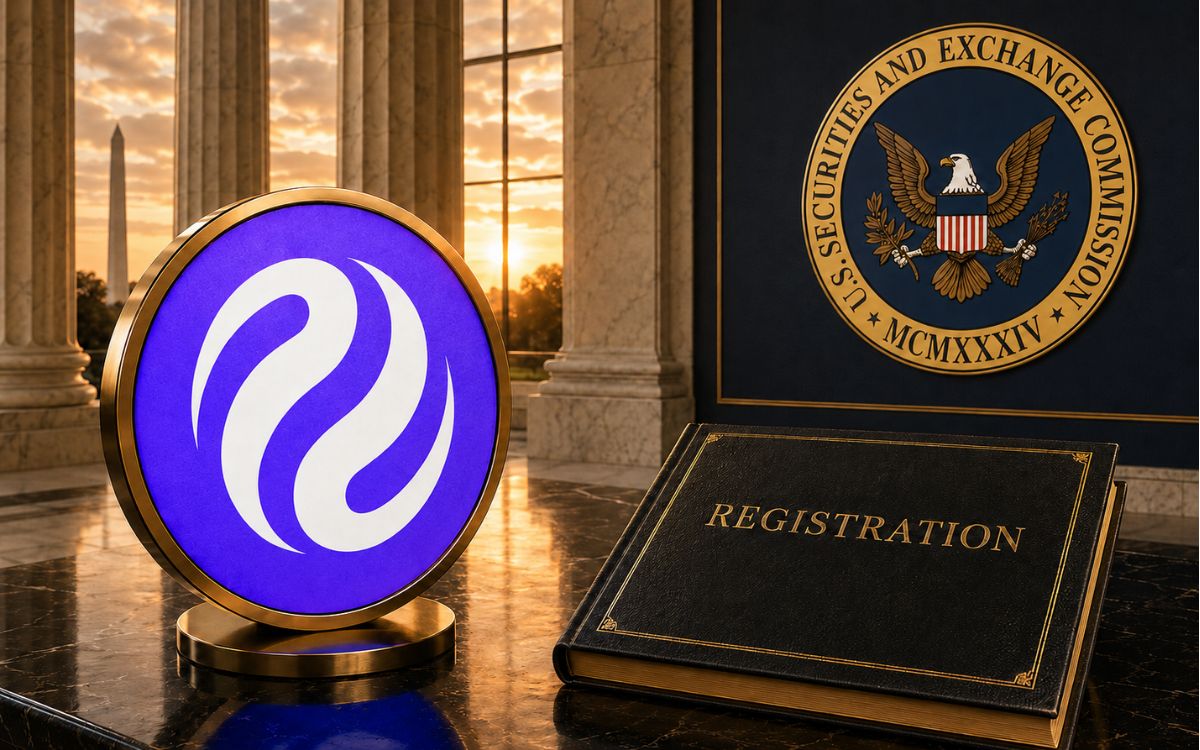
Injective Institutional Services, an affiliate of the Injective blockchain, is now a registered transfer agent with the U.S. Securities and Exchange Commission (SEC).
The Injective SEC registration became effective this week, according to an August 19, 2026 blog post from the Injective Foundation, and the status lets the entity keep the official ownership records for securities, a job that normally sits with banks or dedicated registrars rather than blockchain firms.
It puts Injective among a small group of American crypto companies holding this specific regulatory function.
Injective Institutional Services Clears a New Regulatory Hurdle
According to Injective’s own announcement of the registration, SEC staff have said a registered transfer agent may use distributed ledger technology as its official master securityholder file, as long as the transfer agent meets all applicable federal securities law requirements.
That detail matters because most tokenization projects still keep the authoritative ownership ledger in a separate offchain database, apart from the token itself.
The registration builds on tokenization work Injective had already shipped before this filing. Nomura’s Laser Digital tokenized the Laser Carry Fund on Injective through Libre earlier in 2026, and BlackRock money market products along with the Hamilton Lane SCOPE Senior Credit Fund followed on the same network.
In July 2026, POSCO International and LG CNS also picked Injective for a live pilot tokenizing trade receivables tied to real international commerce.
Injective is pursuing a similar regulatory track in Europe. The INJ MiCA white paper is listed in the European Securities and Markets Authority’s Interim MiCA Register, with Denmark named as the home member state for that filing.
What the Registration Means for Tokenized Asset Buyers
For anyone weighing tokenization platforms, the distinction is practical rather than a compliance footnote.
A registered transfer agent, not just a blockchain token, now sits behind Injective’s asset issuance stack, the kind of regulatory groundwork worth checking whenever a project claims institutional readiness, a comparison our news desk covers across the broader crypto market.
Whether the SEC Extends This Framework to Other Crypto Issuers
The open question is whether other American crypto platforms follow the same path. The SEC’s Division of Trading and Markets lays out the registration and annual reporting steps transfer agents must clear, including the Form TA-1 application and the Form TA-2 annual report, on the agency’s transfer agent page.
Injective’s registration became effective this week, and the company says its European MiCA filing is already active in ESMA’s register, setting up parallel regulatory tracks in the US and EU through the rest of 2026.
What this means for you: If a platform offers you a tokenized asset but can’t point to a registered transfer agent standing behind the ownership records, you’re holding a token that represents a promise rather than the audited recordkeeping that normally protects buyers of securities.
This article is for informational purposes only and does not constitute financial advice. Do your own research before making any investment decisions.