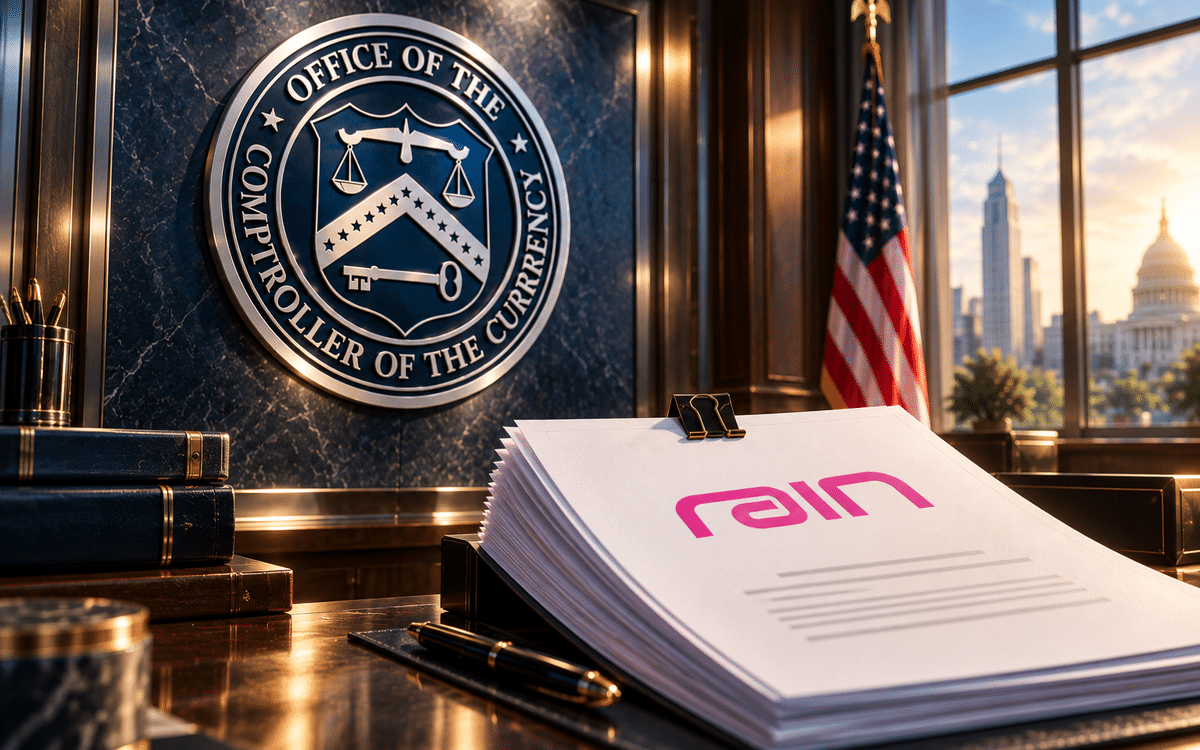
The Independent Community Bankers of America (ICBA) has sued the Office of the Comptroller of the Currency (OCC), challenging the regulator’s authority to grant national trust bank charters to crypto companies.
The ICBA filed the lawsuit on October 2 in the US District Court for the District of Columbia, arguing that the OCC has expanded the national trust bank charter beyond the authority Congress provided under the National Bank Act, allowing crypto firms to perform substantial non-fiduciary activities without being subject to the same framework as insured banks.
The case targets a broader policy shift that has allowed digital asset companies to seek federal trust charters for activities such as custody and stablecoin-related services without becoming traditional deposit-taking banks.
ICBA Says the OCC Created a “Side Door” Into Banking
National trust banks have traditionally handled fiduciary activities such as custody and asset administration.
The ICBA argues that the OCC has gone further by allowing companies focused on crypto custody, tokenization and related digital asset services to qualify even when much of their business is non-fiduciary.
ICBA President and CEO Rebeca Romero Rainey said the organization believes Congress did not create the national trust charter to let crypto companies gain the credibility of a federal bank charter without taking on all the obligations applied to insured depository institutions.
The lawsuit specifically raises concerns about differences in the following:
- Federal Deposit Insurance Corporation (FDIC) insurance
- Community Reinvestment Act obligations
- Consolidated supervision
- Capital requirements
- Liquidity requirements
- Consumer protections
The dispute is therefore not simply about whether crypto companies should be regulated. It is about whether the OCC can use an existing bank-charter framework for businesses whose activities differ substantially from traditional trust banks.
Crypto Trust Banks Cannot Operate Like Normal Commercial Banks
A national trust bank charter does not automatically give a crypto company all the powers of a traditional bank.
According to Reuters, the charters at issue can allow firms to custody digital assets and support settlement functions, but generally do not allow them to accept ordinary insured deposits or make loans like full-service commercial banks.
| National Trust Bank | Traditional Insured Bank |
| Can provide custody and trust services | Can accept deposits |
| May support digital asset settlement | Can make traditional loans |
| Deposits generally not FDIC insured if no insured deposit-taking | Eligible deposits can receive FDIC insurance |
| Limited-purpose charter | Broader banking powers |
| OCC supervised | OCC, FDIC, Federal Reserve or state regulators depending on structure |
Table 1. National Trust Banks Versus Traditional Insured Banks
The ICBA argues that the federal charter could still give crypto companies the appearance and credibility of being a federally chartered bank even though their regulatory obligations differ from those of community banks.
The Lawsuit Challenges an OCC Rule and Interpretive Guidance
The ICBA is also challenging the legal framework the OCC has used to support them.
The lawsuit focuses on a March 2, 2026 final rule and Interpretive Letter 1176, which the ICBA says improperly broadened the activities that can qualify for a national trust bank charter.
The association is asking the court to find those actions unlawful.
According to reporting on the complaint, the ICBA is also seeking to vacate Protego Holdings Corp.’s conditional charter approval.
The OCC has not publicly responded to the lawsuit’s substance. A spokesperson told Reuters that the regulator does not comment on litigation.
OCC Has Expanded Digital Asset Charter Activity in 2026
The lawsuit comes as the OCC has significantly increased its involvement with digital asset companies.
Comptroller Jonathan Gould said in August that the agency had received 40 new bank charter applications since the current administration took office, with 23 involving some form of digital asset activity.
The regulator’s own public database currently lists several digital asset-related applications, including:
- zerohash National Trust Bank
- Payward National Trust Company
- EDX Trust
- PAYO Digital Bank
- Lorum National Trust Bank
The OCC has also issued approvals or conditional approvals to several digital asset-focused institutions during 2026.
Its published decisions include charters involving Coinbase National Trust Company, Ripple National Trust Bank, BitGo Trust Company and Fidelity Digital Asset Services.
That growing pipeline has increased pressure from banking groups that argue crypto companies should not receive federal bank status without equivalent regulatory obligations.
ICBA Has Already Objected to Individual Crypto Charter Applications
The October 2 lawsuit follows months of opposition from the community banking group.
On October 1, one day before filing the case, the ICBA submitted an objection to Block’s application to establish Builders Bank & Trust, N.A. as an uninsured national trust bank.
The association argued that the proposed activities exceeded what Congress intended national trust banks to perform and raised concerns about supervision and the amount of public information available for review.
The ICBA has also filed objections or comments concerning other digital asset charter applications.
Why Crypto Firms Want National Trust Bank Charters
A federal trust charter can offer several practical advantages to a digital asset company.
Operating under one federal regulator can be more efficient than maintaining a patchwork of state-level trust or money-transmitter licenses.
A national trust structure can also support custody, asset administration and settlement services across multiple states under a more unified regulatory framework.
For companies working with institutional clients, federal OCC supervision may also make it easier to build relationships with banks, asset managers and other regulated financial institutions.
However, the ICBA’s lawsuit argues that those benefits should not come without regulatory obligations comparable to those faced by traditional banks with similar risks.
The Case Could Affect Coinbase, Ripple and Other Crypto Firms
Several crypto companies have already received or pursued national trust bank charters.
Among the firms connected to OCC charter decisions or applications are Coinbase, Ripple, BitGo, Fidelity, Payward and zerohash.
A ruling that invalidates the OCC’s legal interpretation could force the regulator to reconsider the basis for some charters or change how it evaluates future applications.
That does not mean existing charters will automatically disappear simply because the lawsuit was filed.
The court has not yet ruled on the ICBA’s claims.
Why Community Banks Are Pushing Back
Community banks argue that the dispute is partly about competitive equality.
Traditional banks face detailed capital, liquidity, lending, consumer protection and community investment obligations.
If a crypto company can obtain a federal bank charter while avoiding some of those requirements, community banks argue that the result creates an uneven regulatory environment.
The ICBA also says consumers may assume that a federally chartered institution carries protections similar to a traditional bank even when deposits are not FDIC insured.
Crypto firms and their supporters, by contrast, have generally argued that specialized charters allow digital asset companies to operate under clearer federal oversight rather than relying on fragmented state regulation.
The lawsuit now puts that policy disagreement before a federal court.
What Comes Next
The US District Court for the District of Columbia will now consider whether the OCC exceeded its authority by expanding the national trust bank framework to cover certain non-fiduciary crypto activities.
The case could affect both future charter applications and the regulatory treatment of crypto companies that have already received approvals.
For now, the OCC’s digital asset licensing process remains active, and the lawsuit itself does not revoke any charter.
What this means for you: The lawsuit could change how crypto custodians, stablecoin companies and other digital asset firms gain access to the US banking system. If the ICBA succeeds, some companies may need different licenses or corporate structures. If the OCC prevails, national trust bank charters could remain an important route for crypto firms seeking federal oversight.