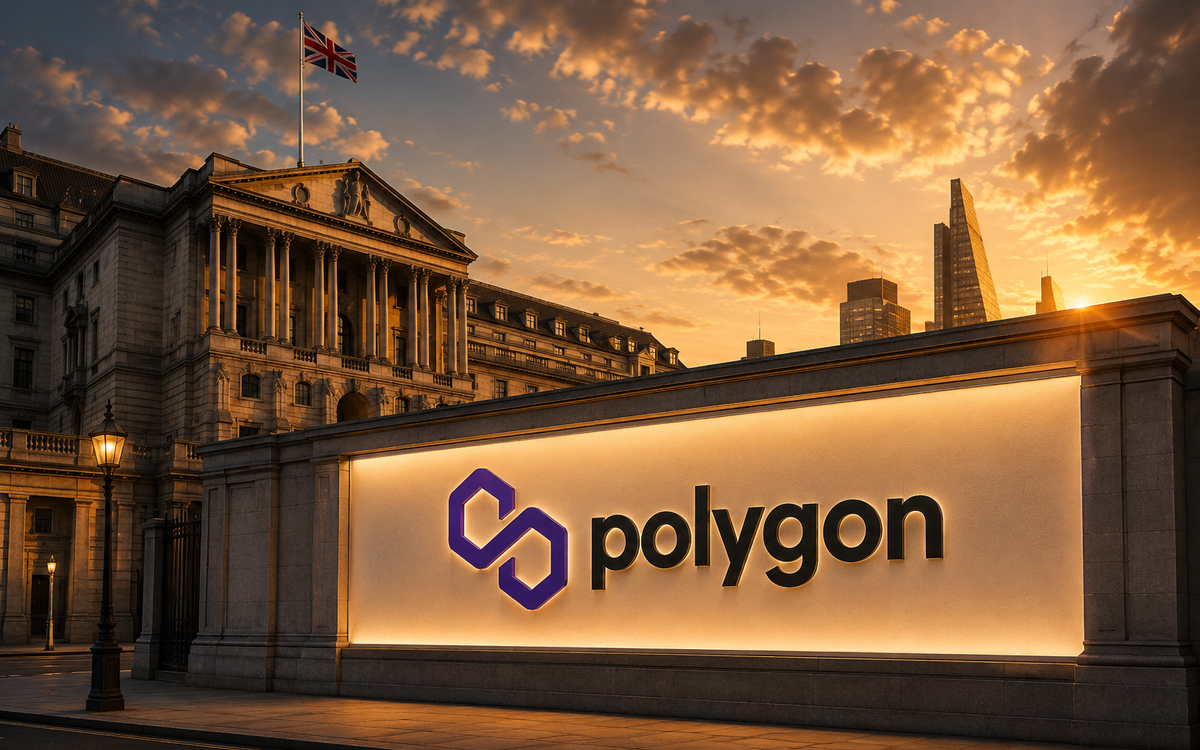
The Bank of England has named Polygon Labs, NOBO Finance, and Dun & Bradstreet as the consortium running a cross-border payments test inside Phase 2 of its Digital Pound Lab. The test will check whether a stablecoin and a simulated digital pound can settle the same international payment in a single flow, something the Lab has not tried before. No real money or customers are involved.
How the Cross-Border Payment Test Works
As of August 2026, the Bank of England’s cross-border payment test is designed to run both legs of one international payment through a single orchestration flow: in the test scenario, an exporter gets paid in stablecoins and an importer settles in a digital pound, instead of using two separate systems that have to wait on each other.
Polygon Labs confirmed its role in a blog post on August 11: its Open Money Stack carries the stablecoin side of the payment, while the Bank’s simulated rails handle the digital pound side.
NOBO Finance leads a second workstream inside the same consortium, a portable credit identity for small businesses called the SME Bankable Profile. Dun & Bradstreet supplies the verified business and credit data behind each profile, and Polygon’s network provides the onchain infrastructure that lets that profile travel with the payment itself.
Marc Boiron, CEO of Polygon Labs, said the test reflects a broader question regulators are now asking: whether central bank money, stablecoins, and tokenized deposits can move as one system rather than three separate rails. Bank of England, meanwhile, describes the exercise as the Lab’s first attempt to run public stablecoin infrastructure and central bank money through a single trade-finance payment.
What This Means for Small Business Owners
Trade finance delays are a common reason smaller UK exporters and importers struggle to prove creditworthiness fast enough to access working capital. Otto Jacobsson, UK chapter lead at the Digital Assets Association, said faster settlement between these payment forms could let businesses free up capital sooner and finance international trade more easily.
This story sits alongside other stablecoin infrastructure moves Polygon has made this year, and it’s the kind of test that could eventually shape how regulators treat stablecoins used inside bank-grade settlement systems.
No Policy Decision Has Been Made Yet
The Bank of England is explicit that nothing tested inside the Lab commits it to any particular design for a digital pound, and Polygon’s participation is not an endorsement from the Bank. The Lab runs with no real customers, no real money, and no formal regulatory review attached to what gets tested inside it. Any decision on whether the UK issues a digital pound, and what it looks like, remains separate from this experiment.
What this means for you: If you’re new to crypto, this is a bank testing plumbing, not launching a new currency. It shows how stablecoins might one day work alongside a government-backed digital pound rather than compete with it.