
Dollar-backed stablecoins USDC and USDT now account for roughly 84% of crypto card spending combined, according to a new a16z crypto report, marking a near-total reversal from a market that euro-backed stablecoins dominated less than two years ago.
The Dollar Takeover
USDC now accounts for about 58% of card spending, and USDT about 26%, according to the report.
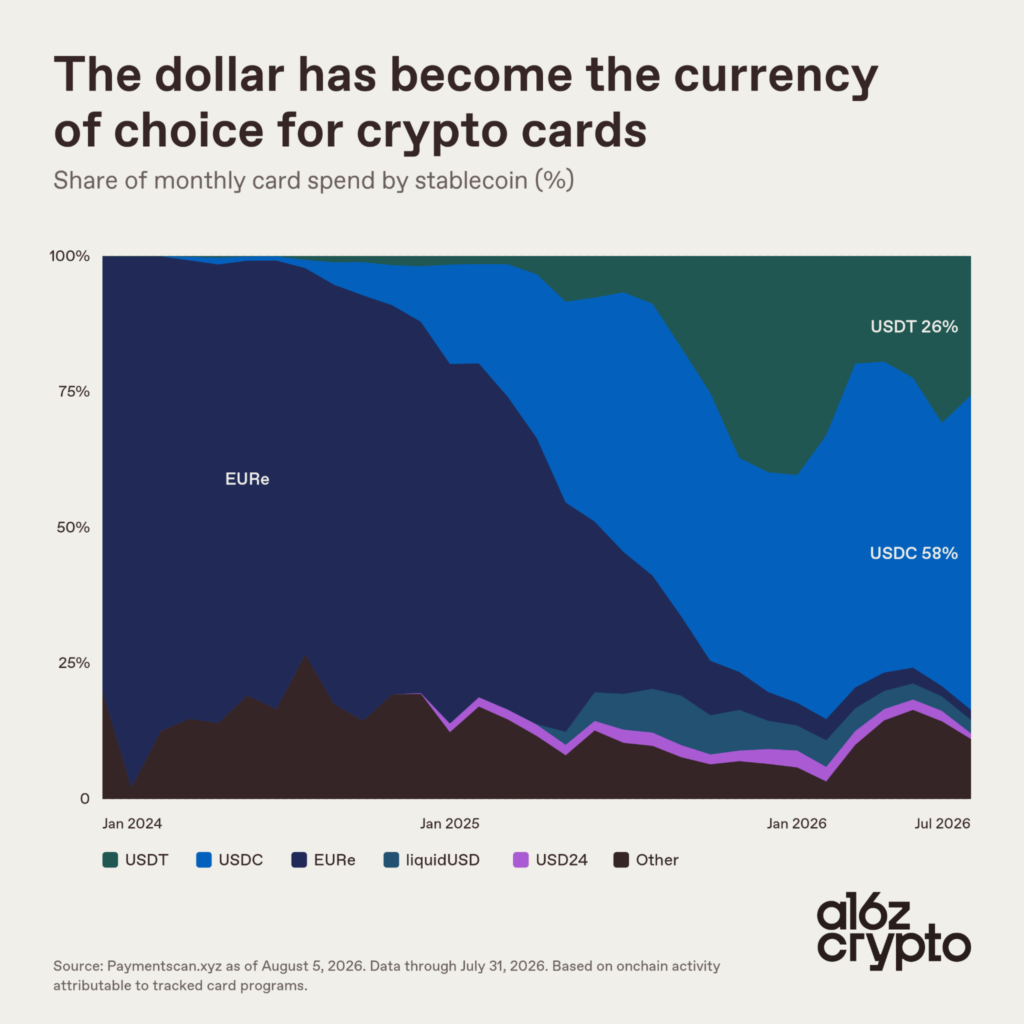
A year ago, those same figures sat closer to 48% and 7%, respectively, meaning USDT’s share grew far more dramatically than USDC’s over that stretch even though USDC remains the larger of the two. The report’s own language was direct about the shift. “Crypto payment card spending now happens overwhelmingly in digital dollars.”
The euro side of the market has essentially collapsed by comparison. Euro-backed EURe accounted for roughly 88% of card volume in early 2024, with most of that activity occurring specifically through the Gnosis network.
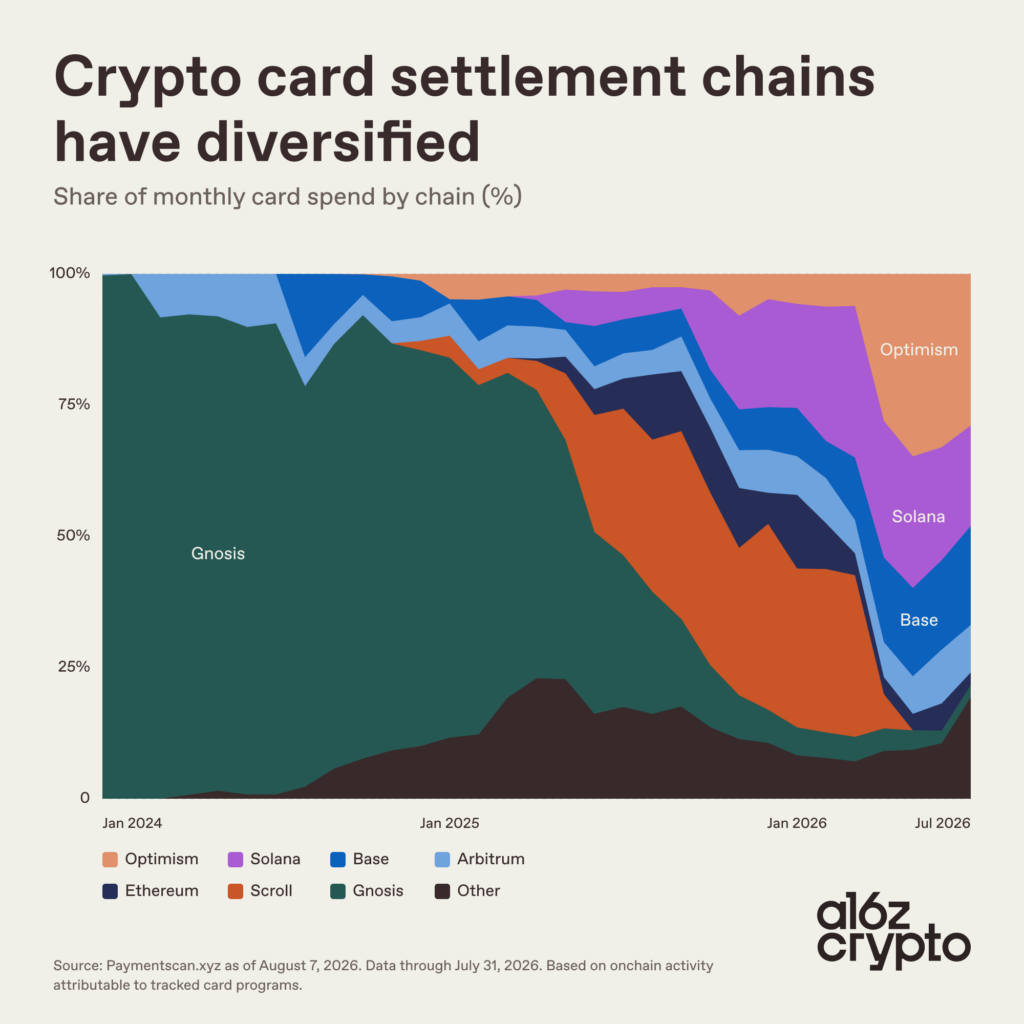
That share has since fallen to just 2%, and Gnosis’s own share of card-spending volume has fallen in step, down to roughly 2% as well.
The shift has coincided with a wave of new card programs and settlement networks launching specifically around dollar-denominated stablecoins, giving users and merchants more infrastructure choices built around USDC and USDT than existed when euro-backed cards held their earlier lead.
Card Spending Overall Has Grown Sharply
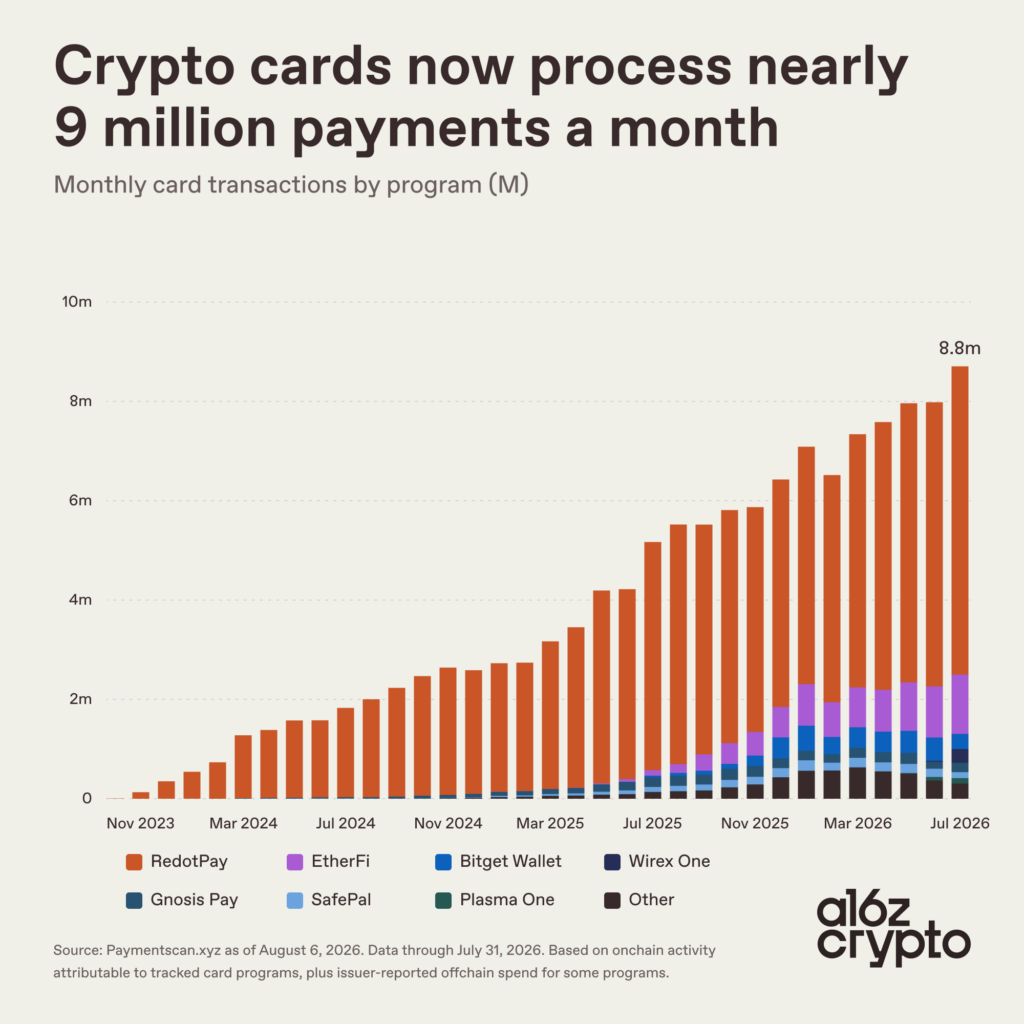
Total crypto card spending reached $759 million in monthly volume in July, up 2.5 times from $306 million a year earlier.
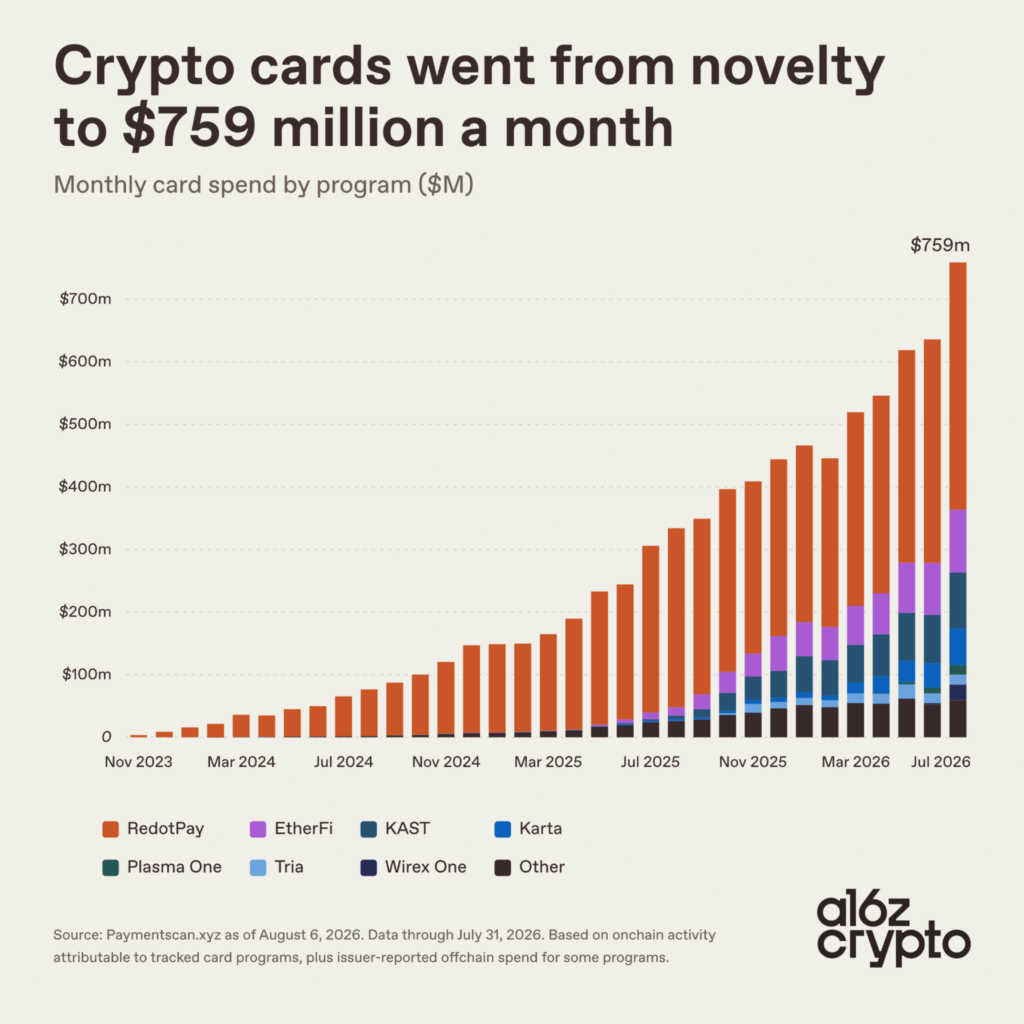
Cardholders made nearly 9 million purchases in July, up from about 5.2 million a year earlier, with an average transaction of roughly $86.
The growth looks even more dramatic zoomed out further. When tracking began in October 2023, monthly volume sat below $1 million, meaning the category has grown from a near-zero base to hundreds of millions in under two years.
Settlement activity has also spread across more blockchains as new card programs have launched.
Optimism now accounts for about 29% of card volume, while Solana and Base each hold about 19%.
Crypto payment cards work by allowing holders to spend stablecoins or other crypto assets anywhere a major card network is accepted, automatically converting the balance to local currency at checkout so merchants see what looks like an ordinary card transaction on their end.
A Real Caveat Worth Knowing About These Numbers
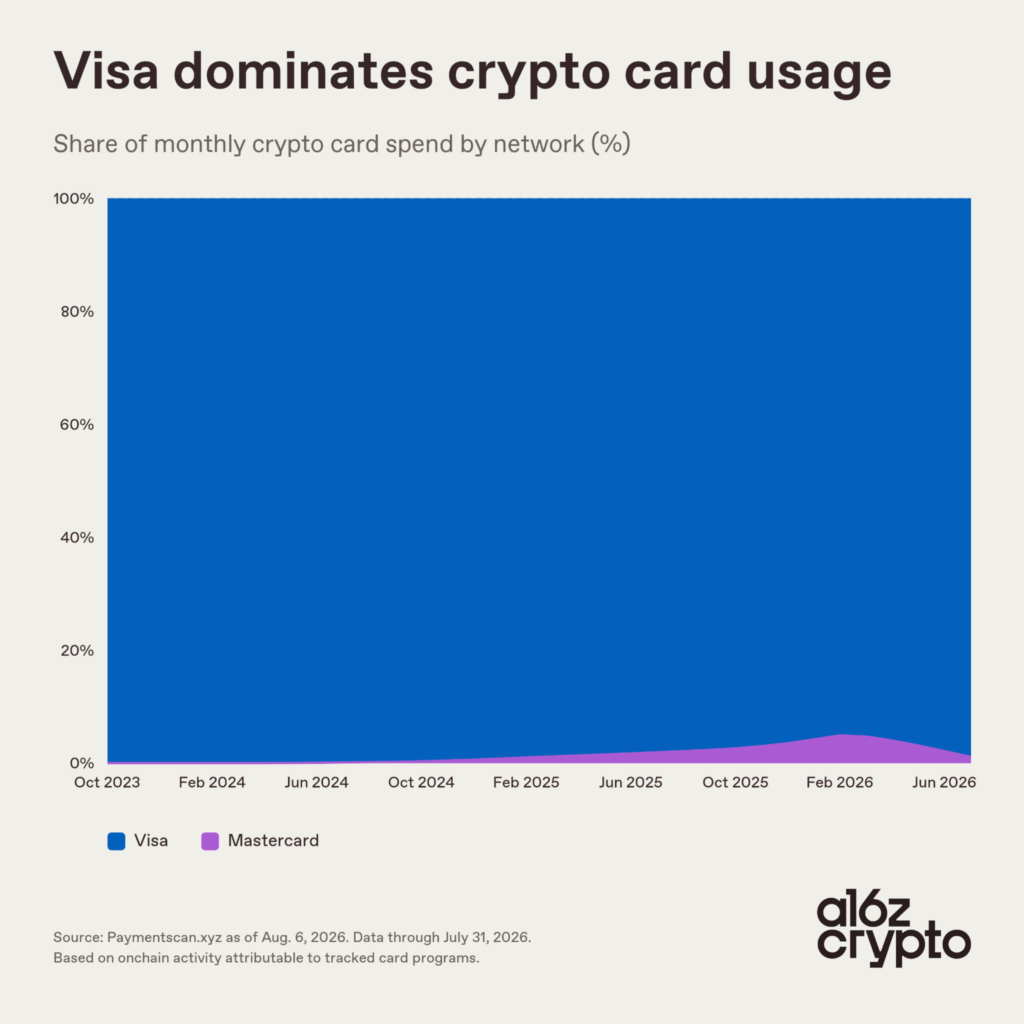
Nearly all tracked spending still moves through Visa’s network, but one specific data-quality issue is worth flagging directly.
RedotPay, the largest individual card program by volume in this data set, self-reports its own figures rather than settling on-chain in a way that can be independently verified.
That does not mean the broader trend toward dollar-denominated stablecoins is in question, since it’s corroborated across the underlying data in multiple ways, but it does mean the exact headline percentages carry more uncertainty than a fully on-chain-verified figure would.
For more on how these cards work day-to-day, our guide to the best crypto cards covers the current options in more detail, and our coverage of Circle’s USDC platform has more on the stablecoin issuer that benefits most directly from this shift.
What Comes Next
Crypto card spending remains small next to traditional payment networks, which process trillions of dollars every month, so this growth is happening from a modest base rather than threatening incumbent payment rails anytime soon.
What this means for you: if you are choosing a stablecoin to hold for everyday spending through a crypto card, the data suggests USDC and USDT have become the default choice for a reason, as merchant and network support has consolidated around dollar-denominated stablecoins specifically, while euro-denominated alternatives have lost most of the infrastructure support they had just two years ago.
That consolidation also matters for anyone building or launching a card program, since it suggests network effects in this specific category now favor integrating with the two dominant dollar stablecoins over betting on a smaller, non-dollar denomination gaining meaningful share back.