

XRP is holding near $1.40 as investors prepare for a key US regulatory vote while institutional activity around Ripple’s ecosystem continues to expand.
US spot XRP exchange-traded funds (ETFs) recently extended a run of positive flows even as Bitcoin and Ethereum funds faced withdrawals, which attracted $18.98 million across September 8 to September 10, putting them on track at the time for a ninth straight week of positive inflows.
Meanwhile, Ripple USD (RLUSD) reached a record supply of roughly $2.44 billion on September 8. About $1.03 billion was issued on the XRP Ledger (XRPL), showing continued growth in Ripple’s stablecoin business even while XRP itself remained range-bound.
The next immediate catalyst is the expected September 15 Senate procedural vote on the CLARITY Act, followed one day later by the Federal Open Market Committee (FOMC) decision.
XRP ETF Inflows Continue Despite Price Weakness
XRP has struggled to turn growing institutional demand into a sustained price breakout.
US spot XRP ETFs recorded $1.55 million in net inflows on September 8, followed by $12.29 million on September 9 and another $5.14 million on September 10, bringing total inflows across those three sessions to $18.98 million, according to SoSoValue data.
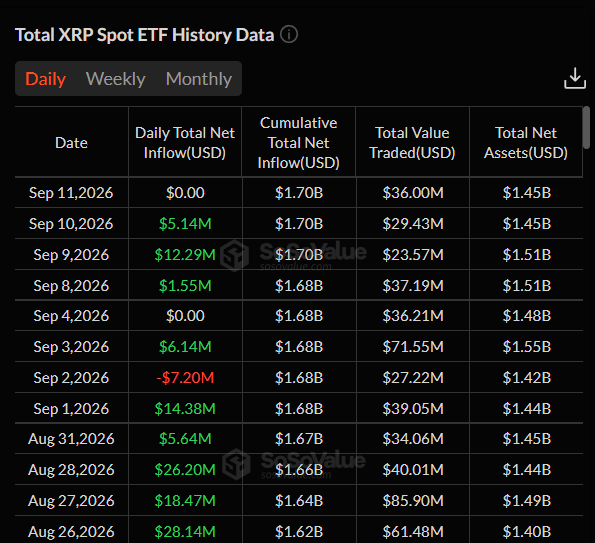
For context, during the same period, Bitcoin ETFs recorded three consecutive outflow sessions totaling about $449.45 million, while Ethereum ETFs also saw withdrawals.
XRP’s ETF market has grown considerably during 2026. As of August 17, cumulative net inflows stood at about $1.51 billion, while seven US spot XRP ETFs collectively held nearly 994.74 million XRP.
XRP ETFs Move Into Wall Street Repo Collateral
XRP-linked investment products are also beginning to appear beyond conventional ETF portfolios.
Four US spot XRP ETFs appeared as collateral in repurchase agreements held by a Charles Schwab money market fund as of August 31. At least $8.32 million in XRP ETF shares appeared in the collateral baskets, up roughly 20 times from May.
JPMorgan Securities and Bank of America Securities were counterparties to five repurchase agreements totaling approximately $3.99 billion.
The $8.32 million XRP-linked component remains small compared with the overall repo transactions. Still, its use is notable because ETF shares are being incorporated into traditional short-term financing structures rather than simply held as investment exposure.
This does not mean banks are directly using XRP as collateral. The collateral consists of shares in XRP ETFs, an important distinction when assessing the development.
RLUSD Supply Reaches a New Record
Ripple’s stablecoin business is expanding even as XRP remains below its recent highs.
RLUSD reached an all-time-high supply of approximately $2.44 billion on September 8. By September 10, supply remained near $2.4 billion, up more than 55% over 30 days, according to DefiLlama data.
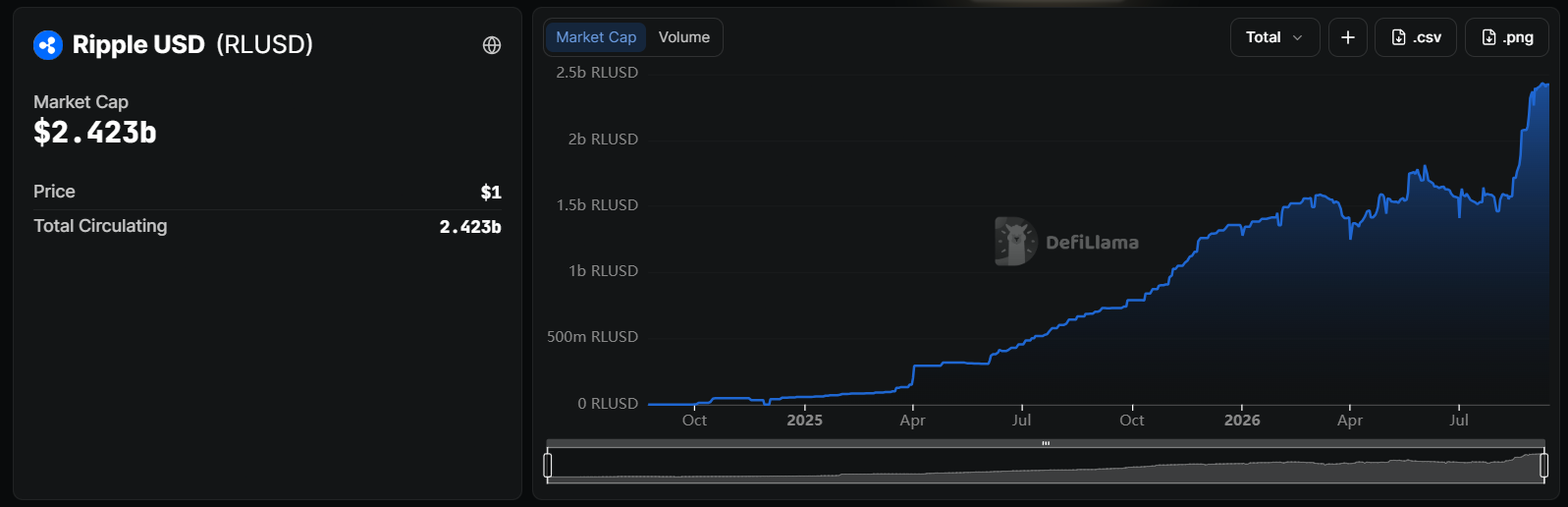
Around $1.37 billion of RLUSD was issued on Ethereum, while approximately $1.03 billion was on XRPL.
The increase highlights growing use of Ripple’s dollar-backed stablecoin across payments, trading, and institutional infrastructure.
However, RLUSD growth should not automatically be treated as direct XRP buying pressure. RLUSD can operate on both Ethereum and XRPL, and increased stablecoin supply does not require an equivalent amount of XRP purchases.
Ripple Expands Institutional Infrastructure Around XRPL
Ripple has continued building financial infrastructure that could bring more institutional activity to XRPL.
The company has invested in ZILO and Licuido as part of an effort to expand regulated transfer agency, token issuance, and collateral mobility capabilities. Ripple said the investments build on existing partnerships and are intended to connect more institutional financial activity with XRPL.
Ripple has also expanded its regulated presence in the United Kingdom. Ripple Markets UK is authorized by the Financial Conduct Authority (FCA) as an Electronic Money Institution and registered as a cryptoasset business.
The company’s broader institutional infrastructure now includes payments, custody, RLUSD, and Ripple Prime, its prime brokerage operation.
These developments strengthen Ripple’s institutional footprint, but they should not be treated as equivalent to direct XRP adoption, as some products use XRPL or RLUSD without requiring significant XRP exposure beyond the network functions that use the native asset.
CLARITY Act Vote Becomes the Next XRP Catalyst
Attention now shifts to Washington, as the Senate is expected to hold a procedural vote on September 15 over whether to advance debate on the CLARITY Act. The vote would not represent final passage of the legislation, but it could determine whether the broader US crypto market structure bill moves forward in the Senate.
For XRP, the bill matters because clearer rules for digital assets, exchanges and financial institutions could reduce regulatory uncertainty across the US crypto market.
Ripple Chief Executive Officer (CEO) Brad Garlinghouse has previously argued that XRP already has greater legal clarity following Ripple’s long-running court battle with the US Securities and Exchange Commission (SEC), while maintaining that the broader industry still needs comprehensive market structure rules.
A successful procedural vote could therefore improve broader crypto regulatory sentiment, although it would still leave additional legislative steps before the bill could become law.
XRP Price Still Lags Institutional Growth
Despite ETF inflows, growing RLUSD supply and Ripple’s expanding institutional infrastructure, XRP has struggled to sustain momentum above the $1.40 area.
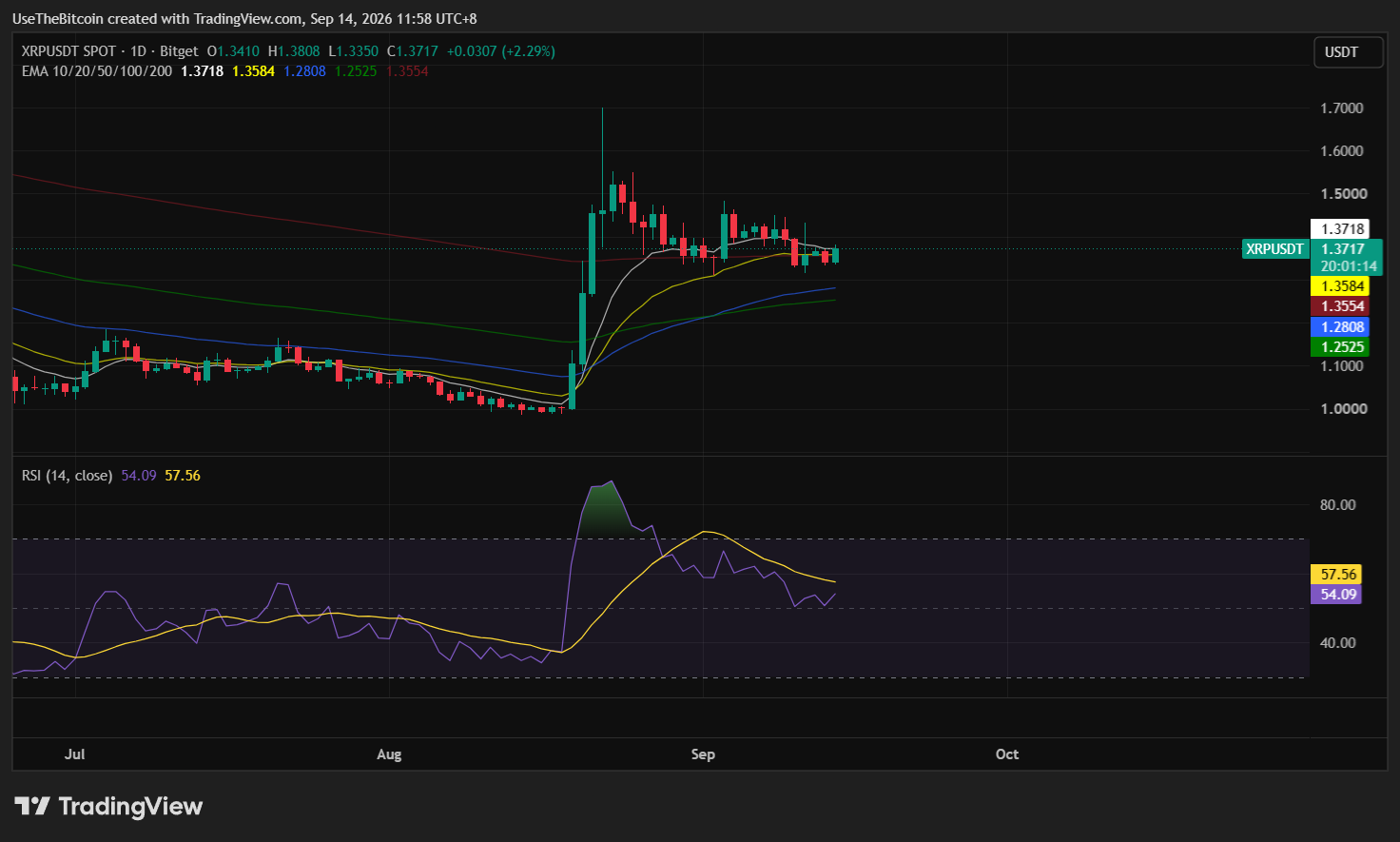
ETF flows represent direct demand for XRP-linked investment products, while RLUSD growth and Ripple’s business expansion measure different parts of the ecosystem. They can support longer-term XRPL development without necessarily creating immediate buying pressure for XRP.
The same distinction applies to institutional infrastructure. Ripple Prime, custody services, and stablecoin adoption can expand Ripple’s business without producing a one-for-one increase in XRP demand.
For XRP holders, the question is therefore not simply whether Ripple continues to grow, but whether that growth ultimately translates into greater usage and demand for the native XRP asset.
What Comes Next
XRP enters a busy two-day window with the CLARITY Act procedural vote expected on September 15 and the FOMC decision scheduled for September 16.
For XRP itself, regulatory progress and continued ETF demand could improve sentiment, but the token still needs stronger price follow-through before Ripple’s expanding institutional footprint translates into market performance.
What this means for you: XRP has several supportive narrative trends behind it, but ETF inflows, RLUSD growth, and Ripple’s business expansion are different signals. The September 15 CLARITY Act vote and September 16 FOMC decision could determine whether those longer-term positives finally translate into stronger short-term momentum.