Crypto auto-trading platforms let you set a strategy once and let bots, AI, or copy-trading tools carry it out around the clock, without you watching a chart at 3 a.m. That’s the appeal: markets don’t close, but people need sleep. These platforms fill the gap with trading bots, AI-assisted setups, and copy trading that mirrors experienced traders in real time.
None of them can promise a profit. What they can do is remove the manual grind of checking prices every hour and executing trades by hand. Below are seven platforms worth knowing in 2026, what each one actually does well, and what to weigh before connecting an API key to your exchange account.
WunderTrading
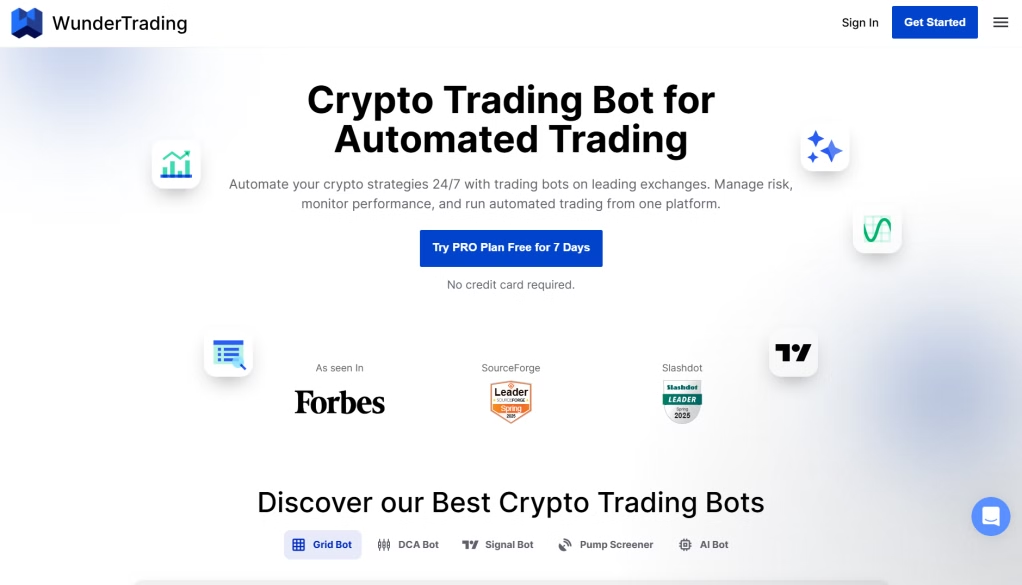
WunderTrading connects to multiple exchanges through API and combines copy trading with customizable bots. Traders can run grid or DCA strategies, or follow verified traders and replicate their trades automatically. The free plan includes one signal bot, one grid bot, and one DCA bot, along with paper trading for testing strategies before committing real funds.
WunderTrading doesn’t charge its own trading commission, so costs come down to your exchange’s standard maker and taker fees plus whatever subscription tier you choose. It works best for beginners who’d rather copy a proven trader than build a strategy from scratch, and less well for anyone trading on-chain, since its automation stops at the edge of centralized exchange markets.
3Commas
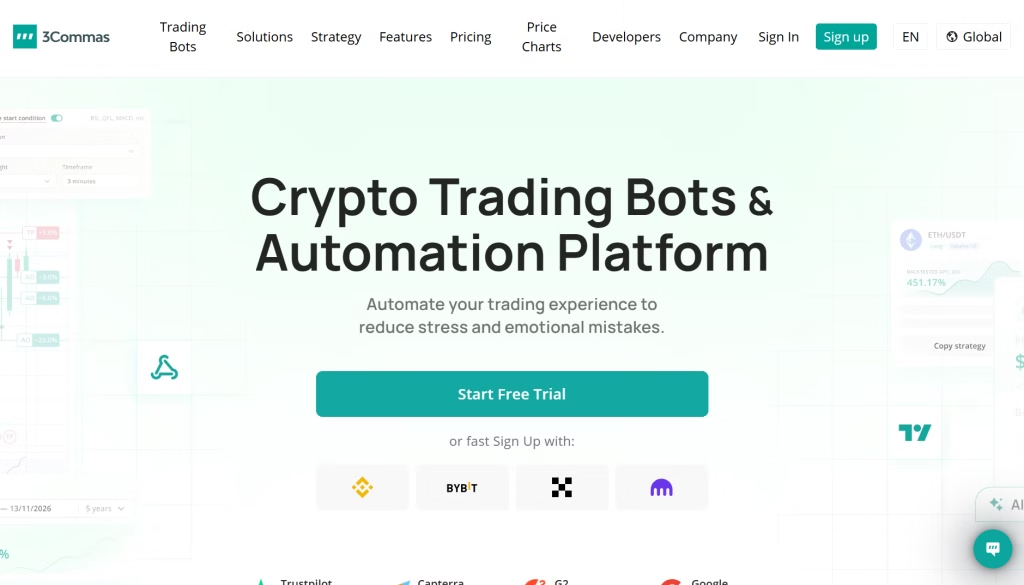
3Commas runs DCA, grid, and signal bots across multiple exchanges, with SmartTrade for manual orders layered on top of the automation. Its Starter plan begins around $20 a month for single-exchange spot trading with 5 active DCA bots, scaling up to the Expert plan near $140 a month for high-volume traders running futures bots across 15 API keys.
Backtesting and paper trading let you test a strategy against up to two years of historical data before risking capital. 3Commas suits traders comfortable with a learning curve. DCA bot setup alone involves more than a dozen configurable fields, so new users who skip the defaults risk mediocre results, and security-conscious traders should restrict API keys to trade-only permissions with no withdrawal access.
CryptoHopper
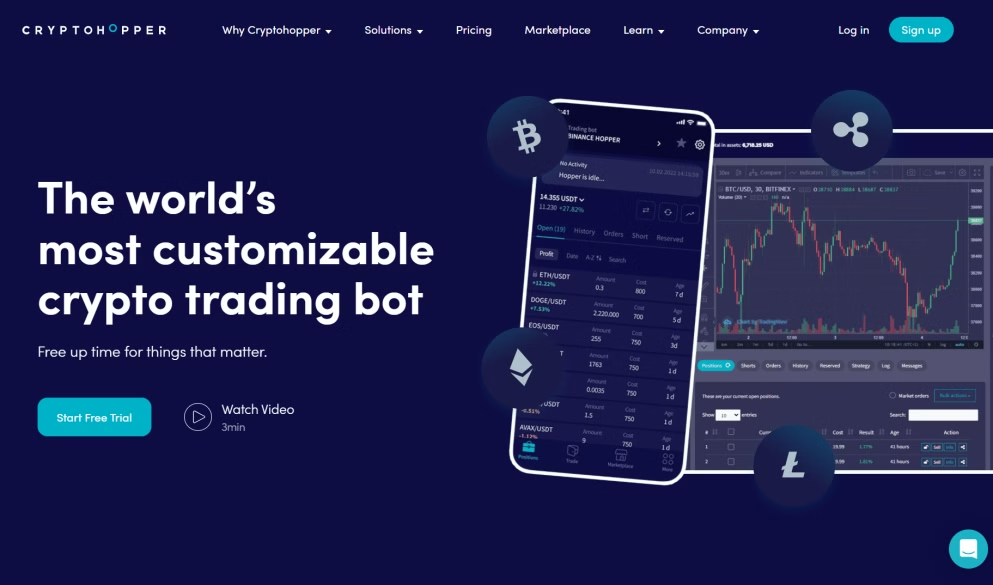
CryptoHopper is a cloud-based bot platform built around a strategy marketplace where users buy, sell, or copy pre-built trading strategies. Its four tiers run from a free Pioneer plan with one bot and no marketplace access, up to the Hero plan at roughly $129 a month, which unlocks the AI Strategy Designer and full marketplace access.
The drag-and-drop strategy builder lets users configure bots visually without writing code, and backtesting or paper trading validate a strategy before deploying it live. The marketplace has no built-in quality vetting, though, so a strategy that looks polished can still be overfit to a specific market period.
Backtest independently rather than trusting a listing at face value, and expect signal subscriptions or premium templates to add to the monthly cost.
Coinrule
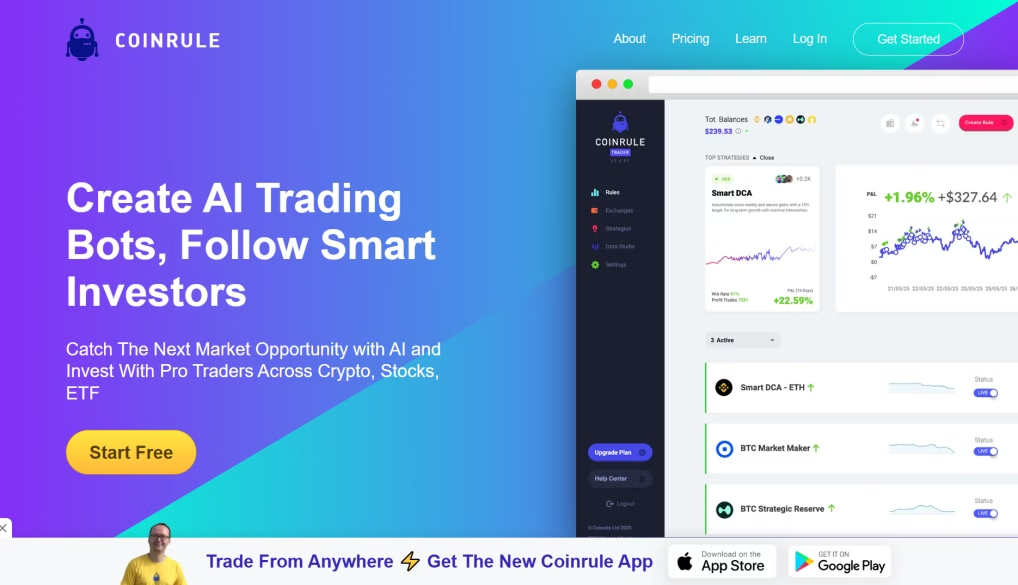
Coinrule uses a visual “if this, then that” rule builder instead of preset bot types like DCA or grid. Traders connect to more than 30 exchanges, including Binance, Coinbase, Kraken, and Bybit, and Coinrule has expanded into on-chain trading on networks including Base and Arbitrum.
Pricing runs from a free Starter plan capped at $3,000 in monthly trading volume, through the Hobbyist plan near $30 a month, the Trader plan near $60 a month, up to a Pro plan around $450 a month.
The rule builder draws from more than 350 pre-built templates, and backtesting lets you test a rule against historical data before deploying it live. Coinrule fits traders who think in conditional logic rather than DCA ladders or grid ranges.
The free plan is tight enough that most users outgrow it quickly, and on smaller accounts the flat subscription can outweigh what a rule actually earns, so it works best once capital is large enough that the fee becomes a rounding error.
MEXC

MEXC runs native Grid, DCA, and Futures Grid bots directly on the exchange, alongside a copy trading pool with more than 21,000 verified traders across roughly 4,000 markets. MEXC’s spot trading carries 0% maker and taker fees across all pairs, though bots and algorithmic strategies routed through the API follow a separate futures fee schedule, which stood at 0.06% maker and 0.08% taker as of August 2026.
The Futures Grid bot includes an AI parameter mode that suggests price range, grid count, and leverage based on historical data. MEXC works well for traders who want automation built into the exchange itself, especially for spot strategies where the zero-fee structure helps. Futures bots carry more risk given the leverage involved, so that side needs closer monitoring than the spot bots.
Bybit
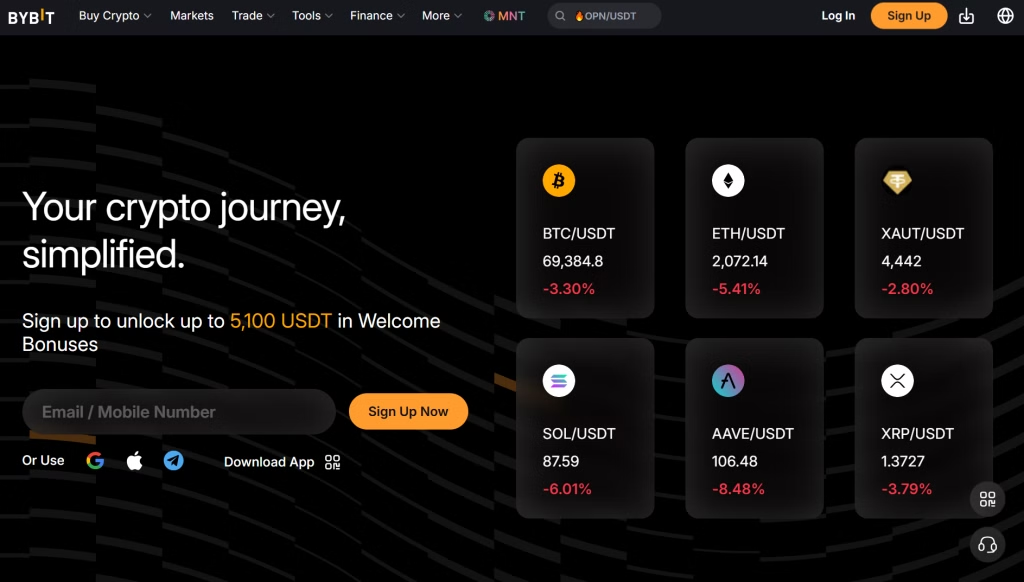
Bybit runs six native bot types directly on the exchange at no extra platform cost: Auto-Invest, DCA, Spot Grid, Futures Grid, Futures Martingale, and Futures Combo.
Its 2026 upgrade, Aurora AI, backtests seven days of historical market data and generates up to 18 ready-to-deploy configuration sets per session, sorted into High Yield, Stable, and High Frequency categories. Loss cover vouchers can offset a portion of eligible losses on select bots after they’re terminated, and there’s no added bot fee beyond Bybit’s standard trading rate.
Bybit suits traders who want plug-and-play AI suggestions without leaving the exchange, though Aurora AI’s configurations come from the same shared dataset every user sees, so identical setups are common. Bots also stay confined to Bybit, so it isn’t a fit for anyone managing strategies across several exchanges at once.
Bitget
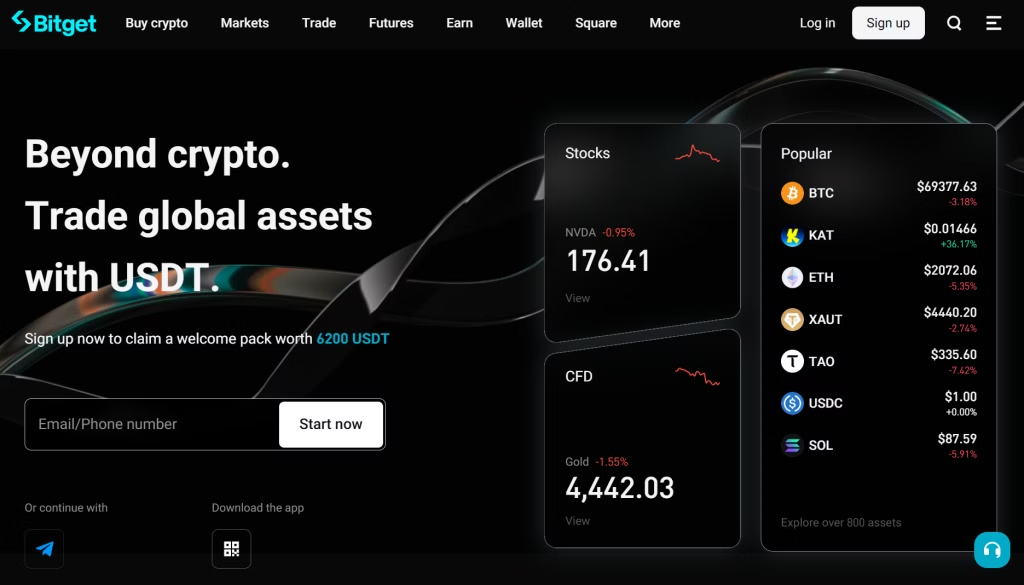
Bitget added Bot Copy Trading in January 2026, letting users one-click copy eligible spot and futures grid bots built by other strategists, with parameters synced automatically and profit-sharing settled at the end of each session. Beyond copy trading, Bitget’s native bot suite includes Grid, Martingale, CTA MACD, BOLL, Auto-Invest, and Signal bots.
Bot Copy Trading lets users copy a strategist’s bot directly, track its performance, and stop copying at any time, while the Auto-Invest bot schedules recurring buys for consistent long-term accumulation.
The feature is still new as of this update, with additional bot types planned beyond the initial spot and futures grid rollout, so it’s worth checking Bitget’s own announcements before committing significant capital to a copied bot.
The Real Cost Behind Every Bot Subscription
Every platform above charges something, even the ones with a free tier. A monthly subscription is only one line on the real bill. Exchange trading fees apply to every order a bot fires, market orders on thinner pairs can fill worse than the displayed price, and futures bots add funding rate costs that most quick profit calculations skip entirely.
Add those together, and a bot needs to out-earn the subscription plus fee drag plus slippage before it turns any actual profit. Account size matters more than most beginners expect. A $30-a-month subscription on a $3,000 account is a real headwind before a single trade executes, while the same fee barely registers on a $30,000 account.
Marketplace and copy-trading strategies carry their own risk too: a well-documented strategy can still be overfit to a specific market period, and past performance on a marketplace listing says nothing about how it handles the next unexpected move.
You can check our guide on crypto overtrading signs if you’re trying to spot when automation is doing more harm than good. Automated tools remove the need to watch every price tick, but they don’t remove the need to understand what you’re automating. You can visit our trading hub to learn more about strategy fundamentals before connecting an API key to real funds.
This article is for informational purposes only and does not constitute financial advice. Do your own research before making any investment decisions.
Frequently Asked Questions
Need a refresher? Here are quick answers to what most beginners ask first.
Are crypto auto-trading platforms safe to use?
Safety depends more on API key permissions than on the platform itself. Restrict any connected API key to trade-only access with withdrawals disabled, enable two-factor authentication, and never share your API secret. In most setups, the platform never holds custody of your funds because bots send instructions to your exchange account rather than pooling capital themselves.
Do these platforms guarantee profits?
No platform on this list guarantees a return. Bots execute a strategy consistently, but a poorly designed strategy loses money just as consistently as a good one makes it. Backtesting and paper trading before going live are the closest things to a safety net available.
Which platform is best for a complete beginner?
WunderTrading and Coinrule tend to have the gentlest learning curves, since copy trading and visual rule-building require less upfront strategy knowledge than configuring a 3Commas DCA bot from scratch. Bybit and MEXC also work well for beginners who’d rather stay on one exchange than manage a separate subscription tool.
Can I use more than one auto-trading platform at once?
Yes, though most traders settle on one primary platform to avoid paying multiple subscriptions and to keep their strategy logic in one place. Running bots on the same funds across two platforms at once also raises the risk of conflicting orders.