Filing crypto taxes in 2026 means tracking more than buys and sells. Staking rewards, NFT trades, DeFi swaps, liquidity pool activity, and cross-chain transfers all create separate taxable events, and most of them happen across more than one wallet or exchange. Missing one can mean overpaying, underreporting, or hearing from a tax authority later.
Crypto tax software exists to close that gap. The right platform pulls in transactions automatically, applies the correct cost-basis method, and produces a report you can hand to a tax professional or file yourself. Below are seven platforms worth considering in 2026, what each one actually does well, and who each is built for.
Koinly: Best Overall and Best for Global Investors
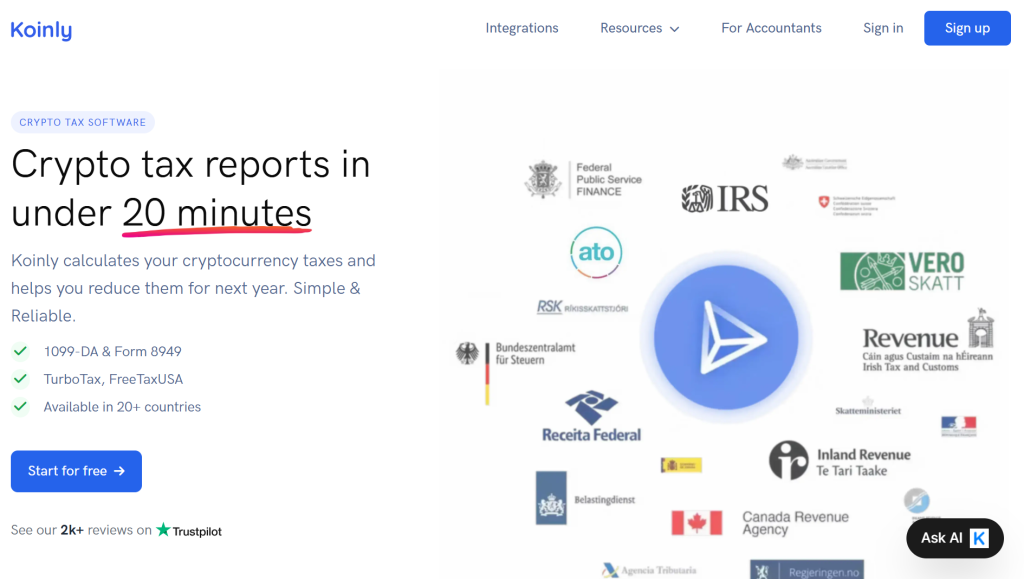
Koinly remains the most consistently recommended platform across independent 2026 reviews, and for a specific reason: its country coverage is the deepest on the market. The platform connects to more than 700 exchanges, wallets, and blockchains, and generates localized tax reports for over 100 countries, including U.S. Form 8949 and Schedule D, UK HMRC capital gains summaries, and Australian ATO reports.
Its free tier lets you import transactions, connect unlimited wallets and exchanges, and preview your full tax liability before paying anything; you only pay when you download the actual report, and paid plans scale by transaction volume.
It supports FIFO, LIFO, HIFO, and share-pooling cost-basis methods, and connects directly with QuickBooks and Xero for anyone who also needs business-level bookkeeping.
The one gap worth noting is account security: Koinly doesn’t currently support two-factor authentication on logins. That aside, it’s the safest starting point for anyone trading or holding across multiple countries, or anyone who wants to preview their full tax picture for free before paying for a report.
CoinLedger: Best for Beginners and TurboTax Filers
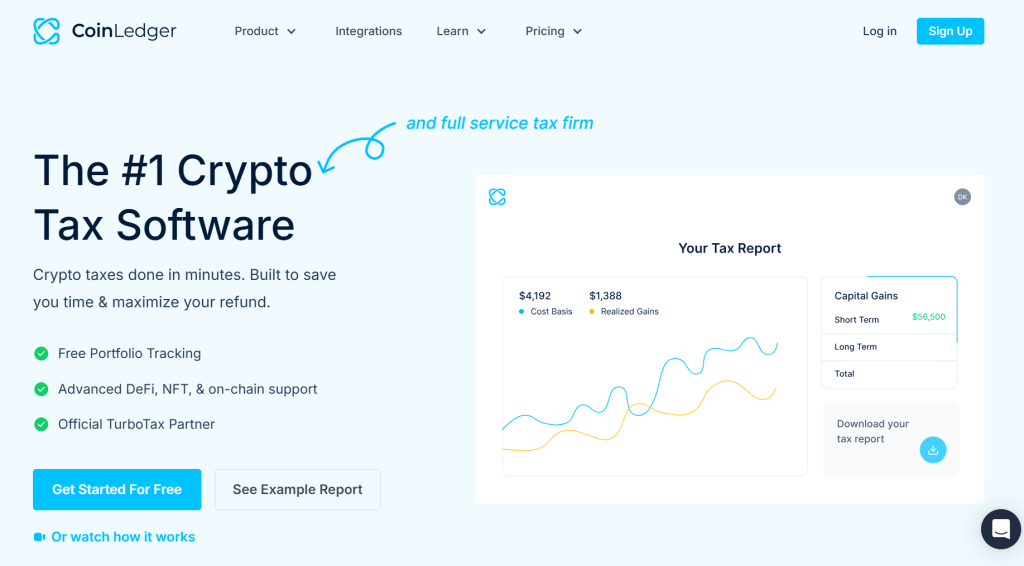
CoinLedger, formerly CryptoTrader.Tax, is built around the shortest possible path from importing transactions to filing. The interface is straightforward enough that first-time filers can complete an import with little guidance, and reports export directly to TurboTax, TaxAct, and H&R Block.
Pricing scales by transaction volume, from an entry-level tier for casual holders up to an unlimited plan for high-volume traders, and every tier includes the same core feature set, so you’re only paying for transaction headroom, not gated functionality. Support has a strong reputation for responsiveness, and the help center covers most common import issues in detail.
CoinTracker: Best for Portfolio Tracking Plus Tax
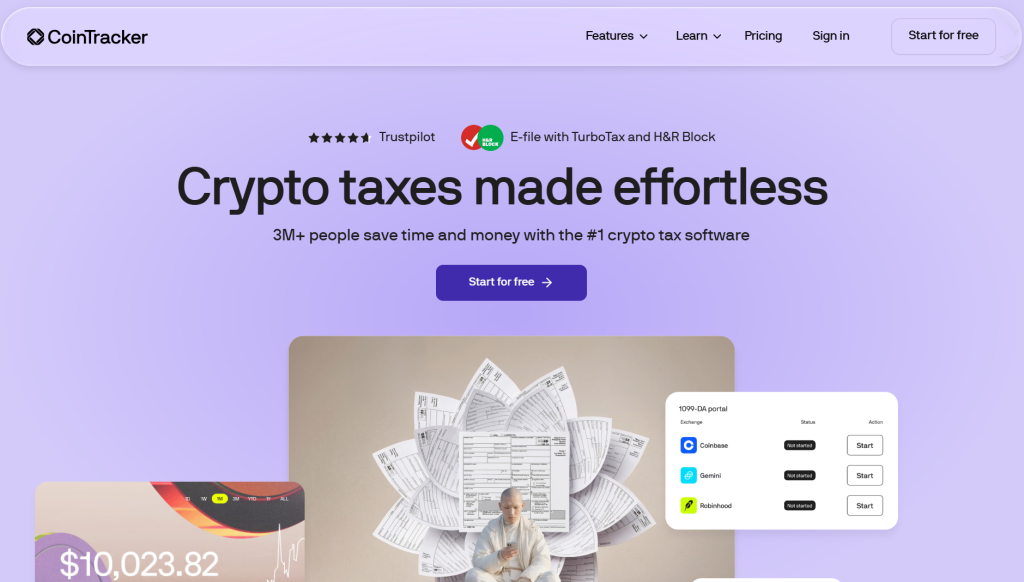
CoinTracker pairs tax reporting with a genuinely useful portfolio tracker, which makes it a better fit for someone who wants to check their holdings year-round, not just file once a year.
It integrates directly with Coinbase and offers a mobile app with real-time syncing across devices, and its free tier covers a limited number of transactions before paid plans scale with volume, including tax-loss harvesting insights that show you which positions could offset gains before the year closes.
Margin and futures trading support is more basic than its other features, and messier transaction histories may need some manual review, so it’s best suited to Coinbase-heavy portfolios and anyone who wants portfolio tracking and tax reporting together in one dashboard.
ZenLedger: Best for DeFi, Staking, and Live Support
ZenLedger has been in the market since 2017 and serves more than 100,000 U.S. users. Its strength is categorizing complex DeFi and staking activity automatically, and it’s one of the only platforms on this list offering paid live support by phone, not just email or chat, available as an add-on for an additional fee on higher tiers.
Several reviewers describe the interface as more layered than CoinLedger or Koinly, and full live support access requires the highest-tier plan, but for investors with heavy DeFi or staking activity who want the option to talk to a real person, that trade-off is often worth it.
TokenTax: Best for CPA-Assisted, Advanced Filing
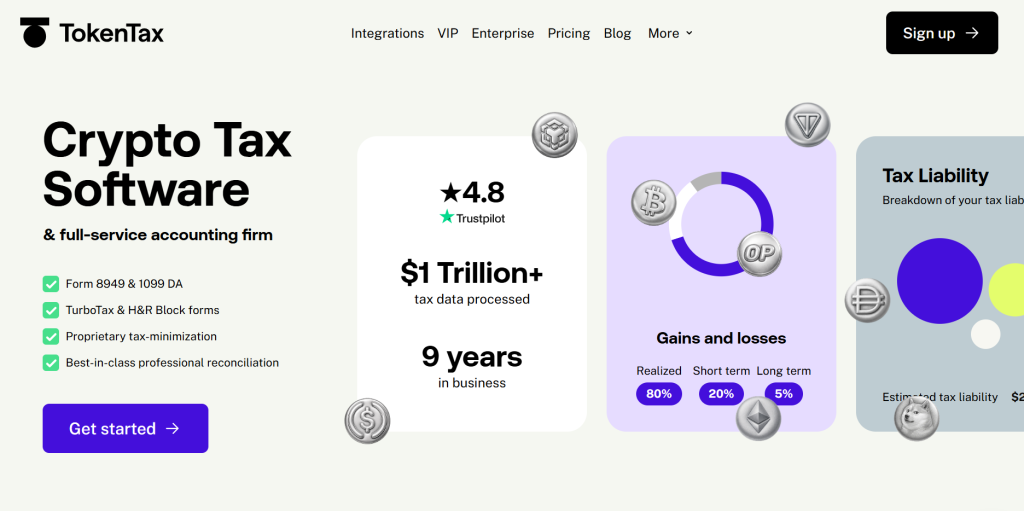
TokenTax operates as much as a full-service crypto tax accounting firm as a software platform. Its top tier includes a dedicated accountant who prepares and files your return from start to finish, which makes it the closest thing on this list to hiring a specialist rather than using a self-serve tool.
There’s no free tier, and pricing starts higher than most competitors, with margin trading and advanced P&L calculations reserved for the highest tier, so the lack of a free preview means you’re committing to a paid plan before seeing what the software actually produces for your data.
That trade-off makes the most sense for high-net-worth filers or anyone with margin trading, advanced DeFi positions, or a portfolio they’d rather hand to a professional outright.
KoinX: Best for Multi-Country Coverage

KoinX focuses on supporting jurisdictions outside the U.S., UK, and EU, including detailed coverage for Indian crypto tax rules. It connects with several hundred exchanges and wallets and generates compliance reports formatted to each supported country’s requirements, which makes it a useful option for investors whose local tax authority isn’t well covered by the bigger platforms.
As with any platform, it’s worth confirming current features directly with KoinX before relying on it for your specific filing situation.
Blockpit: Best for European Filers

Blockpit formed after acquiring former competitor Accointing, and has built its reputation on European tax compliance, working with KPMG on report accuracy and covering countries including Germany, Austria, Switzerland, the UK, and other EU markets alongside the U.S.
It connects with well over a hundred exchanges and blockchains, generates pre-filled tax forms for its supported countries, and includes a tax-loss harvesting tool that flags opportunities to reduce what you owe before the year closes.
Its portfolio tracker is free to use, and a paid tax report is required to file. The platform works well for EU-based filers who need country-specific forms rather than a generic capital gains summary, and its dedicated tax advisor network is a helpful option for anyone who wants a professional to check the numbers first.
What to Look For in Crypto Tax Software
Before comparing specific platforms, it helps to know what actually separates a good one from a mediocre one. These four factors matter most.
A. Volume of Transactions
Every platform on this list prices around your transaction count, not a flat subscription. If you trade often, check the exact ceiling on the paid tier you’re considering. A plan built for 100 transactions will not cover an active trader’s year, and most platforms charge more once you cross a threshold rather than blocking you outright.
B. Geographic Tax Rules
Tax treatment of crypto varies by country, and a platform that only understands U.S. rules will produce the wrong report for a filer in the UK or Germany. Look for software that generates a report formatted for your specific jurisdiction, not just a generic capital gains summary.
C. Type of Crypto Activity
Staking rewards, liquidity pool deposits, NFT sales, and airdrops are all taxed differently depending on where you live, and a tool that cannot categorize them automatically will leave you tagging transactions by hand. Confirm DeFi and NFT support before committing, especially if you’ve used more than one protocol this year.
D. Ease of Use and Support
A platform with every feature imaginable is not useful if the import process breaks or the categorization is wrong and there is no one to ask.
Choosing Between These Seven
If you trade across borders or want the deepest free preview before paying, Koinly is the safest default. If you’re filing in the U.S. for the first time and want the shortest path to a TurboTax export, CoinLedger is a better fit. If your year included heavy DeFi or staking activity and you’d like a person on the phone, ZenLedger’s live support tier is worth the extra cost.
If you’re filing in Germany, Austria, or elsewhere in the EU, Blockpit’s country-specific forms are worth a look. Also, if your portfolio is complicated enough that you’d rather hand it to a CPA outright, TokenTax offers that option directly.
Whichever platform you choose, run a free import first if one is available. Seeing how a tool actually categorizes your specific transaction history tells you more than any pricing page. If you’re still working out what counts as a taxable event in the first place, crypto tax guides covering capital gains, staking income, and reporting requirements can help before you get to the software stage.
This article is for informational purposes only and does not constitute financial or tax advice. Do your own research, and consult a licensed tax professional before filing.
Frequently Asked Questions
Have more specific questions before you pick a platform? Here are the ones that come up most often.
Do I need crypto tax software if I only made a few trades?
If you had fewer than a handful of transactions in the year, a spreadsheet may be enough. Most platforms on this list offer a free tier specifically for this case, letting you preview your gains and losses before deciding whether a paid report is worth it.
Can I switch cost-basis methods between tax years?
In most jurisdictions, once you choose a cost-basis method like FIFO or HIFO, you’re expected to apply it consistently going forward rather than switching year to year to minimize tax owed.
Does crypto tax software report my activity to the IRS?
No. These platforms calculate what you owe based on your transaction history; they don’t submit anything to a tax authority on your behalf unless you use a full-service filing option like TokenTax’s CPA tier. Separately, exchanges themselves may report your activity directly under Form 1099-DA requirements that began applying to broker-reported transactions starting in 2025.
What happens if my transaction history has gaps or errors?
Every platform above will flag transactions it can’t categorize automatically, usually transfers between your own wallets or unusual DeFi activity. Manually reconciling these is normal, and platforms with live support or a professional network, like ZenLedger or Blockpit, can help close a large data gap.