Key Takeaways
- The CLARITY Act is a proposed legislation to define which digital assets are commodities or securities, offering clearer rules for businesses and investors.
- The Senate Agriculture Committee approved part of the CLARITY Act, advancing U.S. efforts to set clear crypto regulations.
- The White House may help mediate disputes between banks and crypto firms, especially on stablecoin yield restrictions.
The CLARITY Act moved a step closer this week when the Senate Agriculture Committee approved its portion of the bill, a key move in shaping the U.S. crypto market. The committee narrowly passed the Digital Commodity Intermediaries Act in a 12–11 party-line vote, with Republicans in favor and Democrats opposed. This marks the first time any part of the CLARITY Act has advanced in the Senate, signaling real progress toward clearer rules for the country’s cryptocurrency industry.
The approved section grants the Commodity Futures Trading Commission (CFTC) greater authority to oversee crypto assets and intermediaries considered commodities. While lawmakers discussed several amendments during the session, none were able to win support across party lines.
What is the CLARITY Act?
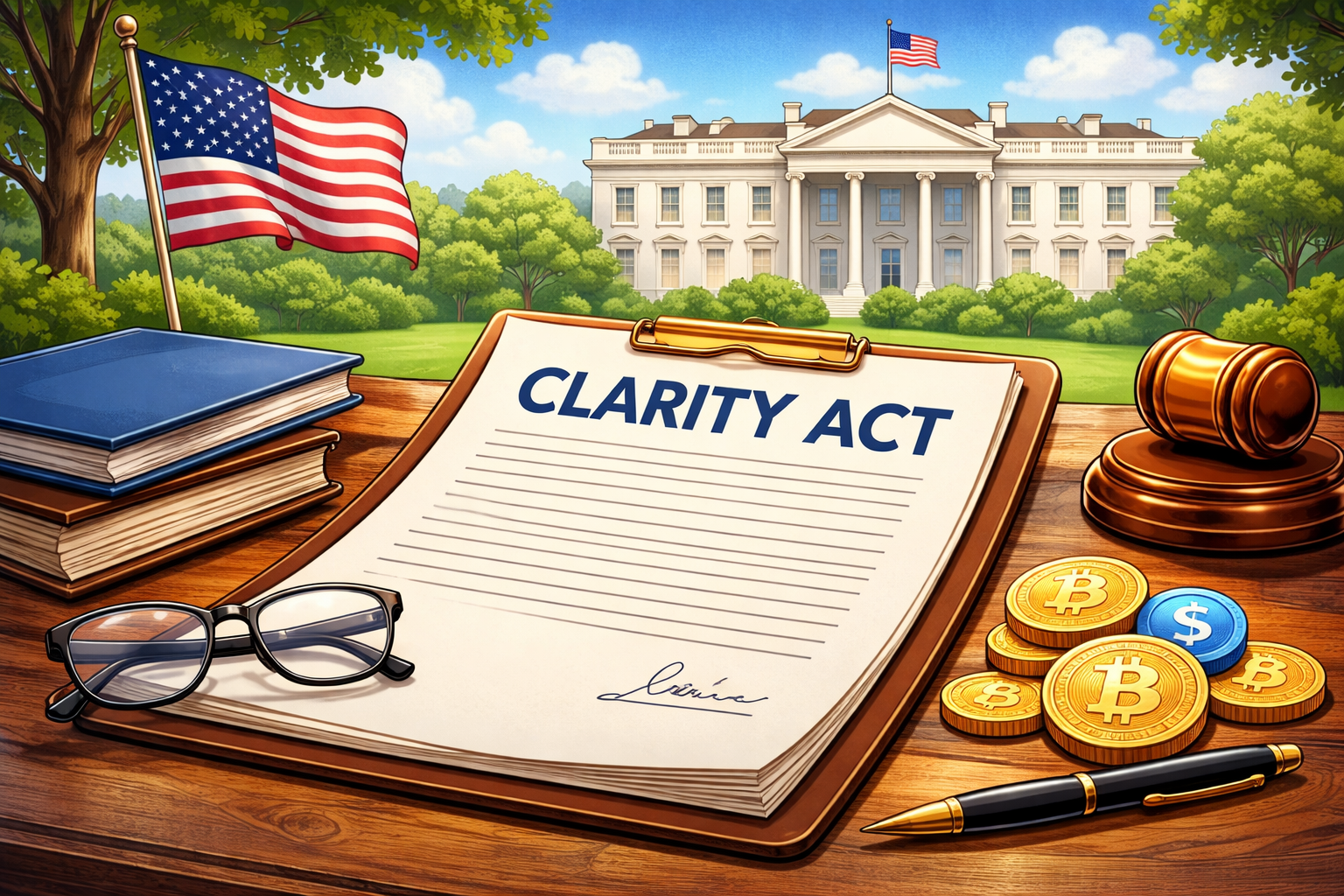
The CLARITY Act is a proposed legislation intended to provide clear regulatory guidance for the U.S. cryptocurrency market. It seeks to establish which digital assets are classified as commodities and which are considered securities, providing businesses and investors with a clearer understanding of the applicable rules. By setting well-defined standards, the Act aims to reduce regulatory uncertainty, promote innovation, and enhance the overall safety and stability of the crypto industry.
What’s Ahead for the CLARITY Act
The Senate Banking Committee is expected to review the bill soon, making the upcoming weeks critical for its progress. If lawmakers can reach a compromise, the CLARITY Act could finally provide clear rules for the U.S. crypto market, defining which digital assets fall under the Commodity Futures Trading Commission (CFTC) and which are classified as securities under the Securities and Exchange Commission (SEC).
Reducing Regulatory Uncertainty
One of the Act’s major impacts would be to reduce the long-standing regulatory uncertainty that has slowed innovation and investment in crypto. Clear guidelines would allow businesses to operate with confidence and could attract institutional investors who have previously been hesitant due to unclear rules.
White House Mediation
The White House’s involvement may help resolve tensions between banks and crypto firms, especially on contentious issues such as stablecoin yield restrictions. A successful compromise could prevent delays and ensure the U.S. remains competitive in the rapidly evolving global crypto landscape.
Ethical Concerns and Political Challenges
Despite progress, ethical questions and political disagreements remain. Critics argue that, without addressing potential conflicts of interest or strengthening consumer protections, certain provisions of the bill may continue to raise concerns.
Global Context and the Race for Crypto Leadership
While the U.S. works on the CLARITY Act, other countries are moving fast to set clear crypto rules:
- United Kingdom: Consulting on regulations that balance innovation with risk management.
- European Union: Introduced the Markets in Crypto-Assets (MiCA) framework in 2023, creating unified rules across all 27 member states.
- Singapore & Hong Kong: Established detailed licensing systems for crypto service providers, attracting significant investment.
Supporters of the CLARITY Act warn that without clear U.S. regulations, talent, innovation, and investment could shift to countries with more predictable rules. The Senate committee’s recent vote is a key step toward giving the U.S. crypto industry the stability it needs to compete globally.
SEC Chair Calls on Congress to Pass CLARITY Act
SEC Chair Paul Atkins is urging Congress to act quickly on the CLARITY Act, saying the time for clear cryptocurrency rules is now. He pointed out that the U.S. crypto market is at a turning point, and without guidance, both innovation and investor confidence could suffer. Atkins stressed that lawmakers have a real opportunity to create stability and clarity for digital assets, which would protect investors and help the U.S. remain competitive in the fast-moving crypto market.
Final Thoughts
The CLARITY Act is a big step toward giving the U.S. crypto market the clear rules it has long needed. With the Senate Agriculture Committee’s recent approval and SEC Chair Paul Atkins urging Congress to act quickly, the bill could finally reduce the uncertainty that has slowed innovation and investment. While debates over policy and ethics are still ongoing, passing the Act would give businesses and investors confidence, help the U.S. stay competitive in the global crypto scene, and create a safer, more stable environment for digital assets. It’s an opportunity for lawmakers to support growth while protecting investors and shaping the future of crypto in America.
Frequently Asked Questions
What is the CLARITY Act?
It’s proposed legislation to define which digital assets are commodities or securities, giving clear rules for businesses and investors.
Why is the Senate Agriculture Committee involved?
It oversees commodity markets and approved the portion giving the CFTC more authority over crypto commodities.
How could it impact crypto businesses?
Clear rules reduce uncertainty, help businesses operate confidently, and attract institutional investors.
What role does the White House play?
It may mediate disputes between banks and crypto firms, especially on stablecoin rules, to speed up progress.