A sweeping US crypto tax proposal is heading to the House Ways and Means Committee on September 16, where lawmakers will consider changes covering transaction fees, stablecoins, staking, mining, lending, and crypto tax reporting.
The 114-page Digital Asset Tax Certainty Act, H.R. 10357, would amend several parts of the Internal Revenue Code and introduce a $10 de minimis exemption for qualifying crypto network and transaction fees. The committee has scheduled its markup for 10:00 a.m. ET on September 16.
The proposal also includes simplified accounting rules for widely traded digital assets, expands wash-sale rules to crypto, and would create a voluntary disclosure program for taxpayers seeking to correct previous digital asset tax filings.
Crypto Fees Under $10 Could Avoid Capital Gains Reporting
Under current US tax treatment, using appreciated crypto to pay a network or transaction fee can itself create a taxable disposition.
H.R. 10357 would generally stop taxpayers from recognizing a gain or loss when using digital assets to pay qualifying network or transaction fees of $10 or less.
The exemption would cover certain network fees used to validate transactions as well as brokerage, trading, liquidity, and similar transaction fees that meet the bill’s requirements.
However, it would not apply universally. The proposal excludes certain traders, brokers, dealers and other businesses, as well as taxpayers who completed more than 5,000 digital asset transfers during the preceding taxable year, subject to exceptions Treasury could develop.
| Proposed Rule | H.R. 10357 Treatment |
| Qualifying crypto network fee | No gain or loss recognized up to $10 |
| Qualifying transaction fee | No gain or loss recognized up to $10 |
| More than 5,000 prior-year transfers | Generally excluded from exemption |
| Proposed effective date | 2028 |
Table 1. Proposed Crypto Fee Tax Changes Under H.R. 10357
The change is narrower than a general exemption for small Bitcoin or crypto purchases. The current proposal focuses on qualifying fees rather than making every small retail crypto transaction tax-free.
The Bill Would Simplify Crypto Gain and Loss Accounting
The legislation also proposes an optional simplified accounting system for certain widely traded digital assets.
Taxpayers making the election could calculate results using aggregate annual information rather than tracking every eligible disposition individually under the normal system. Brokers could then report information such as total acquisitions, disposals, net gain or loss, and beginning and ending fair market values.
The provision addresses a practical problem raised during the committee’s June digital asset tax hearing.
Coin Center Policy Director Jason Somensatto told lawmakers that existing tax rules can force crypto users to maintain detailed records for even small transactions and technologically complex activities.
The Ways and Means Committee has argued that clearer rules are needed because existing tax requirements were largely designed around financial activity conducted through traditional intermediaries rather than open blockchain networks.
Mining and Staking Deferral Was Left Out
Earlier legislation introduced by Representative Mike Carey would have allowed taxpayers in certain cases to defer recognition of newly created mining or staking rewards until the assets were sold or otherwise disposed of.
The current Digital Asset Tax Certainty Act omits that deferral option. Instead, mining and staking rewards would generally continue to be treated as ordinary income when the taxpayer obtains control of them.
Industry groups had supported the earlier deferral proposal, arguing that immediate taxation can create liquidity challenges. The House committee did not include that treatment in the version moving into the September markup.
The bill would still clarify other areas involving validation activity, including allowing certain investment trusts to engage in digital asset staking without that activity alone changing their tax treatment.
Wash-Sale Rules Would Expand to Crypto
Under the proposal on wash-sale rules, a taxpayer could be prevented from claiming a loss when selling a covered crypto asset and purchasing the same or a substantially identical asset within 30 days before or after the sale.
Traditional stocks and securities already face similar rules, but crypto historically has not been treated the same way under the federal wash-sale framework.
The broader package also applies constructive-sale rules to digital assets, bringing some crypto tax treatment closer to existing rules used in TradFi.
Stablecoins Would Get Special Tax Treatment
Qualifying US dollar stablecoins would receive their own tax rules under the bill.
The proposal generally seeks to prevent very small deviations around a stablecoin’s $1 redemption value from creating unnecessary tax complexity. Certain qualifying dollar-backed stablecoins acquired close to their redemption value could use that value as their tax basis.
This would address situations where a stablecoin trades slightly above or below $1 even though it remains designed to maintain a fixed dollar value.
The bill also treats qualifying stablecoins differently under some broker-reporting and anti-abuse provisions, reflecting their intended role as payment and settlement assets rather than conventional volatile cryptocurrencies.
Crypto Lending Would Receive Rules Similar to Securities Lending
Qualifying transfers under crypto lending arrangements could avoid being treated as taxable sales or exchanges, provided the arrangement meets the bill’s conditions.
That approach resembles existing tax treatment available for certain securities lending transactions.
The change could provide more certainty for institutional crypto lending and other arrangements where assets temporarily move between parties without the owner intending to dispose of the underlying economic position.
Voluntary Disclosure Program Would Let Taxpayers Correct Past Filings
H.R. 10357 would require the US Treasury Department to establish a Digital Asset Voluntary Disclosure Program within 12 months of enactment.
Eligible taxpayers could use the program to amend prior returns and settle outstanding tax, interest, and applicable penalties related to digital asset activity.
The proposal appears aimed at improving compliance while giving taxpayers a formal process for resolving earlier crypto reporting issues.
It sits alongside new broker-reporting provisions that would change how some digital asset transactions are reported to the Internal Revenue Service (IRS).
The Bill Combines Several Earlier Crypto Tax Proposals
The Digital Asset Tax Certainty Act consolidates ideas lawmakers have been discussing throughout 2026.
At its June legislative hearing, the Ways and Means Committee considered separate bills on crypto paperwork, mining and staking, charitable contributions, digital asset lending, voluntary disclosures, and tax anti-abuse measures.
H.R. 10357 pulls several of those ideas into one larger package and attempts to build a more complete tax framework around everyday transactions, institutional activity, lending, staking, and reporting.
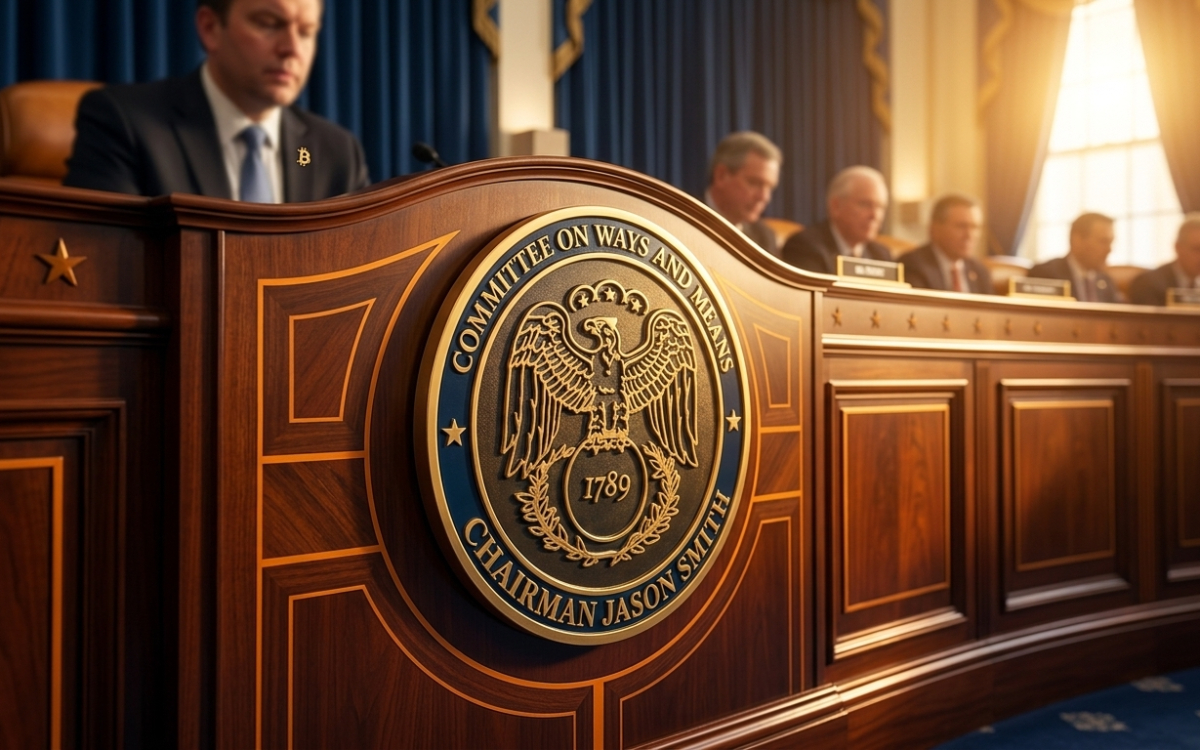
However, the markup process can still change the text. The Joint Committee on Taxation published a separate description of Chairman Jason Smith’s amendment as a substitute ahead of the September 16 committee meeting, meaning lawmakers will consider amended language rather than assuming every provision in the initially introduced bill remains untouched.
What Comes Next
The House Ways and Means Committee is scheduled to mark up the Digital Asset Tax Certainty Act at 10:00 a.m. ET on September 16. During markup, lawmakers can debate the bill, offer amendments, and vote on whether to advance it out of committee.
Committee approval would not make the proposal law. The measure would still need to move through the House and Senate before reaching the president.
The immediate questions are whether the $10 fee exemption and simplified accounting provisions survive the markup and whether lawmakers revisit the omitted mining and staking tax-deferral language.
What this means for you: The bill could reduce some of the tax paperwork attached to small crypto fees and create clearer rules for accounting, stablecoins, and lending, but none of those changes are in effect yet. The September 16 markup is the next step in determining which provisions move forward.