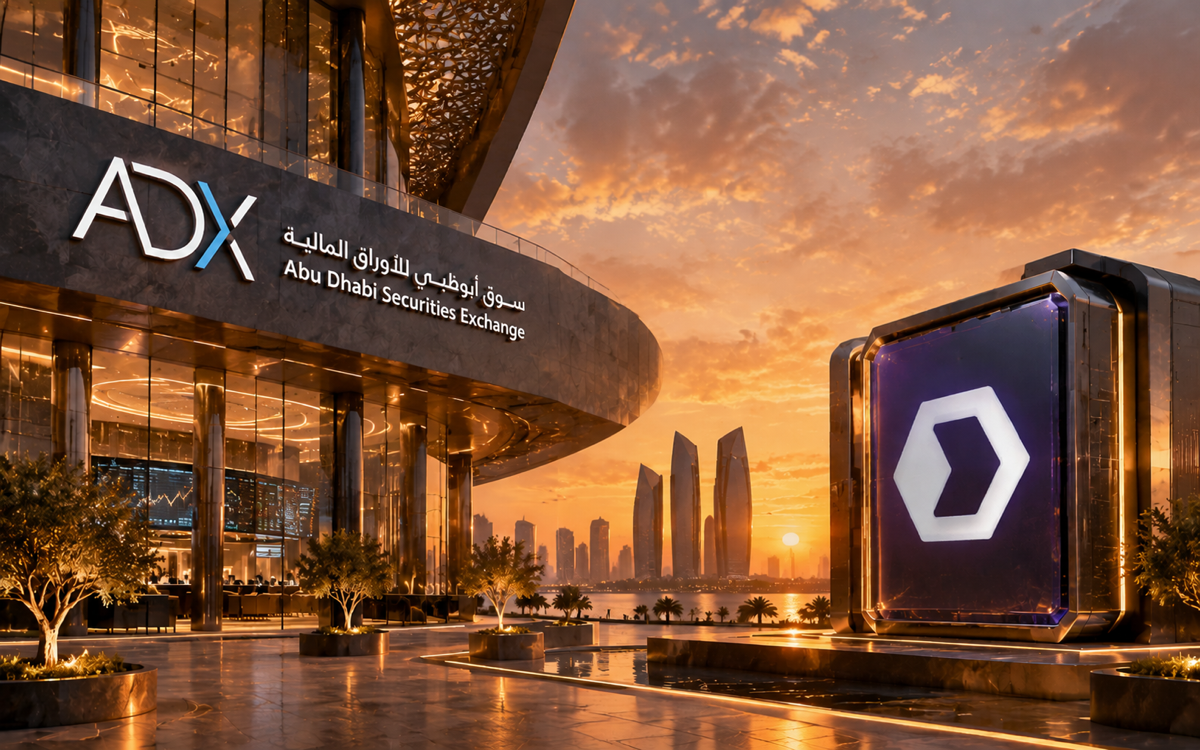
Abu Dhabi Securities Exchange (ADX) announced on September 15, 2026 that it had signed a strategic agreement with digital-asset infrastructure provider DFNS to develop wallet and tokenization capabilities as the exchange continues expanding its blockchain-based financial market infrastructure.
According to DFNS’s announcement, the partnership will provide ADX with institutional wallet infrastructure designed to support digital assets, tokenized securities, and future blockchain-based financial products, positioning ADX among the first regional financial market infrastructures to develop these integrated capabilities.
DFNS confirmed the partnership directly through its official X account, framing the collaboration as a step toward laying the technological foundations for a new generation of regulated digital-asset services:
The collaboration follows ADX’s earlier work in digital securities, including its partnership with HSBC and First Abu Dhabi Bank for the MENA region’s first digital bond issuance. The companies did not disclose the deployment timeline, supported assets, blockchain networks, or whether the wallet infrastructure is already available to investors.
What Institutional Wallet Infrastructure Provides
DFNS, founded in 2020 and backed by ADQ and Further Ventures, provides wallet infrastructure used by more than 350 fintechs and institutions to operate digital assets across more than 30 blockchains and 1,000 tokens, technology built around requirements like controlled access permissions, transaction approval processes, and compliance workflows rather than simple key storage, a distinction explained further in a guide to how MPC wallets work.
For a securities exchange, wallet infrastructure is a key component of supporting tokenized assets because institutions need systems for secure asset management, transaction approvals, and operational controls.
| Partnership Component | Role |
| ADX | Securities exchange developing digital-asset capabilities |
| DFNS | Provides institutional wallet infrastructure |
| Tokenization | Enables blockchain-based representation of financial assets |
| Digital assets | Potential future use within regulated market products |
Table 1. Key components of the ADX and DFNS partnership.
DFNS CEO and founder Clarisse Hagège said secure wallet infrastructure becomes a critical component of market integrity and investor confidence as financial institutions increasingly explore digital assets and on-chain financial products.
How This Builds on ADX’s Earlier Digital Bond Work
The DFNS partnership continues ADX’s broader move toward blockchain-based capital markets infrastructure.
Rather than focusing only on cryptocurrency trading, ADX has been exploring how blockchain technology can support traditional financial products such as bonds and other securities, an approach it first demonstrated through its partnership with HSBC and First Abu Dhabi Bank for the MENA region’s first digital bond issuance.
| ADX Digital Asset Development | Details |
| Digital bond initiative | MENA’s first digital bond issuance |
| Banking partners | HSBC and First Abu Dhabi Bank |
| New infrastructure partner | DFNS wallet technology |
| Focus | Tokenization and institutional digital assets |
Table 2. ADX’s progression toward digital-asset infrastructure.
ADX Group CEO Abdulla Salem Alnuaimi said the collaboration is an important step in building the trusted, institution-grade infrastructure required to translate the potential of digital assets into scalable market capability, advancing ADX’s strategy to position Abu Dhabi as a globally connected hub for the next generation of capital markets.
Why Institutions Need More Than a Standard Wallet
Traditional securities markets rely on established systems for custody, settlement, and asset ownership records. Tokenized markets require additional infrastructure because assets represented on blockchain networks must still be managed securely by institutions.
Institutional wallet systems differ from consumer crypto wallets because they are designed around controlled access permissions, transaction approval processes, compliance workflows, and security management.
For exchanges exploring tokenized securities, these systems can become part of the infrastructure connecting traditional financial markets with blockchain networks.
Why This Fits a Broader Push Beyond Crypto Trading
The partnership reflects a broader shift among financial institutions exploring tokenization, which allows traditional assets, including bonds and other securities, to be represented digitally on blockchain networks, a pattern of institutional interest also visible in how BlackRock’s Bitcoin ETF has changed institutional demand for regulated digital-asset products.
Financial institutions have explored tokenization because it may support faster settlement, improved transparency, and new ways to issue and manage financial products.
However, adoption depends on several factors, including regulatory approval, investor demand, technical integration, and how institutions manage custody and compliance requirements.
What Comes Next for ADX’s Digital-Asset Rollout
The next developments will depend on how ADX implements DFNS technology and whether the exchange launches additional blockchain-based financial products. The companies have not disclosed specific launch dates, supported assets, or details about investor access.
The partnership shows that regulated exchanges are continuing to build infrastructure for potential tokenized markets, even as practical adoption depends on regulatory and institutional development.
What this means for you: ADX’s partnership with DFNS shows how traditional exchanges are preparing for tokenized financial markets by building the infrastructure needed to manage digital assets securely. The immediate impact for investors remains unclear, but the development highlights growing institutional interest in blockchain-based securities infrastructure.
This article is for informational purposes only and does not constitute financial advice. Digital assets, tokenized securities, and blockchain infrastructure involve regulatory, technical, custody, and market risks. Availability of products and services may vary by jurisdiction.