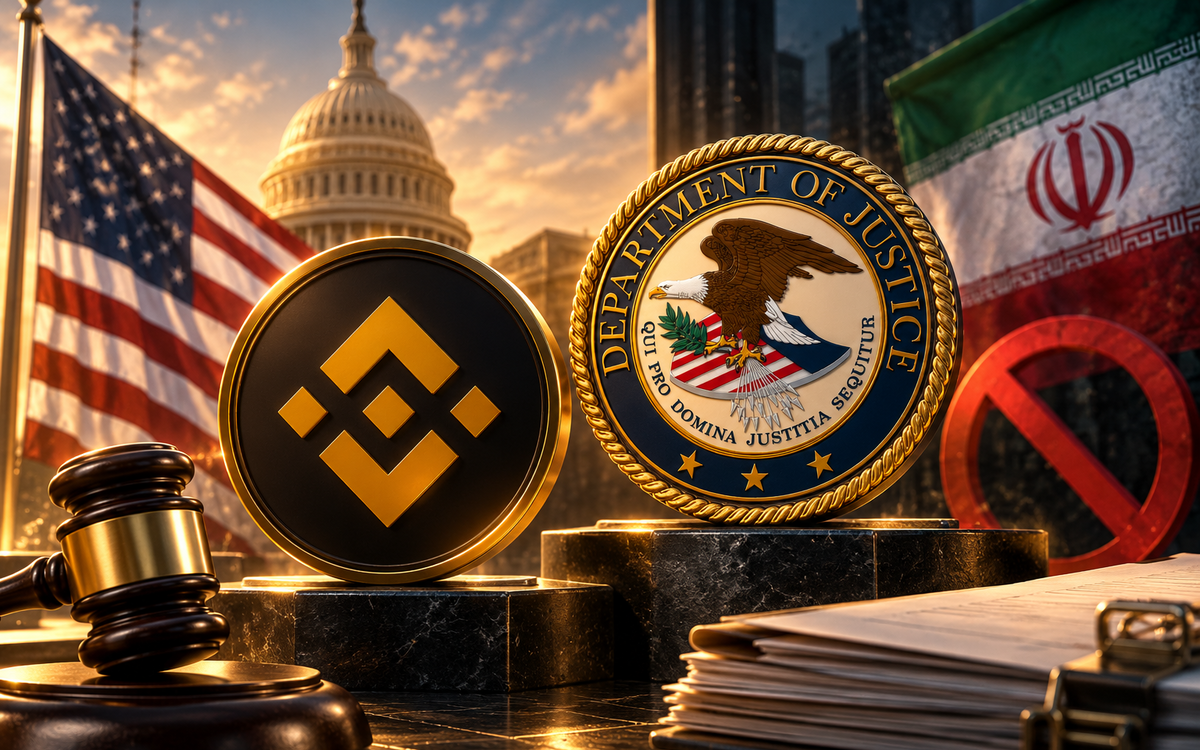
Binance is facing a new U.S. federal investigation into whether it violated sanctions on Iran by allowing certain trading activity on its platform, Bloomberg News reported on September 22.
The Manhattan U.S. Attorney’s Office is leading the investigation, with the Justice Department’s Criminal Division in Washington also involved. Prosecutors are examining whether Binance knowingly allowed trading that should have been blocked under U.S. sanctions.
The specific transactions under investigation have not been publicly identified. The Justice Department and Manhattan U.S. Attorney’s Office have not commented on the reported probe.
Prosecutors Examine Binance’s Iran-Related Compliance
The reported investigation focuses on whether Binance’s compliance systems prevented transactions involving Iran that could have violated U.S. sanctions.
Bloomberg reported that authorities are examining whether Binance knowingly allowed the trading activity. The report did not disclose when the investigation began or identify the customers, accounts, or transactions being reviewed.
Binance said it maintains a zero-tolerance policy toward sanctions violations. “We fully cooperate with law enforcement, and we remain committed to rooting out and shutting down bad actors,” the exchange said in a statement cited by Reuters.
The reported investigation has not resulted in any announced charges against Binance over the alleged Iran-related activity. A Justice Department investigation can end without charges being filed.
New Probe Follows $61 Million Iran Crypto Forfeiture Case
The investigation comes days after federal prosecutors in Manhattan filed a separate civil forfeiture complaint targeting approximately $61 million in cryptocurrency that they allege represents proceeds from the black-market sale of Iranian crude oil and petroleum products.
The September 14 complaint alleges that two Chinese companies, Blessed Trust and Hexa Whale, used trading accounts at Binance’s UAE-based exchange as part of a scheme to launder proceeds from Iranian oil sales.
According to the Justice Department, the broader network moved more than $1.5 billion in alleged Iranian oil proceeds through cryptocurrency addresses. Prosecutors said the funds were ultimately directed toward the Iranian government, its agents and proxies, including the Islamic Revolutionary Guard Corps.
The forfeiture case is separate from the newly reported investigation into Binance’s compliance with Iran sanctions. The Justice Department’s complaint also states that the allegations in a civil forfeiture action have not been proven unless a court enters a judgment in favor of the United States.
Binance Has Faced Iran-Related Sanctions Scrutiny Before
The new investigation also comes nearly three years after Binance pleaded guilty to U.S. federal charges involving anti-money laundering failures, unlicensed money transmission and violations of U.S. sanctions law.
In November 2023, Binance agreed to pay more than $4.3 billion in penalties and forfeiture as part of a Justice Department resolution. Changpeng Zhao, Binance’s founder and then-CEO, also pleaded guilty to failing to maintain an effective anti-money laundering program and stepped down as CEO.
The 2023 case included transactions involving users in sanctioned jurisdictions, including Iran. According to the Justice Department, Binance knew its platform had users in Iran and U.S. users but failed to implement controls that would prevent them from trading with each other.
The department said this resulted in more than $898 million in trades between U.S. users and users ordinarily resident in Iran between January 2018 and May 2022.
Binance agreed to enhance its compliance program and retain an independent compliance monitor for three years as part of the 2023 resolution.
The current investigation is separate from that earlier case, although the previous sanctions violations form part of the regulatory history surrounding Binance.
US Tightens Pressure on Iran’s Crypto Networks
The Binance investigation comes as U.S. authorities continue targeting financial networks that Washington says help Iran move money or evade sanctions.
The Justice Department’s September 14 forfeiture case alleged that cryptocurrency was used to move proceeds from Iranian oil sales. The department said the network involved Chinese companies, cryptocurrency addresses and exchanges as part of efforts to obscure the source and ownership of the funds.
Earlier this month, the U.S. government also imposed sanctions on companies and individuals it accused of supporting Hezbollah and other Iranian-backed groups.
That broader enforcement activity puts additional attention on cryptocurrency exchanges and their systems for identifying sanctioned users, transactions and counterparties.
What Comes Next
The next major development will be whether U.S. prosecutors identify the transactions under investigation or take formal enforcement action against Binance. For now, the reported probe remains an investigation, and neither the Justice Department nor the Manhattan U.S. Attorney’s Office has publicly detailed the conduct being examined.
Binance’s response and its compliance obligations will also be closely watched given the exchange’s 2023 guilty plea and the independent compliance measures imposed as part of that resolution. The separate $61 million forfeiture case could provide additional information about Iran-linked cryptocurrency activity involving Binance accounts, but it should not be treated as proof of wrongdoing in the new investigation.
What This Means for You: Binance users have not been told to take any action because of the reported investigation. The development concerns Binance’s compliance with U.S. sanctions, while the specific transactions being examined remain undisclosed. Users should rely on Binance and U.S. authorities for confirmed updates rather than assuming that the investigation means the exchange has been charged or found liable.