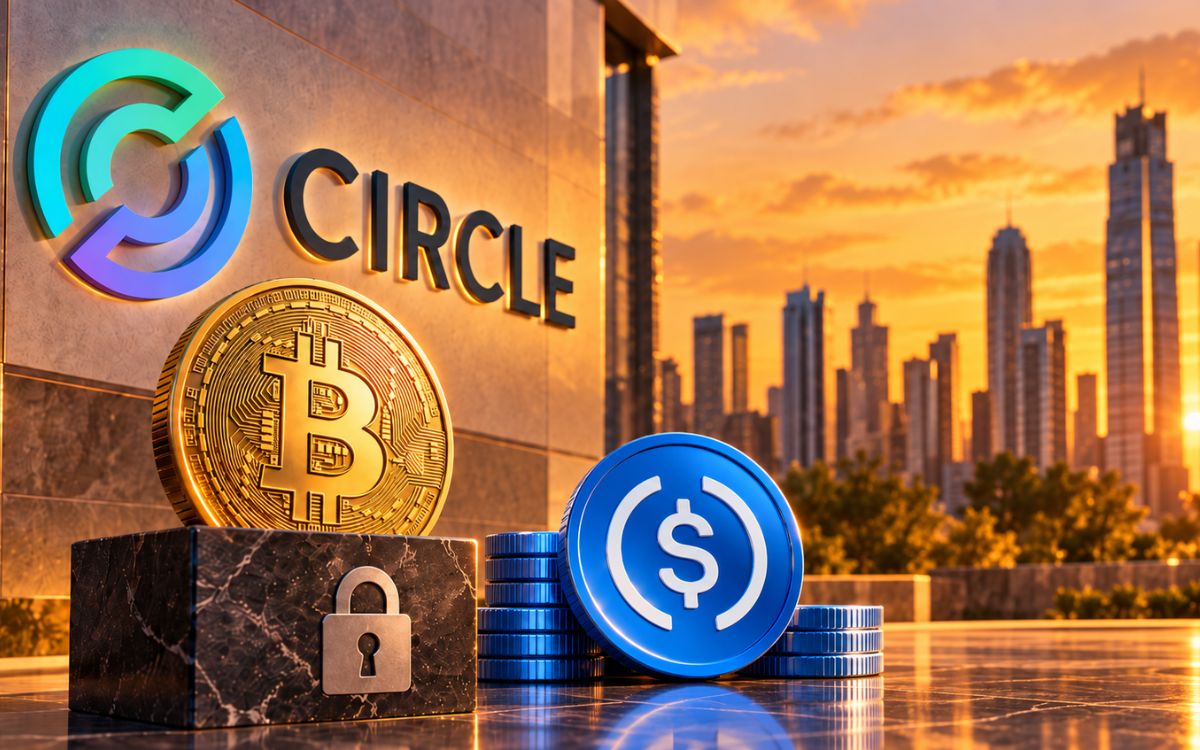
Circle launched Digital Asset-Backed Borrowing (DABB) on September 21, 2026, allowing eligible institutional Circle Mint customers to use Bitcoin as collateral to borrow USDC without selling their BTC.
Eligible customers can deposit BTC, mint Circle Wrapped Bitcoin (cirBTC), supply the token as collateral through supported third-party lending markets, and receive borrowed USDC directly in their Circle Mint balance.
The service launches on Arc and Ethereum, with Morpho as the first approved lending protocol, coinciding with cirBTC’s expansion to Arc, the Layer 1 blockchain Circle launched the previous week.
Circle said the product is designed for institutional treasury teams wanting dollar liquidity while maintaining BTC exposure, and explicitly stated it doesn’t originate, underwrite, or fund the loans itself, since lending is provided entirely by independent third parties.
Morpho announced its participation in the launch through its official X account, framing the integration as bringing BTC into productive onchain use:
What DABB Connects Together
DABB brings several previously separate steps into one workflow. Customers deposit BTC and mint cirBTC, backed 1:1 by native BTC, supply it as collateral through a supported lending market, and borrow USDC into their Circle Mint balance, according to Circle’s announcement.
Collateral can later be released by repaying the outstanding balance and redeeming cirBTC back to BTC, a mechanic worth comparing against the broader landscape covered in 9 best crypto lending platforms in 2026.
| DABB Component | Role |
| BTC | Asset deposited as collateral |
| cirBTC | 1:1 BTC-backed collateral token |
| Morpho | First supported third-party lending protocol |
| USDC | Borrowed dollar-denominated liquidity |
| Circle Mint | Institutional account and settlement environment |
Table 1. Main components of Circle’s Digital Asset-Backed Borrowing service.
Positions are overcollateralized, and borrowing rates, collateral requirements, and liquidation thresholds are determined entirely by the selected lending market rather than by Circle.
Circle Mint’s Institutional Scale Before DABB
Circle Mint has facilitated more than $333 billion in USDC minting and provides access to USDC, EURC, and cirBTC in more than 185 countries, subject to eligibility and banking rails. The platform serves institutions including exchanges, traders, wallet providers, banks, and consumer-app companies, already letting eligible institutions convert bank funds into USDC and redeem USDC for fiat while providing custody and API connectivity.
| Circle Mint Context | Reported Figure |
| USDC minted through Circle Mint | $333B+ |
| Countries with minting/redemption availability | 185+ |
| Customer focus | Institutional |
| DABB launch networks | Arc and Ethereum |
Table 2. Circle Mint’s existing institutional reach alongside the new borrowing service.
DABB adds an onchain credit layer to that infrastructure, letting institutions use BTC as collateral and receive borrowed USDC directly in their Circle Mint account rather than routing it through a separate wallet.
Why cirBTC Exists as a Separate Token
Native Bitcoin does not interact with smart contracts, so Circle created cirBTC to represent BTC on programmable networks. Each cirBTC is backed 1:1 by native BTC, verifiable onchain, with the underlying Bitcoin safeguarded through Circle National Trust, a federally chartered trust bank and qualified custodian, a reserve structure comparable to the model covered in USDC’s no-hype breakdown.
This creates a path from BTC custody to tokenized collateral to USDC liquidity without selling Bitcoin, though the structure introduces its own risk: a sufficient BTC price drop can trigger liquidation under the selected lending market’s rules.
Circle launched cirBTC on Ethereum in June 2026 before expanding it to Arc alongside this launch, accessible on Arc through Arc Portal, Circle’s cross-network transfer interface.
Why Institutions Are Racing to Build BTC-Backed Credit
Morpho is the first approved lending protocol, with Circle saying additional markets, including Aave, are expected over time. The setup connects three pieces of infrastructure: Circle Mint’s account system, cirBTC, and third-party onchain credit markets, and Circle says it doesn’t operate a competing exchange or lending protocol of its own.
This adds Circle to a broader trend of institutional crypto-backed financing: Anchorage Digital enabled borrowing against staked Solana through Kamino, while Lombard and Bitwise built comparable Bitcoin lending infrastructure using Morpho.
What Comes Next for DABB
Circle expects DABB to expand to additional lending markets and third-party platforms as the product develops. Eligible Circle Mint customers can currently open DABB positions, subject to jurisdiction and eligibility requirements, with New York customers excluded under current terms. Circle Mint itself remains available only to institutions and is not offered to individuals.
What this means for you: Circle’s new borrowing service creates a direct route for eligible institutional customers to use BTC as collateral for USDC liquidity without selling the underlying Bitcoin. The development expands Circle Mint from a stablecoin access and settlement platform into an institutional gateway connecting BTC custody with onchain credit, although borrowers remain exposed to collateral volatility, liquidation, lending-market, and smart-contract risks.
This article is for informational purposes only and does not constitute financial or investment advice. Digital Asset-Backed Borrowing is available only to eligible Circle Mint customers and is subject to jurisdiction and eligibility requirements. Borrowing rates, collateral requirements, liquidation thresholds, liquidity, and availability can change.