
Bitcoin is moving more closely with gold than at any point since 2020, while its relationship with technology stocks has weakened.
The 90-day correlation between Bitcoin and gold has climbed to its highest level in nearly six years, according to data from Bitwise. At the same time, Bitcoin’s 90-day correlation with the Nasdaq-100 has fallen to around 0.33, its lowest level in roughly a year.
The shift comes as investors increasingly focus on inflation, government debt and currency debasement risks. Bitcoin and gold have both benefited from renewed demand for scarce assets, while BTC has become less tied to the technology-heavy equity trade that dominated much of its recent market behavior.
Bitcoin Is Trading More Like Gold
Bitcoin has historically shown only a weak long-term relationship with gold, making the recent move notable.
Both assets rallied strongly during the latest market rebound. Bitcoin gained about 22.4% in one week, while gold rose roughly 5%, based on Bitwise’s data.
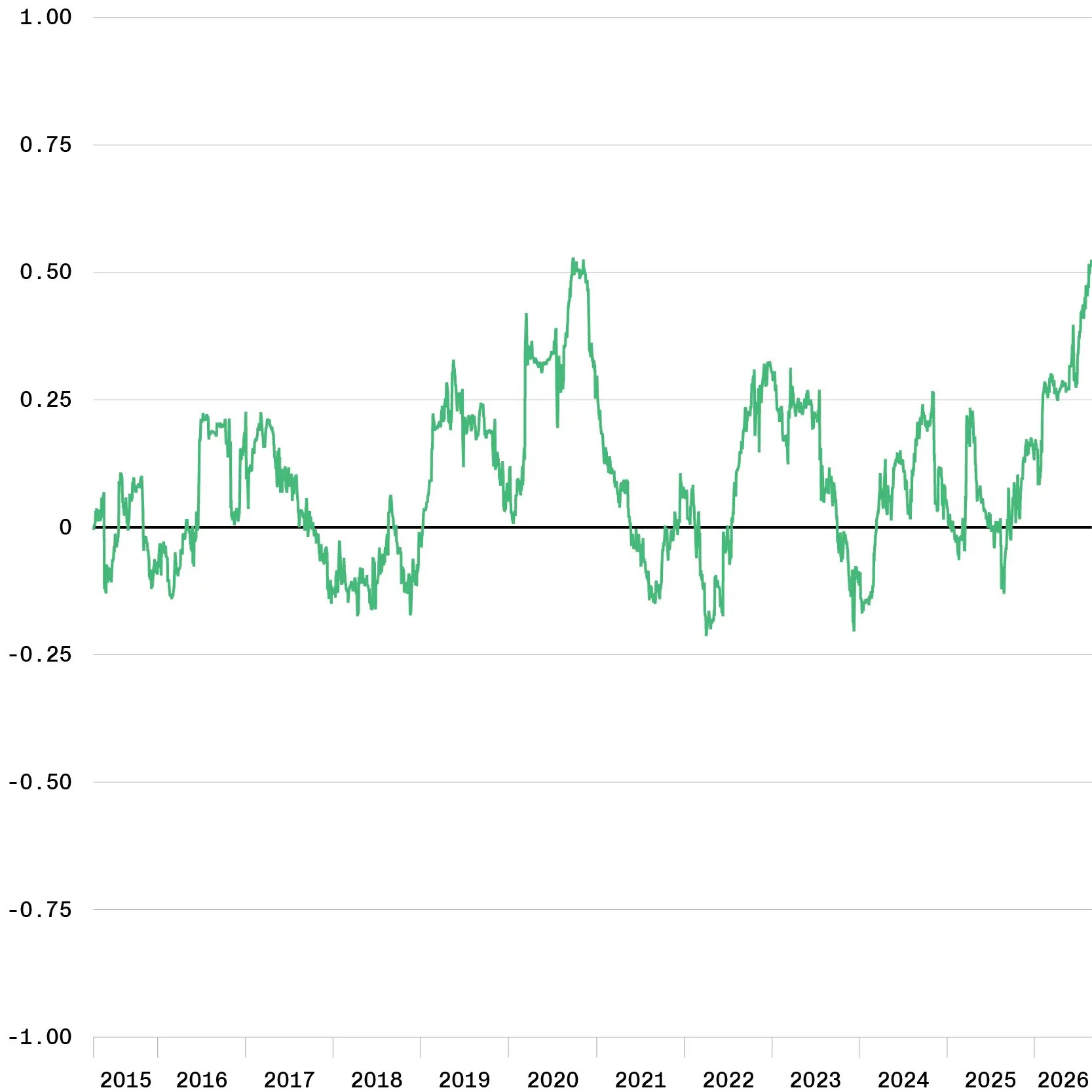
Over the past three months, Bitcoin has still significantly outperformed gold, gaining about 30.6% compared with roughly 2.6% for the precious metal. The difference shows that the two assets can move in the same direction while still behaving very differently in terms of volatility.
| Metric | Bitcoin Relationship |
| 90-day correlation with gold | Highest since 2020 |
| 90-day correlation with Nasdaq-100 | ~0.33 |
| Bitcoin 1-week return | +22.4% |
| Gold 1-week return | ~+5% |
| Bitcoin 3-month return | ~+30.6% |
| Gold 3-month return | ~+2.6% |
Table 1. Bitcoin’s Changing Relationship With Gold and Tech Stocks
The latest data does not mean Bitcoin and gold have permanently become closely linked. Correlations change over time and can rise sharply during periods when the same macro forces affect both markets.
Bitcoin’s Link to Tech Stocks Is Weakening
For much of the past several years, Bitcoin has often traded like a high-risk technology asset, particularly during periods when interest-rate expectations drove both crypto and growth stocks. However, that pattern has weakened recently.
Bitcoin’s 90-day correlation with the Nasdaq-100 has fallen to around 0.33, a one-year low. At the same time, the 90-day correlation between Bitcoin and the U.S. Dollar Index was around -0.35 in late August, meaning BTC and the dollar tended to move in opposite directions during the period.
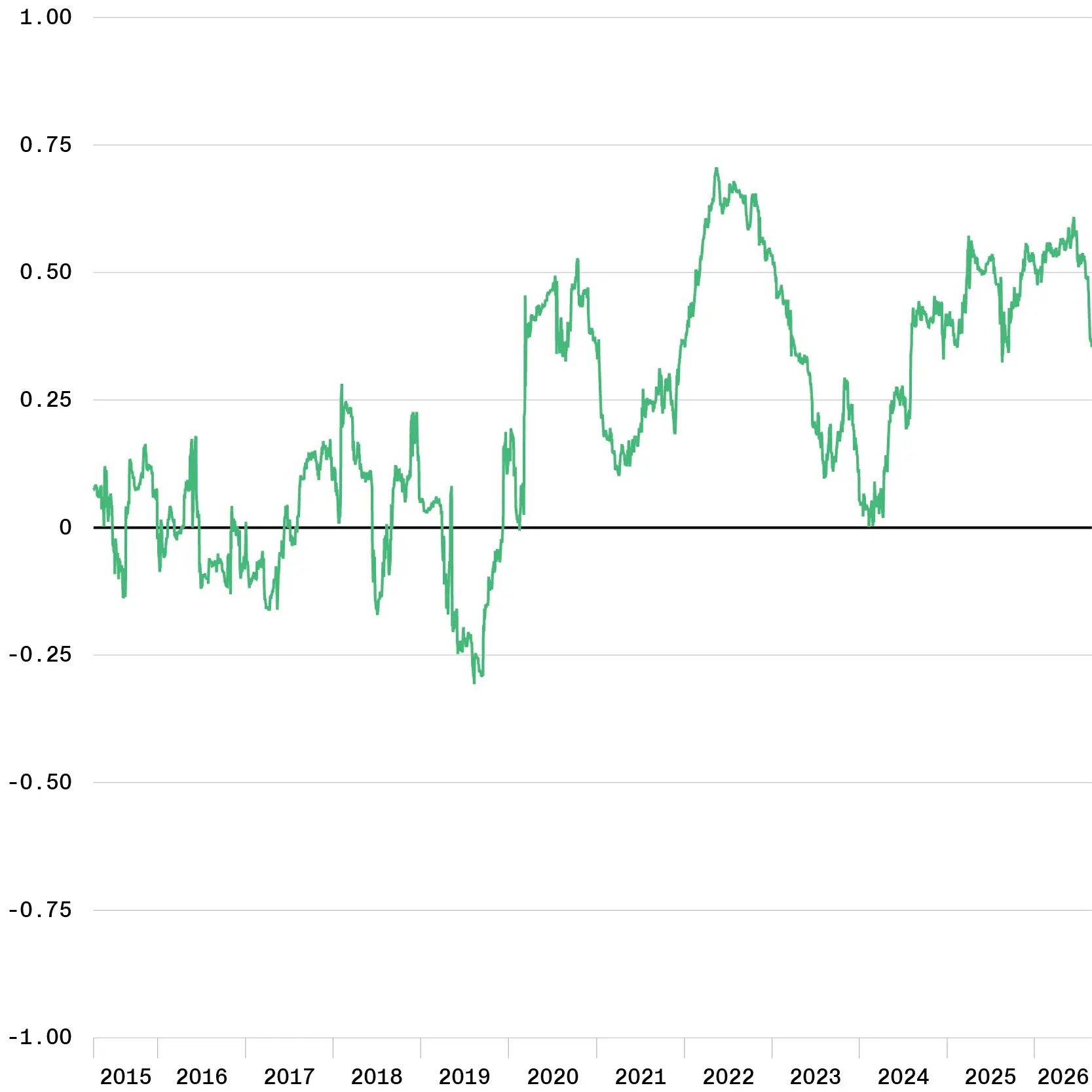
The combination suggests that Bitcoin’s latest rally has been driven less by the technology-stock trade and more by macro concerns surrounding currencies, debt and government borrowing.
The Debasement Trade Is Back in Focus
The latest correlation shift fits into the return of what markets often call the debasement trade.
Investors tend to look toward assets with limited supply when they become concerned about government borrowing, persistent inflation, or the long-term purchasing power of fiat currencies.
Gold has traditionally filled that role, while Bitcoin’s fixed 21 million supply has led some investors to treat it as a digital alternative.
As we covered in our earlier report on the return of the debasement trade, Bitcoin, gold and silver began rallying together as long-term government bond yields climbed and concerns around fiscal policy returned to the market.
Recent Bitcoin-gold correlation data suggests the trend has continued rather than fading immediately.
Bond Market Pressure Is Supporting the Narrative
Long-term bond yields have been an important part of the shift.
The 30-year U.S. Treasury yield recently climbed above 5.3%, reaching its highest level since 2007 before easing. The move came amid concerns around government debt, persistent inflation and heavy borrowing requirements.
The U.S. Treasury has responded by increasing the size of some long-term bond buyback operations, with another enlarged operation scheduled for September 9, Wednesday.
Normally, higher yields can weigh on Bitcoin because they increase returns available from lower-risk assets. However, the latest market reaction suggests some investors may also be interpreting rising long-term yields as a sign of broader fiscal stress, which may support demand for assets perceived as harder to debase, including gold and Bitcoin.
Bitcoin and Gold ETF Flows Add Another Signal
Exchange-traded fund (ETF) flows have also reflected increased demand for both assets.
Gold and Bitcoin ETFs recently attracted more than $7 billion combined over a five-day period, according to Bloomberg ETF analyst Eric Balchunas, marking a record for the two categories over that timeframe.
Large gold and Bitcoin ETFs also moved back among the most actively traded US funds by value, suggesting investor attention has shifted toward hard assets even as the artificial intelligence and technology trade remains active.
The flow data strengthens the case that a common macro theme, rather than price movements alone, is driving the recent correlation.
What Comes Next
The main question is whether Bitcoin continues trading alongside gold once the current macro pressures ease.
Treasury yields, the September 9 bond buyback operation, and the Federal Reserve’s September Federal Open Market Committee (FOMC) meeting could all affect the relationship. A stronger dollar or renewed rally in technology stocks could pull Bitcoin back toward its more familiar risk-asset behavior.
For now, however, the data shows a clear shift, with Bitcoin moving more closely with gold while its connection to the Nasdaq has weakened substantially.
What this means for you: Bitcoin is behaving more like a scarce macro asset than a tech trade right now, but a six-year-high correlation does not mean the relationship with gold will last.