Key Takeaways
- Instant Liquidity: Stablecoins like USDT and USDC enable near-instant delivery of funds, bypassing the 1-5 day delays of SWIFT/wire transfers.
- Cost Efficiency: By utilizing low-fee blockchain networks (e.g., Polygon, Stellar) and direct withdrawal to Indian bank accounts, the total cost can be less than 1% of the remittance value.
- Local Compliance: The process relies on trusted, FIU-registered Indian exchanges (CoinDCX, CoinSwitch) that allow seamless conversion from crypto to Indian Rupees (INR).
The Cost and Speed Advantage of Crypto Remittance to India
India is the world’s leading recipient of international remittances. In 2024, India received an estimated $129-$137 billion in remittances, significantly more than the second-highest recipient, Mexico. Yet, Non-Resident Indians (NRIs) and senders abroad still face significant friction from traditional methods. Commercial banks typically charge high percentage fees and offer poor exchange rates, leading to 30 to 72-hour settlement times.
Crypto remittance offers a definitive solution. By sending value using stablecoins—digital currencies pegged 1:1 to the US Dollar—the sender ensures price stability while taking advantage of the speed and low cost of blockchain technology. The entire process, from send-off to withdrawal in Indian Rupees (INR), is often completed in under an hour.
Step-by-Step Guide: Sending Stablecoins to INR
The stablecoin remittance process involves three main phases, moving value from a global exchange to the recipient’s bank account via a compliant local platform.
1. Sender: Purchase and Transfer Stablecoins
The sender purchases a stablecoin (USDC or USDT) on a major international exchange (Binance, OKX, Kraken). They then initiate a crypto transfer to the recipient’s wallet address.
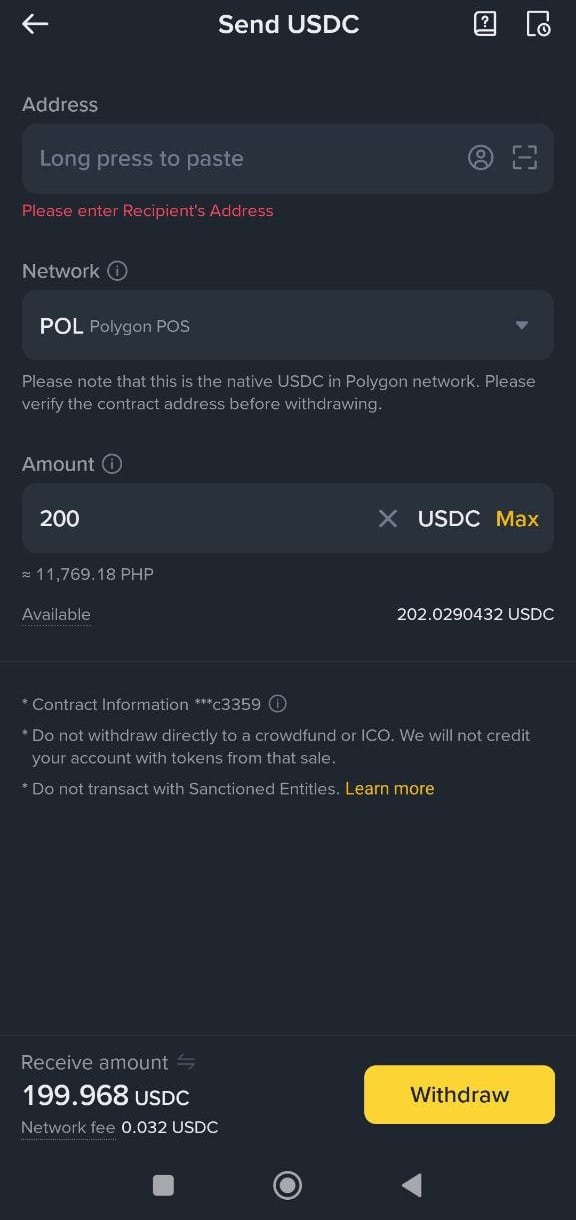
- Network Choice is Key: To minimize fees, the sender must select a low-cost network, such as Polygon (MATIC), Solana (SOL), or Stellar (XLM), avoiding high-fee Ethereum (ERC-20) transfers.
2. Recipient: Receive and Convert to INR
The recipient must have an account with a Financial Intelligence Unit (FIU)-registered Indian crypto exchange (e.g., CoinDCX, CoinSwitch, WazirX). These platforms comply with local KYC (Know Your Customer) and tax regulations.
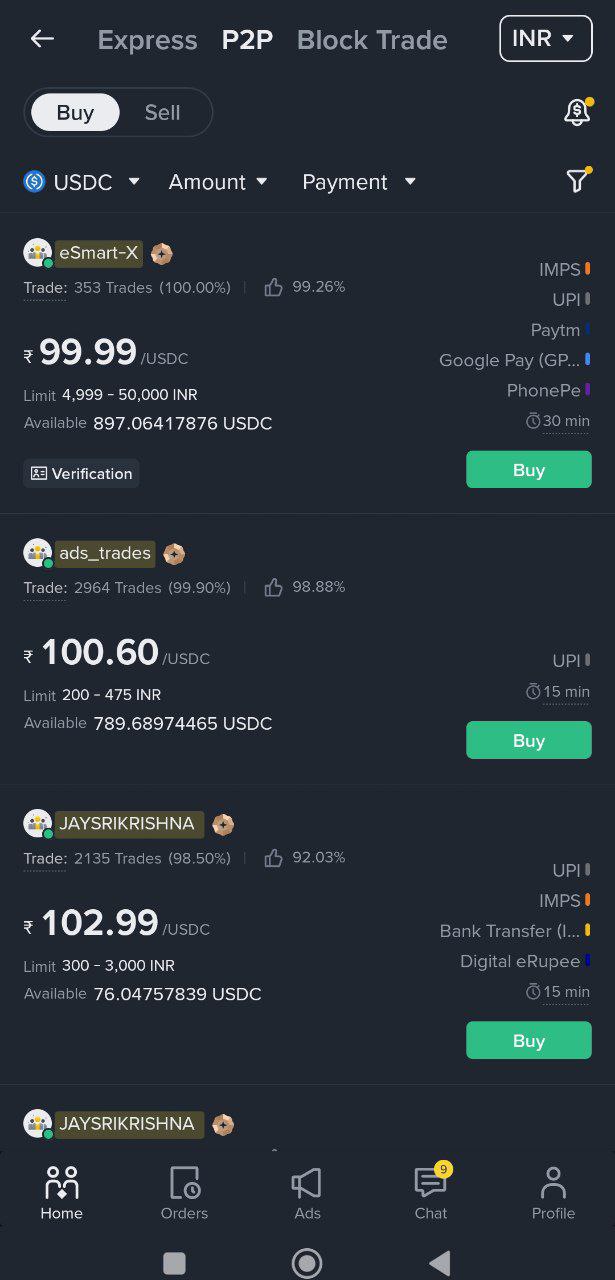
- The recipient receives the stablecoin in their exchange wallet.
- They then sell the USDT/USDC for INR at the platform’s prevailing exchange rate.
3. Cash Out: INR Withdrawal to Bank Account
The final step is the fiat withdrawal. The recipient transfers the INR balance from the exchange to their personal Indian bank account using domestic payment rails.
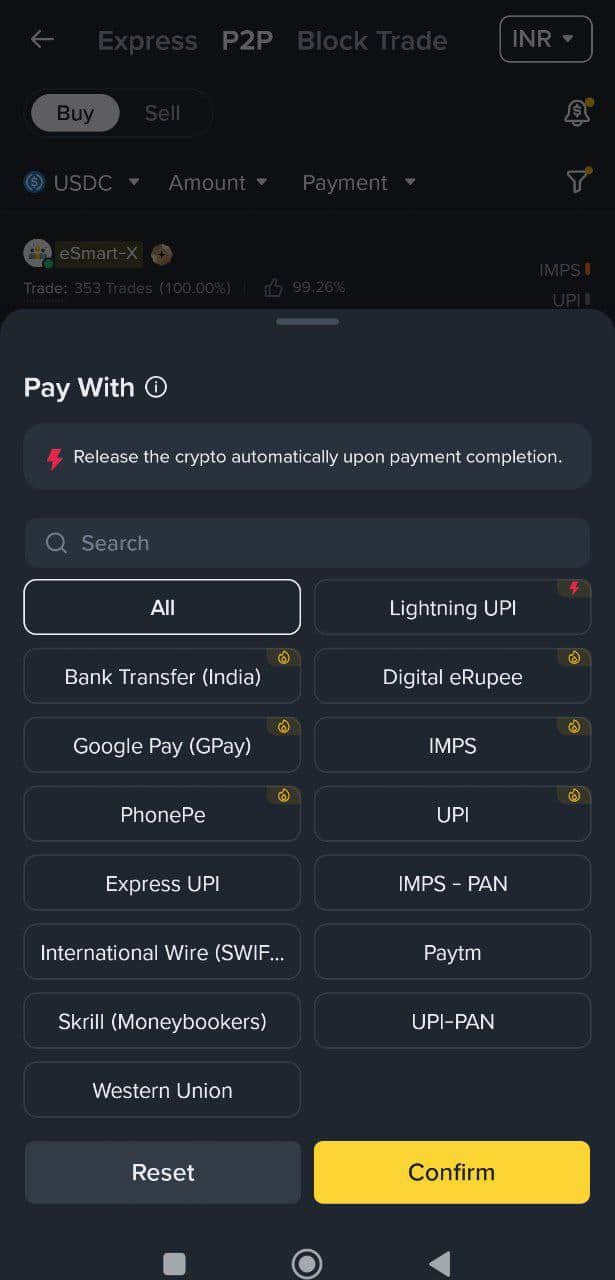
Local INR Cash-Out Options and Fee Comparison
Indian exchanges provide direct withdrawal to virtually any bank account in the country via fast interbank transfer services, making the process highly efficient.
| Cash-Out Method | Local Platform Example (Exchange to Bank) | Withdrawal Fee (INR) | Estimated Time |
| Bank Transfer (NEFT/IMPS) | SBI, HDFC, ICICI, PNB | Typically ₹0 (Free) | Instant (IMPS) or within 2 Hours (NEFT) |
| UPI (Unified Payments Interface) | Direct Payout via CoinDCX, CoinSwitch | Typically ₹0 (Free) | Instant |
| P2P (Peer-to-Peer) | Binance P2P, OKX P2P | Varies (Fee embedded in the rate) | 15 Minutes – 1 Hour |
Note: While crypto exchange withdrawal fees are often zero, the primary cost is the blockchain network fee (paid by the sender, often just a few cents) and the mandatory 1% Tax Deducted at Source (TDS) on the sale of crypto for INR (paid by the recipient).
Final Thoughts
Stablecoin remittance has emerged as the most efficient way to send money to India, dramatically cutting both cost and time compared to traditional methods. By using low-fee chains and FIU-registered local exchanges, NRIs can ensure more of their hard-earned money reaches their families instantly.
Frequently Asked Questions
Is crypto remittance legal in India?
Yes. The buying, selling, and holding of cryptocurrencies are legal in India, though they are classified as virtual digital assets (VDA) subject to specific tax and regulatory frameworks, including a 30% tax on profits and 1% TDS on transactions.
Which Indian exchanges support INR withdrawal from stablecoins?
FIU-registered exchanges like CoinDCX, CoinSwitch, ZebPay, and WazirX all support the conversion of stablecoins to INR and subsequent withdrawal to local bank accounts via IMPS/NEFT/UPI.
Why is using stablecoins better than sending Bitcoin?
Stablecoins (USDT, USDC) maintain a price pegged to the US Dollar, eliminating the risk of volatility that comes with Bitcoin. This ensures the sender knows the exact INR value the recipient will receive upon conversion.