Key Takeaways:
- The best wallet for Bitcoin depends on your storage needs, transaction frequency, and security priorities
- Hardware wallets offer the strongest protection for long-term Bitcoin holders
- Mobile and software wallets work well for regular transactions but require disciplined security habits
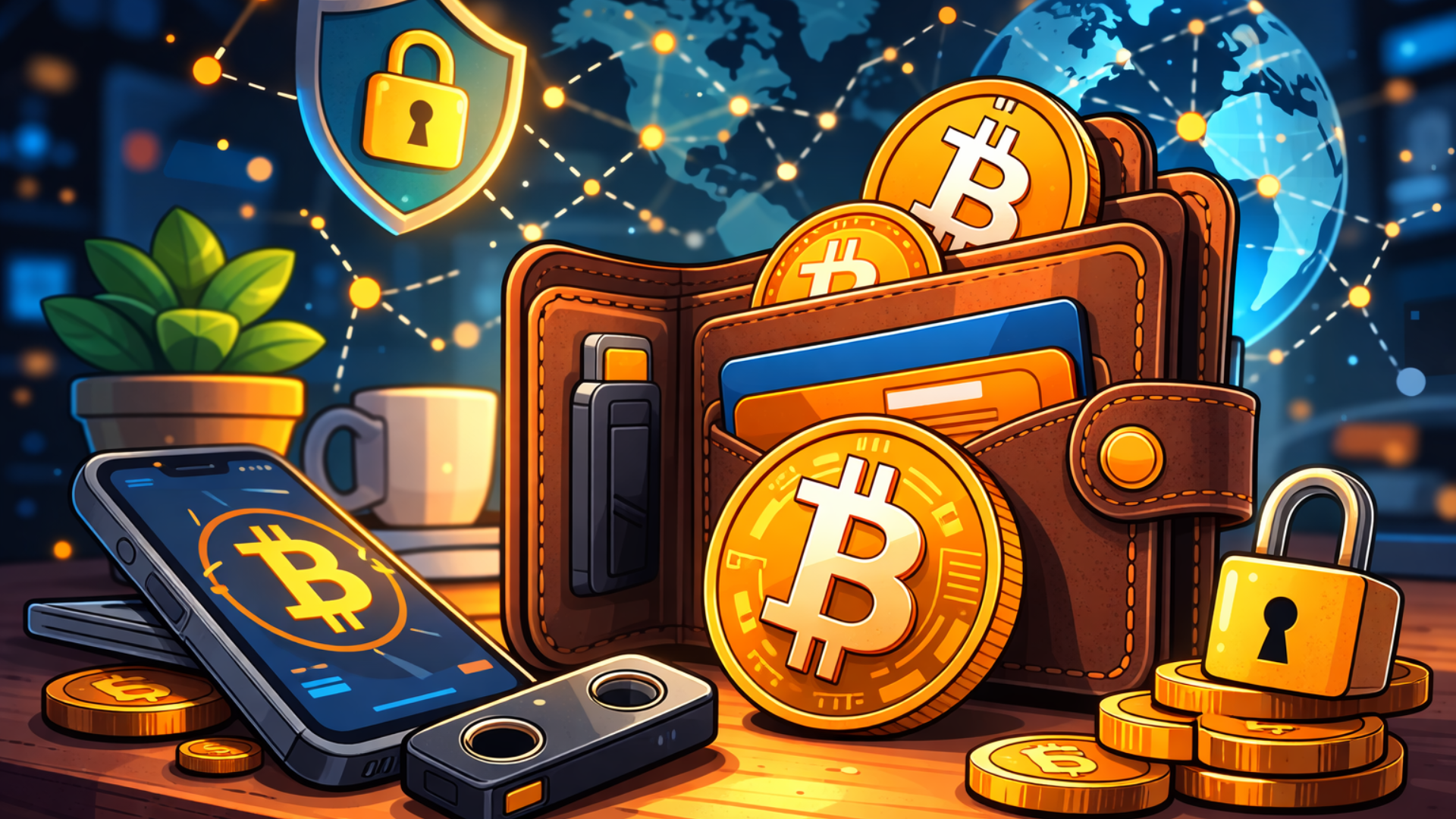
The best wallet for Bitcoin is not the same for every user. Some people hold Bitcoin long term and never touch it for months. Others send and receive it regularly for payments or remittances. Your ideal wallet depends on how you actually use Bitcoin, how much you hold, and how much risk you are willing to manage. This guide breaks down the strongest options available in 2026 and what each one does best.
What Types of Bitcoin Wallets Should You Know About?
Before picking a specific wallet, it helps to understand the two main categories. Each type serves a different purpose, and many experienced Bitcoin holders use both together depending on what they need at any given time.
Hardware Wallets
Hardware wallets store your private keys on a physical device that stays offline. Because they never connect directly to the internet, they remove the most common attack vector for crypto theft. These wallets are the go-to choice for anyone holding a significant amount of Bitcoin they do not plan to move frequently.
The trade-off is convenience. Moving Bitcoin from a hardware wallet requires physical access to the device. For long-term storage, that is a reasonable limitation. For daily transactions, it adds friction most users prefer to avoid.
Software and Mobile Wallets
Software wallets run as apps on your phone or desktop and stay connected to the internet. They are faster and more convenient for regular use, but that connectivity creates more exposure to phishing, malware, and unauthorized access. Most experienced Bitcoin holders use software wallets for smaller, day-to-day amounts and keep larger holdings in cold storage.
For a full breakdown of wallet types and how they work, our guide on navigating crypto wallets is a useful starting point.
What Are the Best Wallets for Bitcoin in 2026?
The wallets below cover the strongest options across hardware and software categories. Each one gives users full control of their private keys, which is the non-negotiable baseline for secure Bitcoin storage.
Ledger Nano X
Ledger remains one of the most trusted names in hardware wallets. The Nano X stores private keys on a certified secure chip and supports over 5,500 assets including Bitcoin. It connects to the Ledger Live app via Bluetooth, making it more practical for mobile users than older hardware wallet models.
For long-term Bitcoin holders, Ledger offers complete platform independence. No exchange, no third-party service, and no sanctions enforcement can affect a Ledger device you physically hold. Adding a custom passphrase on top of your PIN gives you a second layer of protection that even physical theft cannot easily bypass.
Trezor Model T
Trezor is the other leading hardware wallet and a strong alternative to Ledger. Its open-source firmware lets independent security researchers audit the code at any time, which provides a level of verified transparency that closed-source competitors cannot match. The Model T also supports Shamir Backup, splitting your recovery seed into multiple shares so no single lost copy puts your funds at risk.
Both Ledger and Trezor are excellent long-term Bitcoin storage options. The choice between them often comes down to interface preference and whether open-source firmware is a priority for you.
Trust Wallet
Trust Wallet is a widely used non-custodial mobile wallet that supports Bitcoin alongside hundreds of other assets. It gives users full key ownership without requiring a physical device, making it a practical option for everyday Bitcoin transactions and smaller holdings.
The internet connectivity that makes Trust Wallet convenient also creates more exposure than hardware storage. Most users keep only the amount they actively need in Trust Wallet and move the rest to cold storage. That split approach balances accessibility with security effectively.
Electrum
Electrum is a Bitcoin-only desktop wallet with a long track record in the security community. It supports hardware wallet integration, multi-signature setups, and advanced fee control, making it a strong choice for technically minded Bitcoin users. Electrum does not support other cryptocurrencies, which keeps it lean and focused entirely on Bitcoin security and functionality.
For users who want granular control over their Bitcoin transactions without relying on a full node, Electrum is one of the most capable software options available.
How Should You Store Bitcoin Safely Regardless of Wallet Choice?
Every wallet on this list is only as secure as the habits around it. The wallet provides the tools, but protecting your Bitcoin long term comes down to consistent practices. Here are the fundamentals that apply across all wallet types:
- Store your seed phrase offline on paper. Never save it digitally, screenshot it, or type it into any connected device.
- Test your backup by restoring it on a separate device. Confirming your seed phrase works before you need it prevents a stressful discovery later. Our guide on how to back up and restore a crypto wallet covers this process in full detail.
- Use a passphrase alongside your seed phrase. Both Ledger and Trezor support this feature, and it adds meaningful protection against physical theft of your device.
- Keep firmware and wallet apps updated. Security patches address newly discovered vulnerabilities, and outdated firmware leaves known gaps open.
- Split your holdings between hot and cold storage. Keep daily-use amounts in a mobile wallet and long-term savings in a hardware wallet stored offline.
For a broader look at wallet security practices, our guide on understanding wallet security covers additional steps worth building into your routine. If you are still deciding which wallet fits your setup, our guide on how to choose the best Bitcoin wallet walks through the key decision points clearly.
Frequently Asked Questions
What is the safest wallet for storing Bitcoin long term?
Hardware wallets like Ledger and Trezor offer the strongest long-term protection because they store private keys completely offline. They operate independently of any internet connection, exchange platform, or third-party service.
Is Trust Wallet good enough for holding Bitcoin?
Trust Wallet works well for everyday Bitcoin transactions and smaller amounts. For larger holdings, a hardware wallet provides stronger protection because it keeps private keys offline. Many users combine both, keeping small amounts in Trust Wallet for convenience and larger savings in cold storage.
What happens to my Bitcoin if I lose my hardware wallet?
Your Bitcoin stays safe as long as you have your seed phrase stored separately and securely. Use the seed phrase to restore your wallet on a new device right away. Our guide on how to back up and restore a crypto wallet walks through the full recovery process.
Do I need a different wallet for Bitcoin and other cryptocurrencies?
Most hardware wallets, including Ledger and Trezor, support Bitcoin alongside thousands of other assets in a single device. Software wallets like Trust Wallet also support multiple assets. If you hold Bitcoin exclusively, a Bitcoin-only wallet like Electrum offers a more focused and streamlined experience.