XRP is holding near $1.50 after briefly reaching $1.66, giving back part of a rally that had lifted the token more than 20% from its September 17 low near $1.25.
The September 23 session produced a wide range between roughly $1.48 and $1.66 before XRP closed near $1.50. The token remains up strongly from last week’s lows, but the rejection shows that $1.60 to $1.66 remains a difficult resistance area.
The first major support now sits around $1.40 to $1.42. A recovery above $1.60 would reopen the recent $1.66 high, while a drop to $1.40 would increase the risk of a deeper retracement toward $1.30.
XRP Holds $1.50 After Reaching $1.66
XRP’s recovery accelerated between September 17 and September 23.
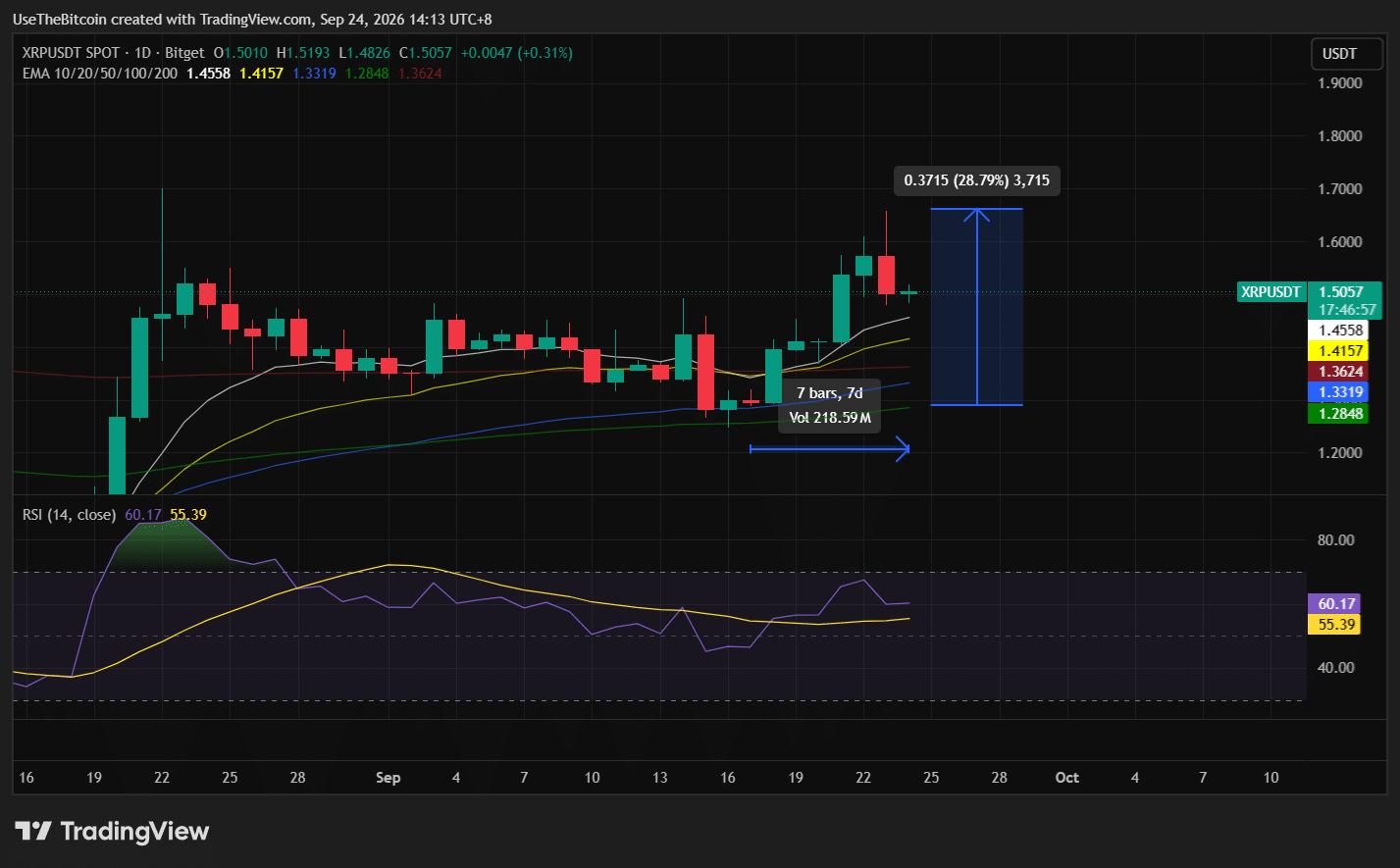
The price climbed from around $1.25 to an intraday high of $1.6581, briefly pushing XRP’s market capitalization back above $100 billion before profit-taking reversed the move.
By the end of the September 23 session, XRP had fallen back toward $1.50, leaving a clearer technical range after the sharp rebound.
| Level | Role |
| $1.28-$1.30 | Major lower support |
| $1.40-$1.42 | Main breakout support |
| ~$1.48-$1.50 | Current price area |
| ~$1.57 | Near-term resistance |
| $1.60-$1.66 | Major breakout zone |
| ~$1.70 | September swing resistance |
| ~$1.80 | Higher resistance if breakout holds |
Table 1. XRP Key Support and Resistance Levels
XRP has not erased the broader recovery, but the rejection from $1.66 shows that buyers still need to absorb significant supply above $1.60.
$1.60 to $1.66 Remains the Main Breakout Zone
XRP reached $1.6581 on September 23 before falling sharply. The same region has repeatedly acted as resistance during September, making a sustained daily close above it more meaningful than another brief intraday move.
The first recovery level is around $1.57, which acted as short-term support during the rally before price fell through it. If XRP retakes $1.57, the market can challenge $1.60 again.
A clean move through $1.66 would then put the earlier September high near $1.70 back into focus. Until that happens, $1.60 to $1.66 remains resistance rather than confirmed support.
$1.40 Is the Key Level if the Pullback Deepens
XRP was near $1.40 during the September 23 session, and the price remains above that level despite the latest selloff, meaning the short-term recovery structure has not yet fully broken.
The 20-day exponential moving average (EMA) places XRP at $1.42, while the 50-day and 200-day EMAs sit closer to $1.33 and $1.35, respectively.
A daily close below $1.40 would weaken the breakout considerably and put the lower cluster back into focus.
Money Flow Was Weak Before the Reversal
Capital-flow indicators did not fully support price momentum during the latest rally. The 20-day Chaikin Money Flow (CMF) reading stood near -0.04 as XRP traded around $1.50 on September 24.
A negative reading suggests buying pressure was not strengthening at the same rate as price, which could explain why XRP struggled to hold above $1.60.
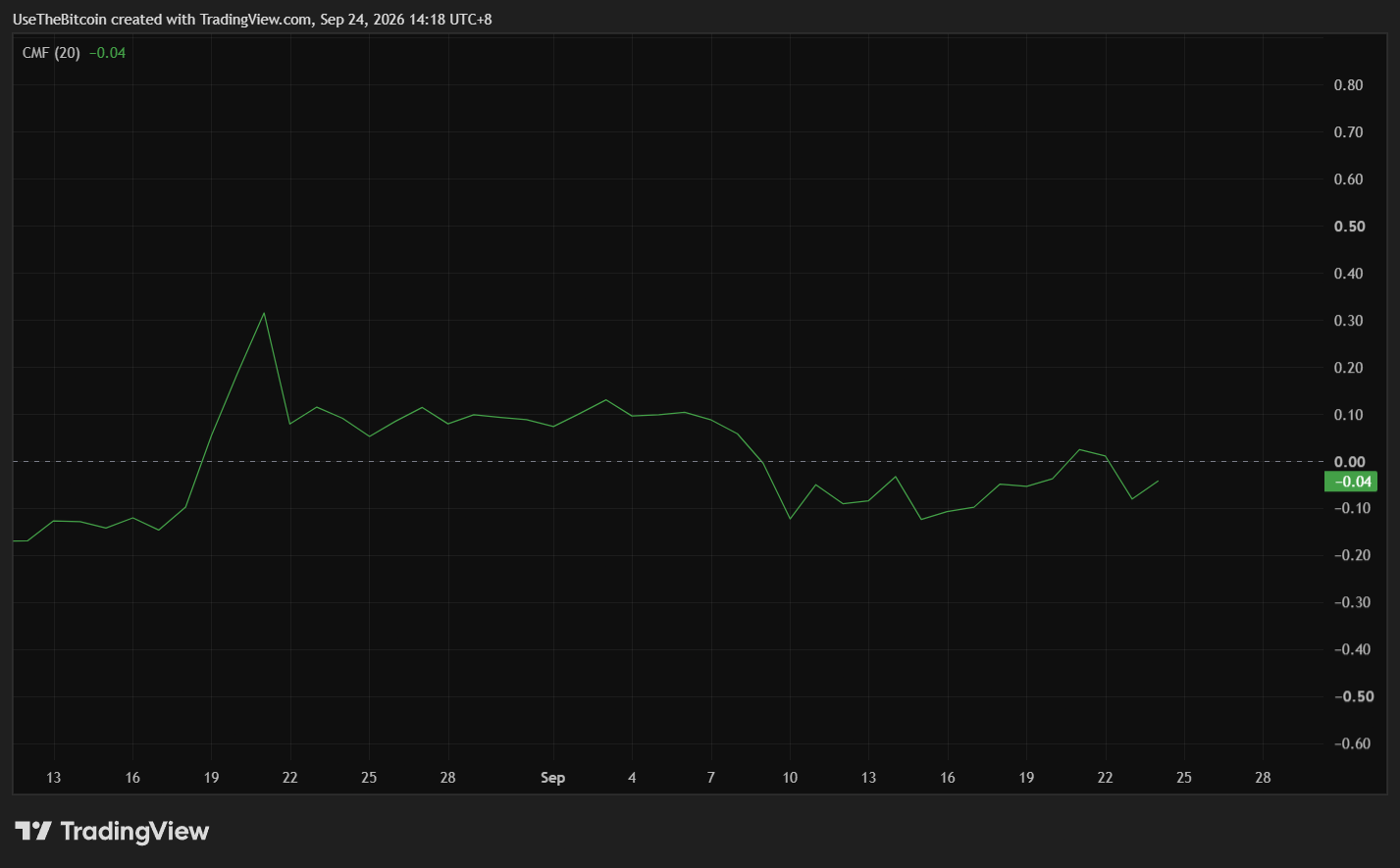
Strong price performance can continue with weak money flow for a period, but repeated resistance combined with negative flow makes confirmation from actual buying demand more important.
A return above $1.60 accompanied by improving money flow would therefore carry more weight than another temporary price spike.
Binance XRP Reserves Rise to the Highest Level Since June
XRP reserves on Binance have increased to approximately 2.68 billion tokens, their highest level since June.
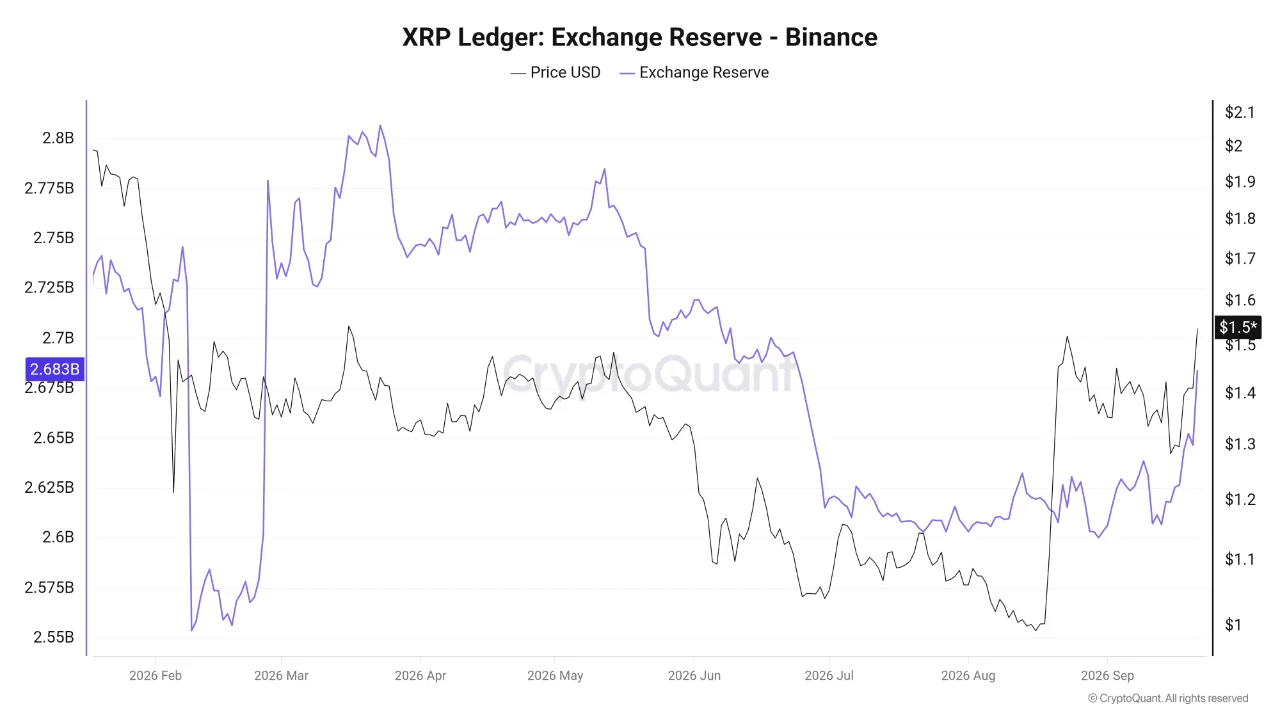
Rising exchange balances can mean more tokens are readily available to trade or sell, although deposits do not prove that holders intend to sell immediately.
The timing still deserves attention because XRP is attempting to break a major resistance zone after a rapid rally.
If exchange reserves continue rising while XRP repeatedly fails around $1.60 to $1.66, the additional available supply could make the breakout harder to sustain.
XRP Ledger Lending Plans Move Forward
The XRP Ledger (XRPL) also has a potential fundamental catalyst developing beneath the price action.
Proposals XLS-65 and XLS-66 would introduce native pooled lending infrastructure directly on XRPL.
XLS-65 covers Single Asset Vaults, while XLS-66 would allow loan brokers to use assets held in those vaults for fixed-term lending.
A vault could hold XRP, Ripple USD (RLUSD), or another supported asset, with depositors receiving shares representing their portion of the pool.
As of this writing, the proposals have not been activated, as they still need more than 80% support from trusted validators for two consecutive weeks before they can become active on mainnet. There is currently no confirmed activation date.
A lending vault denominated in XRP would use XRP directly, while an RLUSD-based lending product would primarily create demand for RLUSD rather than XRP. The upgrade could broaden XRPL’s financial functionality without automatically producing the same level of demand for its native token.
XRP Ledger Delegation Is Closer to Activation
Besides XLS-65 and XLS-66, PermissionDelegationV1_1 entered its 14-day activation period after receiving support from 29 of the network’s 35 trusted validators.
If support remains above the required threshold, the amendment could activate on October 5 at approximately 11:18 UTC.
Permission Delegation lets an XRP Ledger account grant another account specific permissions without handing over full control of its keys, making institutional and business account structures more flexible, but the amendment does not directly change XRP’s supply or tokenomics.
Its price relevance will depend on whether the capability leads to additional network usage after activation.
XRP Needs to Hold $1.50 to Keep the Recovery Intact
XRP’s immediate setup now depends on whether buyers can defend the $1.48 to $1.50 area after the rejection from $1.66.
Holding near $1.50 would keep XRP above the stronger $1.40 to $1.42 support zone and allow the market to consolidate without undoing the broader September recovery.
On the upside, $1.57 is the first level buyers need to reclaim. A move above that would bring $1.60 back into focus, followed by the recent $1.66 high.
If XRP fails to hold $1.48 and selling pressure increases, the next key test would be around $1.40 to $1.42. A daily close below that area would weaken the recovery and expose the $1.28 to $1.35 support zone.
| Scenario | Price Trigger | Possible Outcome |
| Bullish Case | XRP reclaims $1.60 and closes above $1.66 | $1.70 becomes the next test, followed by the $1.80 area |
| Base Case | XRP holds $1.40–$1.42 but remains below $1.66 | Consolidation continues after the sharp September rebound |
| Bearish Case | XRP closes below $1.40 | $1.28–$1.35 becomes the next major support zone |
Table 2. XRP Price Scenarios After the $1.66 Rejection
Bottom Line
XRP is holding around $1.50 after reaching approximately $1.66 and reversing from resistance.
The token is still up strongly from its September 17 low near $1.25 and remains above its main short- and long-term moving averages. The pullback therefore has not yet erased the broader recovery.
On the downside, $1.40 to $1.42 is the more important support area. Losing it would put the 50-day and 200-day moving-average region around $1.28 to $1.35 back into focus.
This article is for informational purposes only and does not constitute financial advice. Crypto price predictions are based on analyst estimates and are not guarantees of future performance. Do your own research before making any investment decisions.
Frequently Asked Questions
Need a refresher? Here are some common questions about XRP’s current price setup.
Why Did XRP Fall After Reaching $1.66?
XRP reached approximately $1.658 on September 23 but failed to hold the breakout. Momentum had become stretched, with the daily RSI approaching 70, while money flow remained negative. Price subsequently moved back toward $1.50.
What Is XRP’s Most Important Support Level?
The main short-term support sits around $1.40 to $1.42, where XRP’s 20-day moving average is located. Below that, the $1.28 to $1.35 area contains several longer-term moving averages and previous support.
What Price Does XRP Need to Break?
The first major resistance zone is $1.60 to $1.66. A sustained daily close above $1.66 would put approximately $1.70 back into focus and strengthen the case for a larger continuation.
Is XRP Ledger Lending Live?
No. XLS-65 and XLS-66 would introduce native vault and lending functionality, but the amendments still need sufficient validator support before they can activate on the XRP Ledger mainnet.
Are Rising XRP Exchange Reserves Bearish?
Not automatically. Binance’s XRP reserves have risen to about 2.68 billion tokens, meaning more XRP is available on the exchange, but deposits do not prove those tokens will be sold. Continued reserve growth alongside repeated price rejection would be more concerning than the reserve figure alone.