Key Takeaways
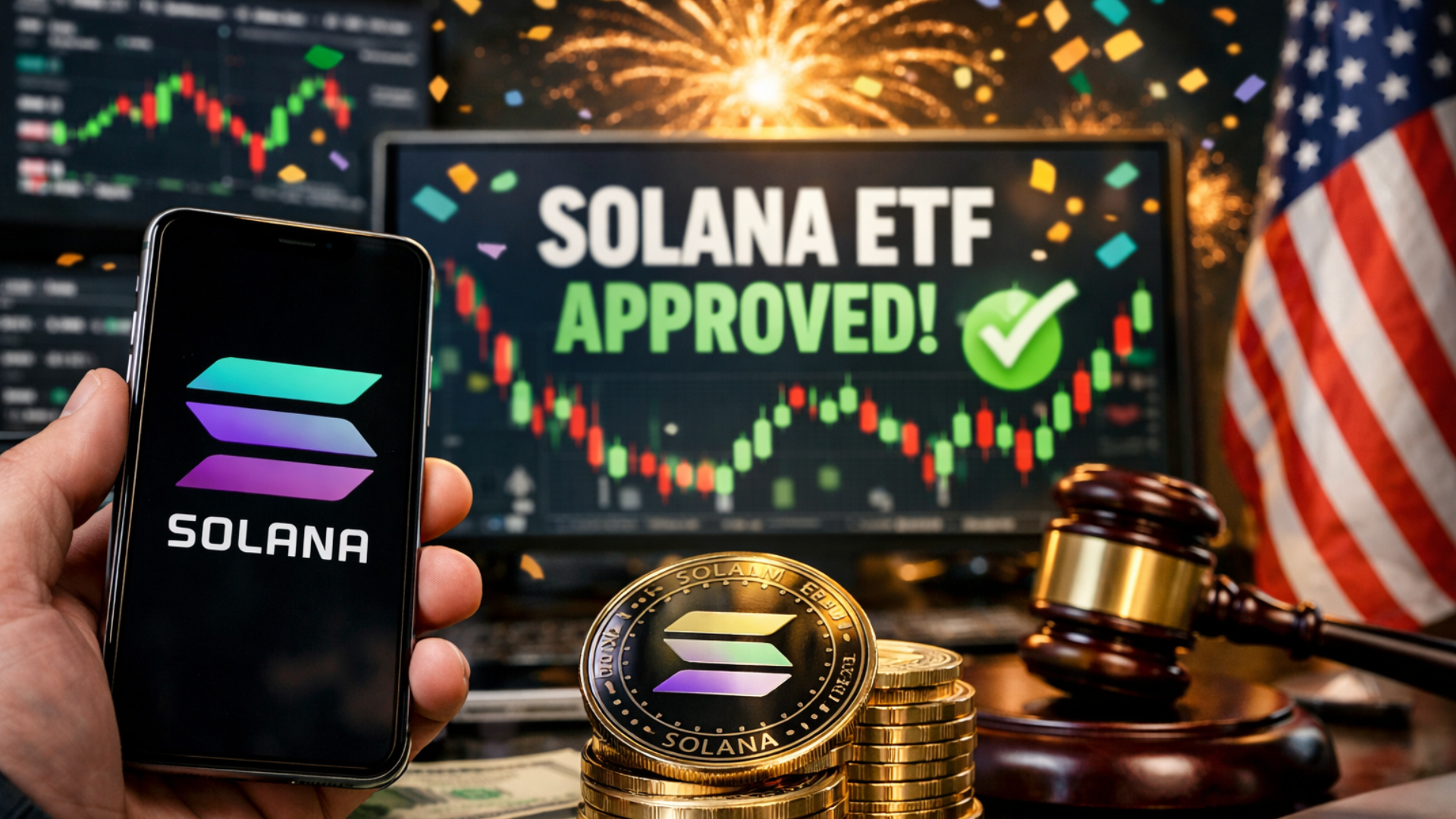
- The SEC approved spot Solana ETFs in October 2025, making SOL the third crypto to reach that milestone after Bitcoin and Ethereum.
- Cumulative inflows passed $900 million by early March 2026, with Goldman Sachs disclosing $108 million in SOL ETF holdings.
- Solana ETFs launched with staking built in, something Bitcoin and Ethereum ETFs still do not offer.
The Solana ETF approval story moved fast. The SEC gave spot SOL products the green light in October 2025. Solana became only the third cryptocurrency to clear that bar, after Bitcoin and Ethereum. By April 2026, the conversation had shifted. The question was no longer about approval. Now it centers on real-world performance, inflows, and the next wave of staking-enabled products.
How Did the Solana ETF Approval Actually Happen?
The path to a U.S. spot Solana ETF was not quick or simple. Canada moved first, launching four spot Solana ETFs on the Toronto Stock Exchange in April 2025. The Ontario Securities Commission approved those products months before U.S. regulators acted.
In the U.S., one regulatory shift changed everything. In September 2025, the SEC approved new generic listing standards for spot cryptocurrency ETFs. That move cut approval timelines from over 240 days down to roughly 75. Multiple asset managers could then move through the process at the same time.
U.S. spot Solana ETFs began trading on October 28, 2025. Issuers that cleared the process included Bitwise, Grayscale, Fidelity, Franklin Templeton, 21Shares, VanEck, and Canary Capital. For everyday investors, the approval meant regulated SOL exposure through a standard brokerage account. No crypto exchange needed, no custody risk, and no seed phrase to worry about.
What Solana ETF Products Are Trading Right Now?
Several spot Solana ETFs are actively trading on U.S. exchanges as of early April 2026. The fee competition between issuers has made the market tight, with management fees running from 0.19% to 0.50%. Here is a snapshot of the key products available now:
- Franklin Solana ETF (SOEZ) — 0.19% fee, waived until May 31, 2026
- Bitwise Solana Staking ETF (BSOL) — 0.20% fee, staking enabled
- 21Shares Solana ETF (TSOL) — 0.21% fee
- Fidelity Solana Fund (FSOL) — 0.25% fee, waived for the first six months
- Canary Marinade Solana ETF (SOLC) — 0.50% fee, waived until July 1, 2026
All of these trade through standard brokerage accounts. Investors do not need a crypto wallet or a separate exchange account to access them.
How Has the Market Responded So Far?
Early inflow numbers tell a strong story. U.S.-based Solana ETFs recorded 12 or more consecutive days of net inflows through February 2026. Cumulative inflows passed $900 million by early March 2026. Bloomberg Intelligence analyst Eric Balchunas noted that Bitwise’s BSOL recorded the strongest ETF debut of 2025 across any asset class, not just crypto.
What Are Institutions Doing With SOL ETFs?
Large institutions have started taking visible positions. Goldman Sachs disclosed $108 million in SOL ETF holdings as of April 2026. That kind of exposure signals that traditional finance is taking Solana seriously.
First-year inflow projections had ranged widely before launch. JPMorgan estimated around $1.5 billion, citing lower network activity compared to Bitcoin. Other analysts projected between $3 billion and $6 billion, based on adoption patterns from earlier Bitcoin and Ethereum ETF launches. U.S. spot Bitcoin ETFs pulled in roughly $36.2 billion in their first year. Ethereum ETFs accumulated around $8.64 billion in cumulative net inflows. Solana’s market cap at launch was about 5% of Bitcoin’s and 22% of Ethereum’s, which analysts used as a baseline for sizing expectations.
Why Does Staking Set Solana ETFs Apart?
Staking is the feature that separates Solana ETFs from Bitcoin and Ethereum ETFs. U.S.-listed Bitcoin and Ethereum ETFs launched without any staking component. Solana ETFs launched with it from day one, and that difference matters for yield-focused investors.
When an ETF stakes SOL, it helps secure the Solana network and earns rewards in return. Those rewards pass through to shareholders after the fund’s management fee. Bitwise’s BSOL stakes 100% of its SOL holdings through Helius, a leading validator on the Solana network. The fund targets average annual staking rewards above 7%, though yields shift with network conditions.
The REX-Osprey Solana Staking ETF, trading as SSK, was the first staking fund to launch in the U.S. It began trading in July 2025 under the Investment Company Act of 1940, which is a different regulatory framework from the spot ETFs that followed in October. If you want to understand why staking-enabled ETFs remove a major barrier for investors, reading up on how self-custodial wallets work gives useful context on what ETFs are replacing.
What Comes Next for Solana ETFs in 2026?
Spot ETF approval was just the first step. Several developments are now shaping what comes next for SOL investors and the broader market. Here are the key things to watch:
- VanEck JitoSOL ETF: Nasdaq filed a proposal to list the VanEck JitoSOL Solana Liquid Staking ETF. This product would hold the JitoSOL liquid staking token, giving investors SOL price exposure plus staking yields and MEV block tips. Approval is still pending as of early April 2026.
- Alpenglow upgrade: Solana is preparing to roll out the Alpenglow upgrade, which aims to bring transaction finality down to 100 to 150 milliseconds. Faster finality could drive more on-chain activity and strengthen demand for SOL over time.
- Price outlook: SOL experienced a pullback in early 2026 despite strong ETF launch momentum. Technical analysts are watching the $80 to $90 support zone as a potential base for a move toward $150 to $200.
- Regulatory streamlining: The SEC’s shift toward generic listing standards should speed up future approvals. Specialized and futures-based SOL ETFs should face a shorter review process going forward.
For a broader view on how institutional holdings shape token prices, the UTB breakdown of top individuals and companies holding Bitcoin offers useful comparison points.
Frequently Asked Questions
Are spot Solana ETFs available in the U.S. right now?
Yes. Multiple spot Solana ETFs started trading on U.S. exchanges on October 28, 2025. Products from Bitwise, Fidelity, Franklin Templeton, 21Shares, and others are available through standard brokerage accounts today.
Do Solana ETFs include staking rewards?
Several do. Bitwise’s BSOL stakes 100% of its holdings and targets over 7% annually in staking rewards. The REX-Osprey SSK fund also includes staking. Not every Solana ETF offers this feature, so it is worth comparing products before investing.
How do Solana ETF fees compare across products?
Fees range from 0.19% for the Franklin Solana ETF up to 0.50% for the Canary Marinade Solana ETF. Several issuers have temporarily waived fees to attract early investors, so the effective cost may be lower for a limited time depending on the product.
What is the VanEck JitoSOL ETF proposal?
Nasdaq filed to list the VanEck JitoSOL Solana Liquid Staking ETF. The fund would hold the JitoSOL liquid staking token, offering SOL price exposure plus staking yields and MEV block tips. The proposal was still pending approval as of early April 2026.