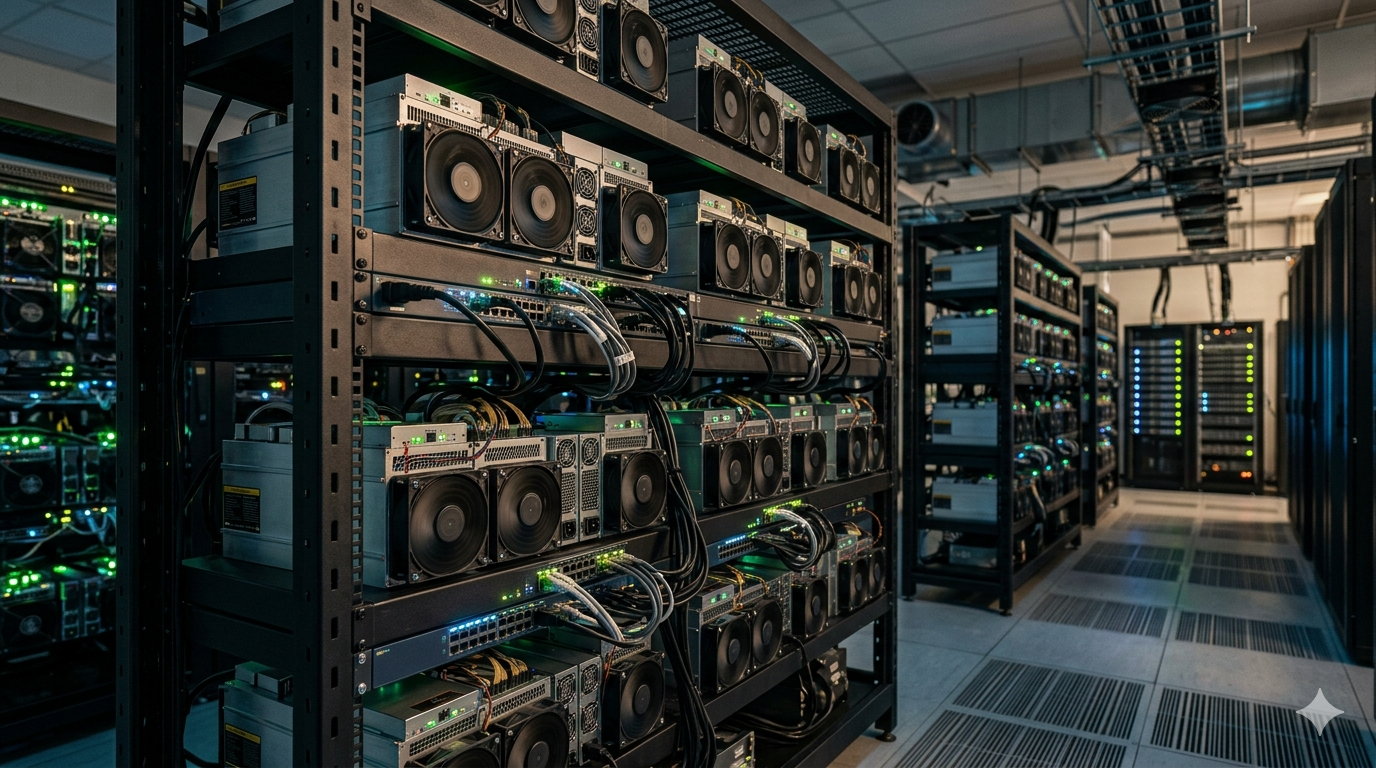
Key Takeaways
- ASIC miners dominate Bitcoin mining in 2026, with efficiency ratings below 15 J/TH considered competitive.
- The April 2024 halving cut the block reward to 3.125 BTC, making energy cost the single biggest profitability variable.
- Home mining is possible but rarely profitable without access to cheap electricity, typically below $0.07 per kWh.
A bitcoin mining rig is a piece of hardware built to perform one task: compute SHA-256 hashes as fast as possible to win block rewards. In 2026, that means using an ASIC (Application-Specific Integrated Circuit) miner. GPUs are no longer viable for Bitcoin mining. The network’s difficulty is too high.
How a Bitcoin Mining Rig Works
Every 10 minutes, the Bitcoin network produces a new block. Miners compete to find a valid hash for that block. The miner who finds it first earns the block reward plus transaction fees. With the 2024 halving behind us, that reward sits at 3.125 BTC per block.
Your mining rig performs trillions of hash calculations per second. That speed is measured in terahashes per second (TH/s). Efficiency measures how much electricity it uses per terahash, expressed as joules per terahash (J/TH). Lower J/TH means lower electricity cost per unit of work.
Hash Rate vs. Efficiency
These two numbers determine whether your rig makes money:
- Hash rate (TH/s): higher is better, but raw speed alone does not determine profitability.
- Efficiency (J/TH): this is the more critical number. A miner with a lower J/TH rating costs less to run per TH/s of output.
For 2026, rigs above 200 TH/s with efficiency ratings below 20 J/TH sit in the competitive range. The best machines from Bitmain and MicroBT are pushing below 15 J/TH.
Top Bitcoin Mining Rigs in 2026
Several models stand out this year. Here are the most discussed options across the mining community:
- Bitmain Antminer S21 Pro. Around 234 TH/s at roughly 15 J/TH. This is one of Bitmain’s flagship models for the current generation.
- MicroBT Whatsminer M60S. Around 186 TH/s at about 18.5 J/TH. MicroBT has built a strong reputation for reliability, and the M60S handles heat well.
- Bitmain Antminer S21 XP Hyd. A water-cooled version pushing over 270 TH/s. Higher upfront cost, but the efficiency gain can pay off in the right facility setup.
- Canaan AvalonMiner 1566. A more affordable option at around 185 TH/s. It is not the most efficient machine available, but the lower purchase price lowers the breakeven threshold.
Prices fluctuate based on BTC price. When BTC is rising, miners pay premium prices for hardware because everyone wants in. When BTC drops, secondhand miner prices fall fast.
Is Home Bitcoin Mining Profitable in 2026?
Home mining is challenging but not impossible. The math comes down to three numbers: hash rate, electricity cost, and hardware cost.
At $0.10 per kWh, most current-gen ASICs run near breakeven or slightly negative depending on BTC price. At $0.05 to $0.07 per kWh, the same machines turn a meaningful profit. At $0.12 per kWh or above, they lose money even with BTC at current prices.
Most home miners in high-electricity-cost countries struggle to compete with industrial operations in Kazakhstan, Paraguay, and parts of the US that have access to sub-$0.05 power. If you pay residential rates, home mining in 2026 is more of a hobby than a business unless you have a specific electricity advantage.
What About Mining Pools?
Solo mining with a single rig gives you near-zero chance of ever finding a block. Mining pools combine hash rate from thousands of miners and split rewards proportionally. You earn small, consistent payouts instead of waiting years for a single win. Most miners join pools by default. Popular options include Foundry USA, AntPool, and ViaBTC.
For those tracking portfolio value from mining rewards, tools like CoinLedger and Koinly automate the tax tracking side. You can also check this overview of top crypto cloud mining platforms if you want to mine without buying physical hardware.
Frequently Asked Questions
What is the best bitcoin mining rig in 2026?
The Bitmain Antminer S21 Pro and MicroBT Whatsminer M60S are among the top performers in 2026, offering strong hash rates and competitive efficiency ratings.
How much does a bitcoin mining rig cost?
New high-end ASICs range from $2,000 to over $6,000 depending on the model and current BTC price. Secondhand machines cost less but may have higher J/TH ratings.
How long does it take to break even on a mining rig?
Break-even time depends on electricity cost, BTC price, and network difficulty. At $0.07/kWh and current BTC prices, break-even can range from 12 to 24 months on a new machine.
Can I mine bitcoin with a GPU?
No. Bitcoin’s network difficulty is too high for GPU mining to be viable. ASICs are the only practical option. GPUs are used for other coins like Ethereum Classic or Kaspa.
Do I need to join a mining pool?
For solo miners with a single rig, joining a pool is effectively required. Solo mining has an extremely low probability of ever earning a block reward at current network difficulty.